A close look in the mirror can make dullness, rough texture and peach fuzz feel more noticeable than they did last week. When considering dermaplaning versus microdermabrasion, the right choice comes down to what is sitting on your skin’s surface, how reactive your skin is, and the result you would most like to see.
Both treatments are professional exfoliation options that can leave the complexion looking fresher and feeling smoother. They are not interchangeable, though. One focuses on gently removing fine facial hair and surface build-up with a sterile blade; the other uses controlled mechanical exfoliation to refine texture. A personalised assessment helps ensure your treatment feels comfortable and supports your skin rather than overworking it.
Dermaplaning versus microdermabrasion: the key difference
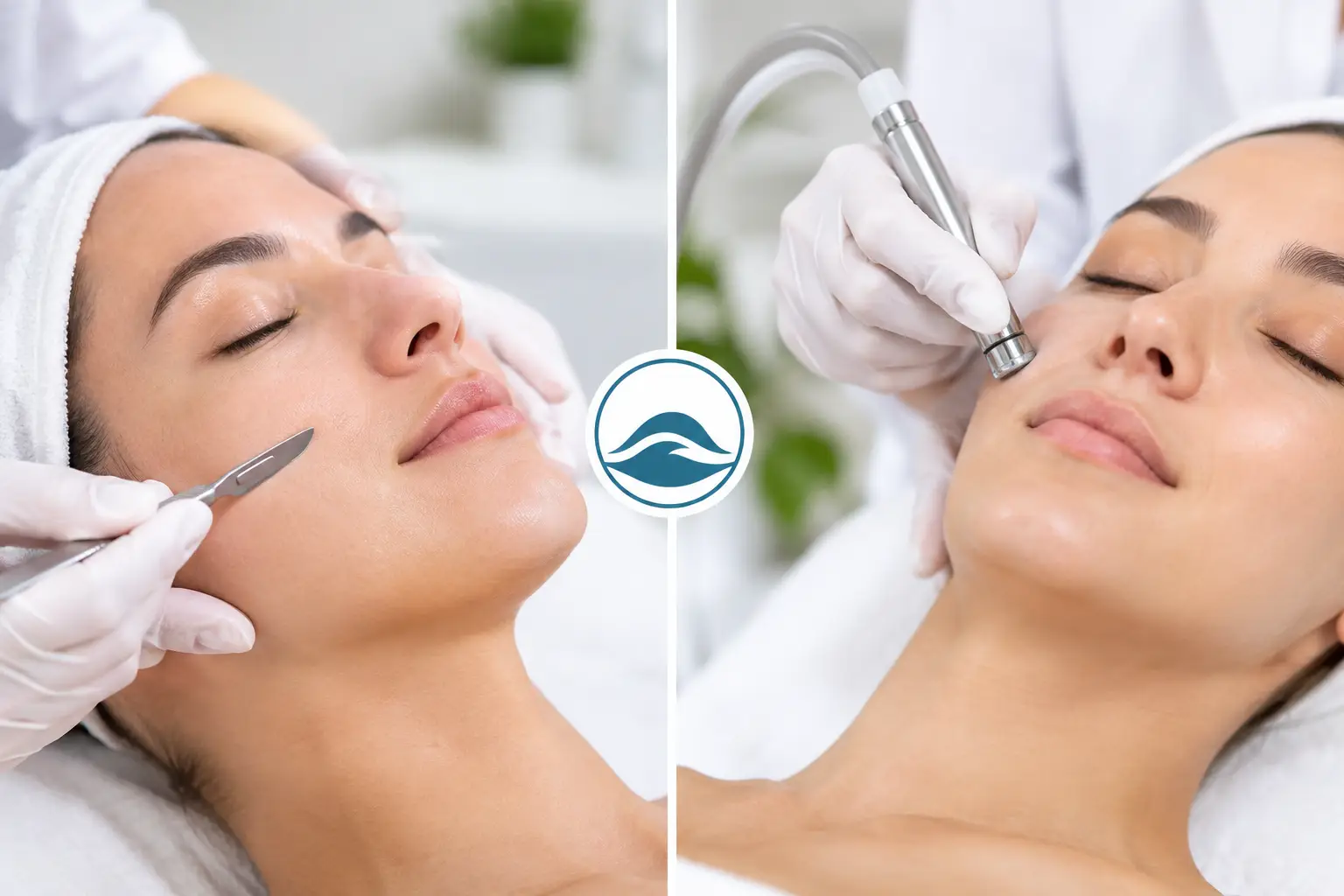
Dermaplaning is a manual exfoliation treatment. A trained practitioner uses a sterile, single-use surgical blade held at a precise angle to gently lift away dead surface skin cells and vellus hair – the soft, fine hair often called peach fuzz. The treatment is performed with controlled, light strokes and is typically focused on the face.
Microdermabrasion uses a professional device to exfoliate the outermost layer of the skin. Depending on the system used, it may involve a diamond-tipped handpiece and gentle suction, or a controlled crystal-based method. It is designed to polish away surface debris and encourage a smoother-looking skin texture.
Neither treatment is intended to dramatically change deep scarring, active inflammatory skin conditions or significant pigmentation concerns in one appointment. They can, however, be valuable parts of a broader skin maintenance plan, particularly when matched to your skin goals and followed by appropriate home care.
What dermaplaning is best for
Dermaplaning is often chosen by people who want an immediately smooth finish. By removing fine facial hair and built-up dead skin cells, it can help make-up sit more evenly and give the complexion a soft, polished appearance. It is a popular option before an event, although it is equally useful as a regular professional facial treatment for suitable skin types.
It may be a good fit if your main concern is peach fuzz, a dull or uneven surface, or make-up that catches on dry patches. Because it does not use suction or abrasive crystals, some clients with dry or mature skin find it a comfortable option when their skin barrier is in good condition.
A common concern is whether hair grows back darker or thicker after dermaplaning. It does not. Dermaplaning trims vellus hair at the skin’s surface and does not alter the hair follicle, growth rate, colour or texture. As the hair grows back, it can initially feel different because the fine hair has been cut bluntly, but it remains the same type of hair.
Dermaplaning may not be appropriate if you have active acne, inflamed breakouts, cold sores, open skin, eczema or irritation in the treatment area. Passing a blade over active blemishes can spread bacteria or cause further irritation. Your practitioner should always assess this before treatment.
What microdermabrasion is best for
Microdermabrasion is often selected when skin feels congested, rough or lacklustre. Its controlled exfoliation can help refine the look of mild texture irregularities, superficial congestion and dry, flaky surface cells. Many clients also enjoy the clean, refreshed feeling that follows a professional microdermabrasion facial.
It can be particularly helpful for skin that needs a gentle reset after inconsistent exfoliation, heavy make-up use or seasonal dryness. With the right settings and treatment frequency, it may support a brighter-looking complexion and smoother application of skincare and make-up.
The important word is controlled. Stronger is not always better, especially if your skin is sensitive, dehydrated or already using active skincare ingredients. Too much exfoliation can lead to redness, tightness, flaking and a compromised barrier. At Coastal Skin Clinic, treatment planning begins with understanding how your skin is behaving now, not simply what treatment is trending.
Microdermabrasion is generally avoided on very inflamed acne, rosacea flare-ups, broken capillaries, open wounds, sunburn or skin that is highly sensitised. If you are prone to pigmentation, your practitioner will also consider whether mechanical exfoliation is suitable and how conservatively it should be performed.
Results, comfort and downtime
Both treatments are usually associated with little to no downtime when performed appropriately. Skin may look slightly pink immediately afterwards, particularly if it is fair, sensitive or dry, but this commonly settles quickly. It is wise to plan your appointment away from intense exercise, heat, swimming and direct sun exposure for the rest of the day where possible.
Dermaplaning delivers the most obvious immediate smoothness, particularly if facial hair is a concern. Microdermabrasion tends to feel more like a thorough polish, with results centred on surface texture and radiance. Some people prefer dermaplaning before an occasion; others favour microdermabrasion as part of a regular corrective or maintenance facial plan.
Comfort varies from person to person. Dermaplaning is generally described as a light scraping sensation, while microdermabrasion can feel like mild suction and abrasion. Neither should feel painful. Tell your practitioner straight away if you feel stinging, heat or discomfort beyond a manageable level.
How to choose the right treatment for your skin
Start with your primary concern. If fine facial hair is affecting how your complexion looks or how make-up applies, dermaplaning may be the more direct option. If your focus is roughness, dullness or mild surface congestion, microdermabrasion may be better suited.
Your current skin condition matters just as much as your goal. A person with a healthy, resilient complexion may tolerate either treatment at different times. Someone managing sensitivity, breakouts, rosacea, pigmentation or a weakened skin barrier may need a gentler facial approach first, or may benefit from delaying exfoliation until the skin is calmer.
Consider your routine too. Retinoids, exfoliating acids, benzoyl peroxide and at-home scrubs can all increase sensitivity. Let your practitioner know what you have used recently, including prescription skincare and any recent cosmetic or laser treatments. This allows them to adjust the treatment safely and advise when to pause active products.
Preparing for and caring for your skin afterwards
For a few days before your appointment, avoid adding new active products or aggressive at-home exfoliation. Arrive with clean skin if practical, and mention any changes such as a breakout, sun exposure, irritation or a new medication.
After dermaplaning or microdermabrasion, treat your skin gently. Use a mild cleanser, moisturiser and broad-spectrum SPF during the day. Skip scrubs, exfoliating acids, retinoids and hair removal products until your practitioner advises it is appropriate to resume them. Hydration and sun protection help preserve that fresh post-treatment glow while your skin settles.
Do not be tempted to book frequent exfoliation simply because your skin feels smooth. Skin needs time to complete its natural renewal cycle. The best schedule is individual and should reflect your skin’s tolerance, goals and any other treatments in your plan.
A professional assessment makes the difference
Dermaplaning and microdermabrasion can both be effective, feel rewarding and fit beautifully into a considered skin routine. The safest choice is not necessarily the treatment your friend loved or the one with the most dramatic before-and-after photos. It is the treatment that respects your skin’s needs on the day.
If you are unsure, a professional consultation can take the pressure out of choosing. With clear advice, careful skin assessment and a treatment plan that can evolve with your skin, you can choose exfoliation with confidence and enjoy results that look naturally fresh, not overworked.