A sparse tail, an old brow shape that no longer feels like you, or the daily effort of pencilling in uneven brows can make a semi-permanent brow treatment feel very appealing. When weighing up cosmetic tattoo versus microblading, the best choice is rarely about what is most popular. It is about your skin, the finish you genuinely like, your lifestyle and how much maintenance feels right for you.
Both treatments can create fuller, more balanced-looking brows and reduce the time spent in front of the mirror each morning. Yet they are performed differently, heal differently and can suit different clients. A considered consultation is the safest place to start.
Cosmetic tattoo versus microblading: the key difference
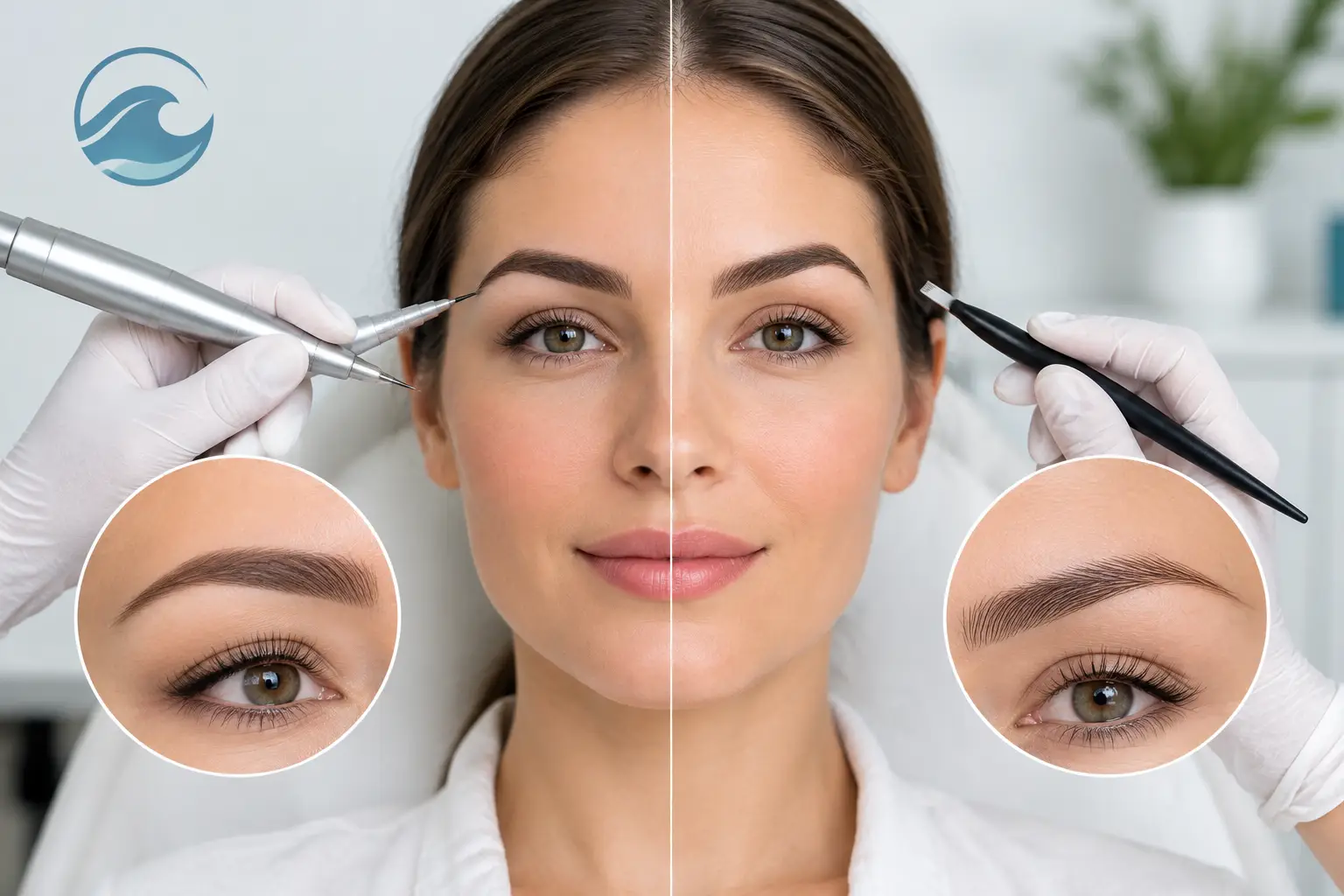
Microblading is a manual technique. A practitioner uses a small handheld tool made up of fine needles to place pigment in tiny, hair-like strokes through the upper layers of the skin. The goal is to mimic the look of natural brow hairs, making it particularly appealing when you want a soft, feathery result.
Cosmetic tattoo is a broader term for semi-permanent makeup. For brows, it often refers to a machine method that deposits pigment with a specialised tattoo device. Powder brows, ombré brows and combination brows all sit under this umbrella. Rather than relying only on individual hair strokes, cosmetic tattoo can create a gentle shaded effect, from very soft and airy through to a more defined makeup-style brow.
Neither technique should look harsh when it is selected and performed well. The difference lies in the method and finish: microblading focuses on hair-like detail, while cosmetic tattoo is usually more versatile for creating density, shape and shading.
The finish you can expect
If you naturally have reasonable brow hair but would like to fill small gaps or refine your shape, microblading may give the subtle enhancement you are after. At a normal conversational distance, well-healed microblading should blend with your own hairs rather than look drawn on.
Cosmetic tattoo can be equally natural, but it offers more options. A soft powder brow can resemble lightly filled-in makeup. An ombré style is typically lighter at the front and gradually more defined through the arch and tail. Combination brows can pair machine shading with carefully placed hair strokes, where suitable, for added texture.
Your desired look matters, but your current brow pattern matters too. Brows that are very sparse, asymmetrical or missing in sections may benefit from the structure that shading can provide. A skilled practitioner will map your brows around your facial features and work with, rather than against, your natural growth pattern.
Skin type can influence the better option
Skin is not a blank canvas. Oil production, texture, pore size, sun exposure and previous treatments can all affect pigment retention and how crisp a healed result appears.
Microblading often heals best on normal to dry skin with smaller pores. On very oily skin, hair strokes may soften, expand or blur more quickly over time. This does not mean microblading is impossible, but it does mean the result may not hold the fine, defined detail you saw immediately after treatment.
Machine cosmetic tattoo, particularly soft powder or ombré shading, can be a more predictable option for many oily or mature skin types. Because the technique is designed around gentle layers of pigment rather than relying entirely on crisp strokes, it can age more gracefully for some clients. It still requires individual assessment – there is no one brow treatment that suits every skin type.
Healing is part of the result
Freshly completed brows are not the final result. Both treatments normally appear darker, warmer or more defined in the first days of healing. As the skin recovers, light flaking can occur and the colour may seem to fade significantly before it settles back in. This stage can feel unsettling, especially if it is your first cosmetic tattoo experience, but it is a normal part of the process for many clients.
Microblading and cosmetic tattoo both need careful aftercare. Your practitioner will provide clear instructions based on the technique used and your skin. In general, this means avoiding picking or scratching, keeping the area protected as advised, and avoiding activities that may affect healing, such as swimming, heavy sweating and direct sun exposure for the recommended period.
A touch-up appointment is commonly needed after the initial session. This is not a sign that anything has gone wrong. Skin retains pigment differently from person to person, and the perfection appointment allows the practitioner to assess healed colour, refine the shape if needed and build longevity conservatively.
How long do cosmetic tattoo and microblading last?
Despite the word tattoo, brow cosmetic tattoo is not usually treated as a forever result. It gradually fades and refresh appointments are generally required to maintain the colour and shape. Longevity varies widely, though many clients find their brows need a colour boost somewhere around the one-to-three-year mark.
Microblading can fade sooner for some people, particularly those with oily skin, frequent sun exposure, an active lifestyle or a skincare routine that includes exfoliating ingredients around the brow area. Cosmetic tattoo shading may hold more evenly for others, but it also fades over time.
It is better to think of both as a commitment to maintenance, not a once-only treatment. Choosing a shape and colour that feels like you now, rather than following a short-lived trend, gives you the best chance of being happy between appointments.
Safety, suitability and choosing your practitioner
Brow tattooing is a treatment, not a quick beauty add-on. Hygiene standards, correct pigment selection, experienced technique and an honest suitability assessment all matter. At Coastal Skin Clinic, personalised guidance is central to helping clients make decisions they can feel comfortable with.
Before treatment, share your full health history, current medications, skin conditions, allergies and any previous brow tattoo work. Some situations may mean postponing treatment or seeking medical advice first. Active irritation, infection, a recent skin procedure in the area or certain medications can affect whether it is appropriate to proceed.
Previous cosmetic tattoo deserves special attention. Faded brows may appear simple to cover, but old pigment can influence the new colour and shape. In some cases, corrective work is possible; in others, lightening or removal may be worth considering before adding more pigment. A reputable practitioner will explain the trade-offs instead of promising an instant fix.
When choosing where to go, look beyond social media photos taken immediately after treatment. Ask to see healed results on a variety of skin types, discuss who will perform your procedure, and make sure you understand the aftercare and likely maintenance. You should never feel rushed into a brow shape or colour you are unsure about.
Which one is right for you?
Microblading may be the better fit if you have normal to dry skin, existing brow hair and a strong preference for fine, natural-looking strokes. Cosmetic tattoo may suit you better if you enjoy the look of softly filled brows, have oily or mature skin, want more visible definition, or need to create the appearance of density where hair is limited.
There is also room between the two. A soft combination brow may offer the texture you like with the durability and structure your skin needs. The answer is not always either-or.
The most flattering brows are not necessarily the boldest or most symmetrical ones. They are brows that suit your face, heal well in your skin and make your morning routine feel a little easier. A professional consultation gives you the space to ask questions, see what is realistic and choose a treatment plan with confidence.