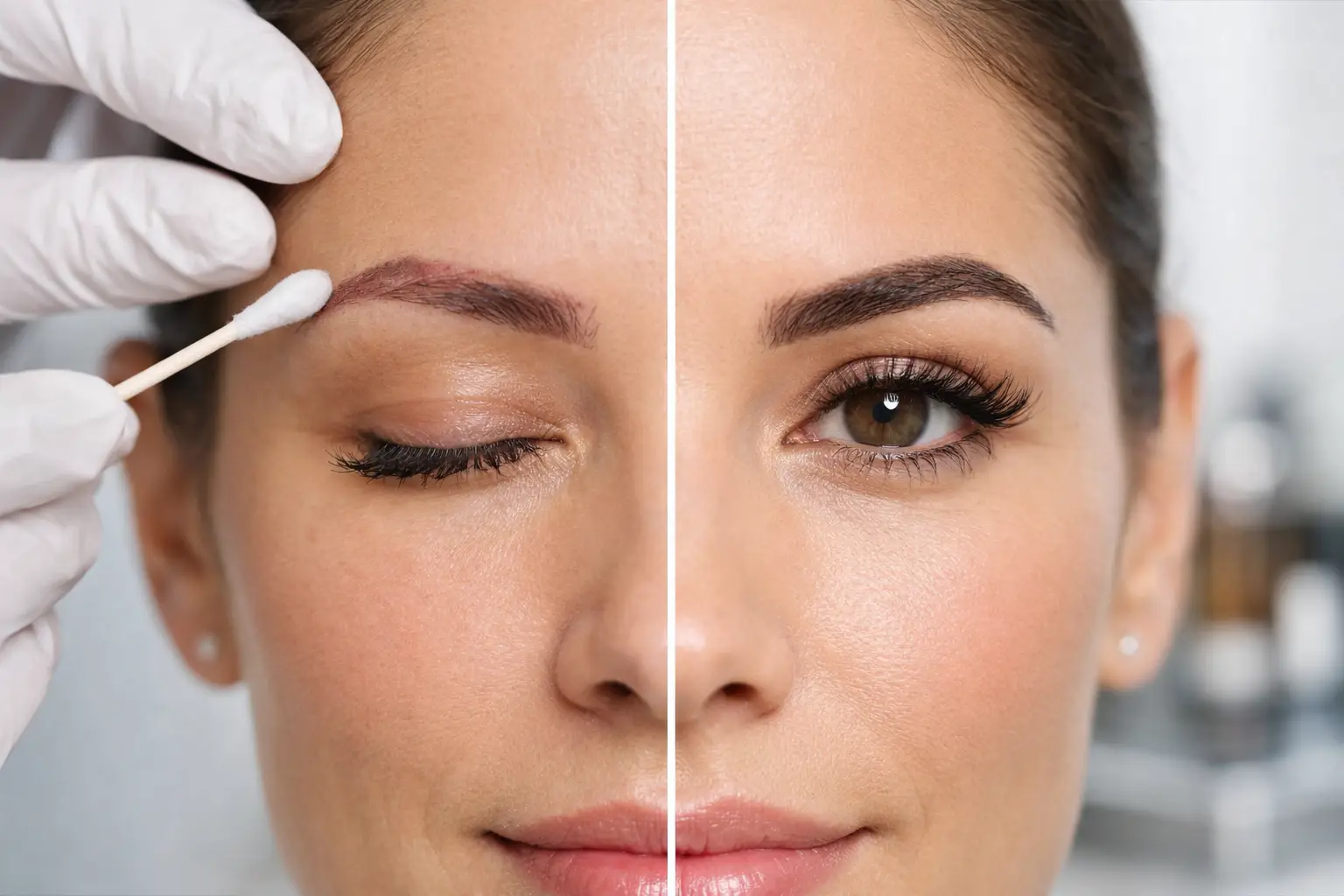
When someone searches for brow tattoo correction before after photos, they are usually not just curious about the treatment. They are trying to answer a more personal question – can this actually fix my brows without making them look worse first?
That is a fair concern. Correcting an old cosmetic tattoo, uneven shape, unwanted pigment shift or heavy-looking brow work is rarely a one-size-fits-all treatment. The best results come from careful assessment, realistic planning and choosing the right correction method for the skin, pigment and desired end result.
What brow tattoo correction before after really shows
Before-and-after images can be reassuring, but they only tell part of the story. A strong correction result is not always about taking a dark brow tattoo to nothing in one step. In many cases, success means softening harsh edges, lifting unwanted warmth, improving symmetry or creating a cleaner base for future brow work.
This matters because eyebrow tattoos age differently from person to person. Some fade cool and ashy. Others turn salmon, orange, grey or blue over time. Some become blurred as pigment migrates slightly in the skin. A client might also feel that the original shape sits too low, too square at the front or too thick for their face now. So when you look at brow tattoo correction before after outcomes, the real goal is improvement that suits the face – not a generic perfect brow.
Why brow tattoos need correction in the first place
Most clients seeking correction are not dealing with a dramatic treatment gone wrong. More often, they are living with brows that no longer match their features, style or skin tone. Trends change. Faces change. Skin changes too.
Pigment choice is one common issue. A shade that looked balanced initially can heal too cool or too warm, particularly as the years pass. Depth of implantation also plays a role. If pigment sits too deep, the brow can look flat, heavy or blurred rather than crisp and natural. Shape is another major factor. Even a technically well-applied tattoo may not age well if the original design was too bold, too close together or not in harmony with natural facial proportions.
There are also cases where previous correction attempts have added complexity. Covering an old brow with more pigment can sometimes make the area denser and harder to refine later. That does not always mean it cannot be improved, but it often means the treatment plan needs to be more measured.
Correction is not always the same as removal
This is where many people get confused. Brow tattoo correction can involve full or partial laser removal, colour reduction, reshaping, fading for a future refresh, or a combination approach. The right option depends on what is actually sitting in the skin and what the client wants next.
If the brow shape is too large or the pigment has shifted significantly, laser fading may be the best starting point. If the main problem is minor asymmetry or an outdated outline, partial correction may be possible after enough fading has been achieved. In some cases, the goal is not complete removal at all. It is to create a softer, cleaner canvas so a better-designed brow tattoo can be done later.
That is why consultation matters. A professional assessment should look at pigment tone, saturation, age of the tattoo, skin condition and previous treatment history before any plan is recommended.
What to expect from the treatment process
A proper correction plan usually starts slowly. The first appointment is less about rushing into treatment and more about understanding what will respond safely and predictably. Cosmetic brow tattoos sit on delicate facial skin, and treatment needs to respect that.
Laser correction is often chosen when the pigment needs to be lifted or reduced. Over a series of sessions, the tattoo can lighten enough to improve shape and colour, or to allow for future cosmetic tattooing with better balance. Not every pigment behaves the same way under laser, though. Some inks fade steadily. Others may temporarily shift tone before improving further. This is one reason experienced treatment guidance is so important.
Healing between sessions also matters. Skin needs time to recover, and pigment breakdown continues after the appointment itself. Chasing rapid change too aggressively can increase irritation without improving the final result.
Brow tattoo correction before after expectations
The most helpful expectation is this: good correction is usually gradual. Dramatic transformations do happen, but most excellent results come from a staged process rather than a single session.
Your before-and-after result will depend on several factors. Older pigment may respond differently from newer work. Black, brown, red-based and mixed pigments each have their own behaviour. Skin type, immune response and previous touch-ups also affect fading. If there is scar tissue from prior work, that can influence how evenly the area responds.
This is why promising an exact result upfront is not responsible. What a qualified provider can do is explain the likely pathway, the possible variables and whether your goals are realistic. For some clients, a successful outcome is near-complete clearance. For others, it is enough to remove the visible mistakes and make the brows look softer and more natural.
Common concerns clients have
Pain is usually one of the first questions, especially because the brow area is front and centre. Most people describe correction treatment as manageable, although sensitivity varies from person to person. The bigger concern for many clients is downtime. Immediately after treatment, the area may look slightly red or feel warm, and some temporary changes in appearance are normal while the skin settles.
Another common worry is whether the brows will look odd during the process. Sometimes they can, particularly if pigment is partway through fading and not yet at the final stage. That can be frustrating, but it is often part of moving from a result you dislike to one you feel confident with.
There is also understandable concern about damaging natural brow hair. When treatment is performed appropriately, protecting the skin and preserving the integrity of the area is a key priority. The approach should always be safe, measured and tailored.
When laser is likely to help most
Laser is often the best option when there is too much pigment, unwanted colour change or a shape that needs to be reduced rather than simply refined. It can be especially useful for old cosmetic tattoos that have become blocky, grey, blue or warm-toned over time.
That said, laser is not automatically the answer to every brow issue. If someone wants a brow redesign but the existing tattoo is only slightly visible, a less intensive approach may be appropriate. If the skin barrier is compromised or the area has been treated repeatedly, timing and skin preparation become even more important.
At a specialist clinic, the goal is not to sell the most treatment. It is to recommend the safest path that has a genuine chance of delivering a better cosmetic outcome.
Choosing a provider for brow correction
This is not a treatment to shop for on price alone. Brow tattoo correction sits at the intersection of laser knowledge, cosmetic tattoo understanding and facial aesthetics. A provider needs to assess not just whether pigment can be treated, but how the correction will sit on your face afterwards.
Look for clear consultation processes, honest discussion around limitations and a treatment plan that feels individual rather than rushed. You want someone who can explain why a brow has changed, what method suits it and what realistic progress looks like over time.
For clients on the Sunshine Coast, that often means looking for a clinic with both technical training and a calm, supportive approach. Brow correction can be emotional. Many people feel self-conscious before they even walk through the door. Being treated with professionalism and care makes a real difference.
The best before and after is the one that fits you
The most impressive result is not always the most dramatic photo. It is the correction that restores balance, softens what feels harsh and gives you back confidence when you look in the mirror.
Some brows need a full reset. Others just need careful fading and better shape planning. If your current tattoo feels too dark, too warm, uneven or simply no longer like you, there are often more options than you think. The right next step is not guessing from photos online. It is having your brows properly assessed, with a plan built around safe treatment and a result that makes sense for your face.
A good correction does more than change pigment. It gives you room to feel like yourself again.