Your new eyebrow tattoo may look more defined, darker or warmer than you expected when you first leave the clinic. That is normal. The way you care for your skin over the next couple of weeks has a real influence on how comfortably it heals and how evenly the colour settles. This guide to eyebrow tattoo aftercare will help you understand what is normal, what to avoid and when to contact your practitioner.
Every skin type heals differently, and your practitioner’s individual instructions always come first. The tattoo technique used, your skin condition, lifestyle and any previous cosmetic tattoo history can all affect your recovery. Think of aftercare as protecting a fresh, carefully placed treatment while your skin does its work.
Your guide to eyebrow tattoo aftercare
An eyebrow tattoo is a controlled treatment that places pigment into the upper layers of the skin. Although it is often described as semi-permanent makeup, the area still needs time to heal. During that period, keeping the brows clean, dry when directed and free from friction gives the pigment the best conditions to settle.
The goal is not to make the healing process happen faster. It is to avoid interrupting it. Picking, over-cleansing, applying unapproved products or exposing the area to heat and moisture can lead to patchy retention, irritation or unnecessary risk of infection.
The first 24 hours
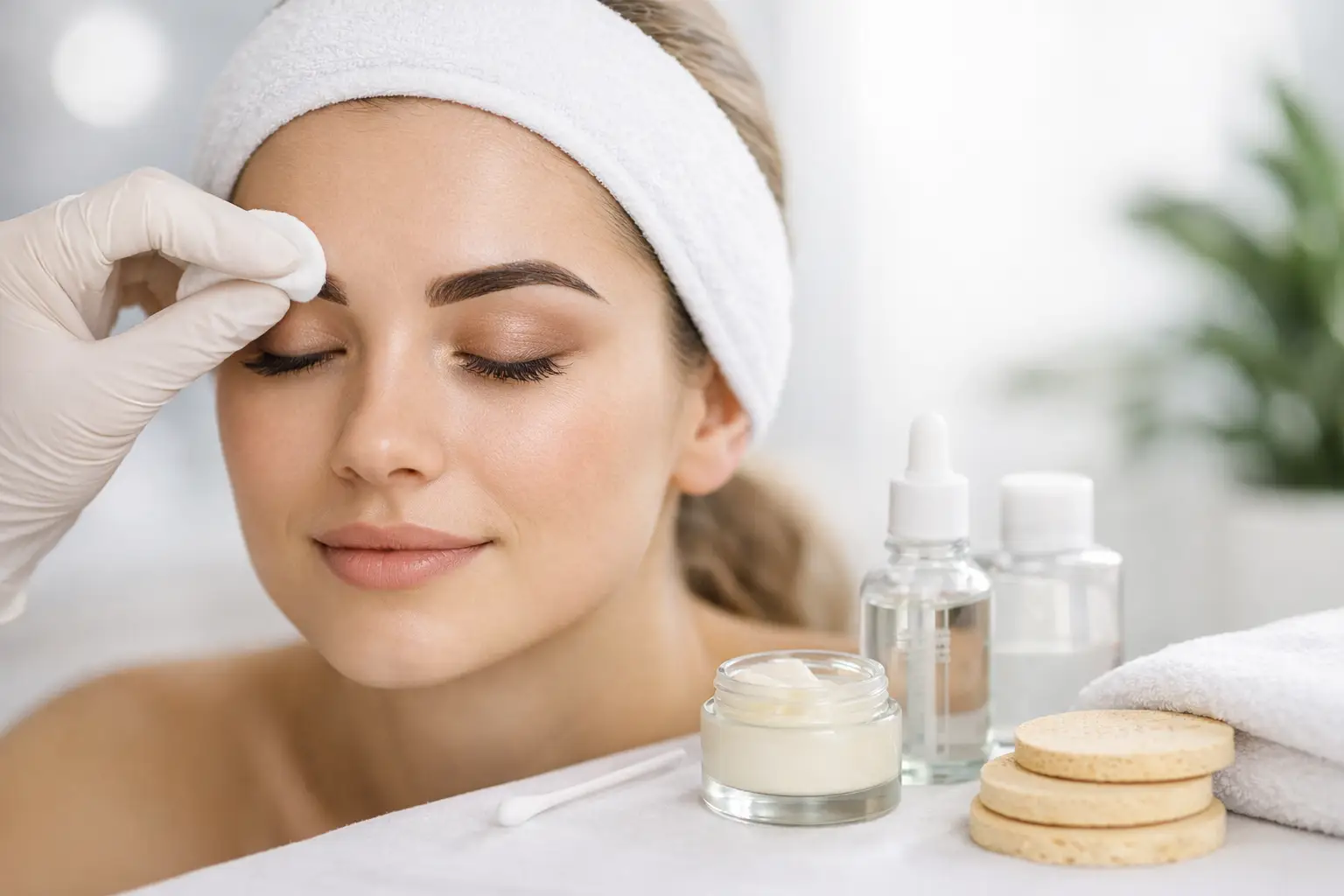
The first day is about gentle protection. Your practitioner will advise whether and how to blot the brow area, based on the technique used and your skin. If you have been instructed to blot, use only a clean tissue or sterile material as advised, with clean hands. Do not rub the area.
Avoid touching your eyebrows unless you need to complete your aftercare. Hands pick up everyday bacteria from mobiles, door handles, gym equipment and surfaces, so wash them thoroughly before going anywhere near the treated skin.
Skip makeup around the brows, including brow pencil, foundation and concealer. Keep hair products, skincare and perfume away from the area too. Even products that are usually gentle can irritate freshly treated skin.
Days 2 to 7: darker, dry and possibly flaky
This is often the stage that causes the most worry, particularly for first-time clients. Brows commonly appear darker and more defined before they soften. You may notice mild tightness, dryness, itchiness or fine flaking as the skin begins to renew.
Do not scratch, scrub or pick at flakes or scabs. It can be tempting to remove a small loose patch, but doing so may pull pigment from the healing skin and create uneven areas. Let any flaking lift naturally, even if the brows appear temporarily patchy.
Follow the cleansing routine provided by your practitioner. In many cases, this means gently cleansing as instructed, patting dry rather than rubbing, and applying only a very thin layer of the recommended aftercare product if one has been prescribed. More ointment is not better. A heavy layer can trap moisture and make the skin soggy.
You may need to take a short break from your usual active skincare routine. Keep retinoids, exfoliating acids, vitamin A products, scrubs and strong serums well away from the brow area until it has fully healed. If you are unsure whether a product is suitable, leave it out and ask your clinic.
Days 7 to 14: the colour can look lighter
As surface flakes come away, the tattoo can appear much lighter, softer or even as though some colour has disappeared. This is a common part of healing. New skin can temporarily sit over the pigment, creating a muted or hazy appearance before the colour gradually returns and settles.
This is not the time to judge your final result. Cosmetic eyebrow tattoos usually need a follow-up appointment after the initial healing period, where your practitioner can assess colour retention, shape and any areas that may benefit from refinement. Trying to correct light spots with makeup too early, or booking another treatment before the skin is ready, can compromise the outcome.
What to avoid while your brows heal
For approximately 10 to 14 days, or for as long as your practitioner advises, avoid activities and products that add heat, sweat, bacteria, friction or excess moisture to the brows. A little planning can protect the investment you have made in your treatment.
Avoid the following during the healing period:
- Swimming pools, the ocean, spas and saunas
- Intense exercise that causes heavy sweating
- Direct sun exposure, tanning and solariums
- Facial treatments, peels, waxing, threading and brow tinting
- Makeup and active skincare on or close to the treated area
- Long, hot showers that allow water to run directly over your brows
This does not mean you need to put life completely on hold. Gentle walks and normal day-to-day activity are usually fine, provided you avoid getting hot and sweaty. If your work involves heat, dust, water or physical activity, speak with your practitioner beforehand so you can plan your appointment and recovery time appropriately.
Sun protection matters once the skin has completely healed. UV exposure can contribute to premature fading and changes in pigment tone over time. After healing, use a broad-spectrum sunscreen around the brow area as part of your daily skincare routine, taking care not to apply it to broken or peeling skin.
Normal healing signs and when to call your practitioner
Mild redness, tenderness, tightness, itching and flaking can all be expected in the early stages. A small amount of clear fluid immediately after treatment may also occur. These signs should gradually improve, not become more intense.
Contact your practitioner promptly if you experience increasing pain, worsening redness, significant swelling, heat in the area, yellow or green discharge, a spreading rash or symptoms that concern you. If you develop signs of a severe allergic reaction, such as difficulty breathing or facial swelling, seek urgent medical care.
It is also worth getting in touch if you are simply unsure. A reputable clinic would rather answer a quick question than have you rely on conflicting advice from social media or well-meaning friends. At Coastal Skin Clinic, aftercare is part of the treatment experience, not an afterthought.
Small habits that support better retention
Clean pillowcases are a simple but worthwhile step for the first few nights. Try to sleep on your back where possible and avoid pressing your face into the pillow. Keep pets away from your pillow and take care when changing clothes, brushing your hair or washing your face so the brows are not accidentally rubbed.
Your long-term colour retention will depend on more than aftercare alone. Oily skin can soften pigment more quickly than dry skin, while frequent sun exposure, active skincare and regular exfoliating treatments may contribute to fading. This is why maintenance appointments are individual. Some people enjoy their colour for longer, while others prefer a refresh sooner to keep their brows looking balanced and defined.
Be open with your practitioner about any medications, skin conditions, previous tattoo work or treatments you are considering. Laser rejuvenation, chemical peels and other advanced skin services can be excellent options when planned correctly, but timing matters around a healing cosmetic tattoo.
Give your brows time to settle
The most reassuring thing you can do after an eyebrow tattoo is allow the process to unfold. Fresh brows rarely look like healed brows, and healed brows may still need a carefully planned perfection visit. Resist the urge to compare your day-three brows with someone else’s day-ten result.
Keep your aftercare simple, follow the advice tailored to you and ask for support whenever something does not feel right. A calm healing period gives your new brows the best chance to settle into the soft, natural-looking result you chose them for.