A little warmth, tightness and visible redness can be expected after a professional peel, but it is still unsettling when your skin feels unlike itself. Knowing how to calm skin after peel treatment means giving it a quiet, protected environment to recover, rather than trying to fix the redness with more products.
A peel deliberately accelerates the shedding of damaged surface skin to support clearer, smoother and more even-looking skin over time. The right aftercare depends on the type and strength of peel used, your skin condition and the treatment plan agreed with your practitioner. Your personalised post-treatment instructions should always come first.
How to calm skin after peel treatment
For the first few days, think gentle, simple and protective. Your skin barrier may be temporarily more vulnerable, so the goal is to reduce irritation while it repairs itself naturally.
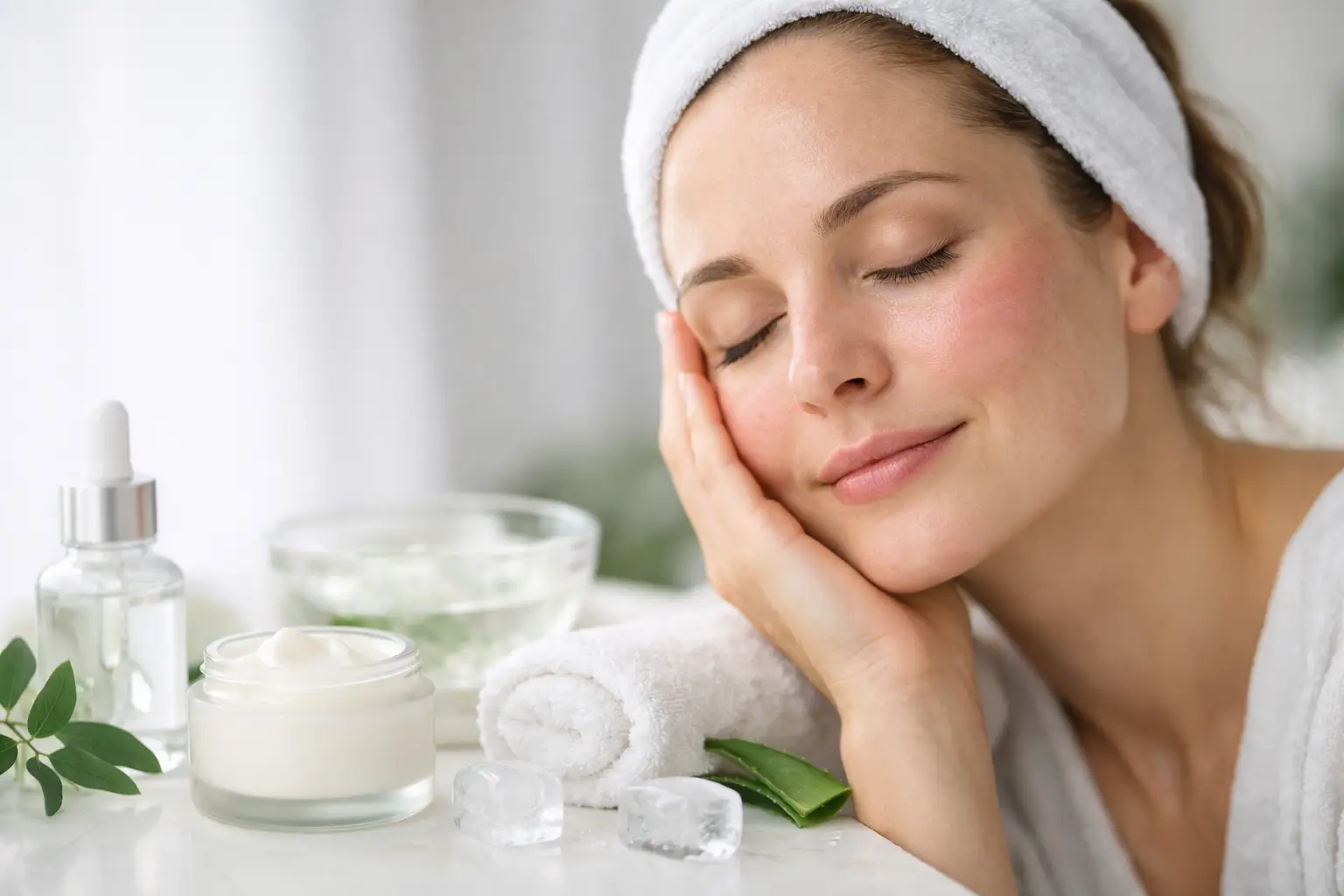
Cleanse only as directed by your practitioner, usually with cool to lukewarm water and a mild, non-active cleanser. Pat your face dry with a clean, soft towel rather than rubbing it. Follow with the recovery cream, moisturiser or soothing serum recommended for you. A plain, fragrance-free moisturiser can help relieve that dry, stretched feeling by supporting the skin barrier.
If your skin feels hot or flushed, use a cool compress for short periods. Choose a clean, soft cloth dampened with cool water, never ice directly on the skin. Ice can cause further stress to already sensitive skin, while a gentle cool compress can feel far more comfortable.
It is also wise to keep showers lukewarm, avoid vigorous exercise for the timeframe advised, and give saunas, steam rooms and hot yoga a miss. Heat can prolong redness and make post-peel sensitivity feel more intense.
Keep your routine deliberately boring
After a peel, the products that normally make your skin feel polished can become the products that make it sting. Put active skincare on pause until your practitioner says it is appropriate to restart. This commonly includes retinoids, exfoliating acids, scrubs, benzoyl peroxide, strong vitamin C products and at-home peel pads.
Avoid trying a new serum, face mask or spot treatment while your skin is recovering. Even products marketed as natural or gentle may contain fragrance, essential oils or botanical extracts that are not ideal on compromised skin. This is not the time to chase a glow with extra exfoliation. The peel has already done the work.
Make-up may also need to wait, particularly straight after treatment or while there is active peeling. If you have been cleared to wear it, use clean brushes or sponges and choose simple, non-irritating formulas. Heavy or long-wear products can be difficult to remove without rubbing the skin.
Do not pick, peel or scrub
Flaking is one of the most tempting parts of the healing process to interfere with. Resist it. Pulling at loose skin, using a facial scrub or rubbing with a towel can remove skin before it is ready, leading to irritation, prolonged redness and, in some cases, uneven pigment changes.
Let skin shed at its own pace. Depending on the peel, you may see light dryness, fine flaking or more noticeable peeling. You may also see very little visible peeling at all. Visible shedding is not a measure of whether your treatment has worked.
Sun protection is non-negotiable
Freshly treated skin is more sensitive to UV exposure. On the Sunshine Coast, where incidental sun exposure can happen on the walk to the car or while sitting outside for coffee, this matters even more.
Wear the broad-spectrum sunscreen recommended by your practitioner and reapply as directed. A wide-brimmed hat, sunglasses and shade provide valuable extra protection, especially during the first week. Try to avoid intentional sun exposure, tanning and sunbeds entirely while your skin is healing.
Sun exposure after a peel can increase the risk of irritation and unwanted pigmentation, particularly for people prone to dark marks or uneven tone. Protecting your skin is not simply about avoiding a burn. It helps protect the result you have invested in.
What is normal after a peel?
The recovery experience varies. A light superficial peel may cause temporary pinkness, dryness, mild tingling or subtle flaking. A stronger peel can bring more obvious redness, tightness, swelling and shedding, with a longer recovery period.
Your practitioner should explain what to expect before treatment, including how long redness and peeling may last for your individual peel. If you have an event coming up, it is always best to allow adequate recovery time rather than assuming your skin will look settled by a particular date.
Some sensitivity is normal, but discomfort should not be ignored. The safest approach is to contact your treating clinic if anything feels different from the aftercare expectations you were given.
When to contact your practitioner
Reach out promptly if you notice increasing pain, significant swelling, blistering, weeping, a rash, yellow crusting, spreading redness or signs that you may be having an allergic reaction. Also contact your clinic if the sensation is becoming more intense rather than gradually settling.
Do not attempt to treat a concerning reaction with leftover prescriptions, harsh antiseptics, exfoliants or advice from social media. Your skin may need a tailored response based on the peel used, your medical history and the way your skin is presenting.
At Coastal Skin Clinic, professional treatment is paired with clear aftercare guidance because your result is shaped by what happens after your appointment as well as during it. If you are unsure whether a symptom is normal, asking early is always the sensible choice.
Preparing for a smoother recovery next time
Good post-peel care begins before the treatment. Tell your practitioner about any changes in your skin, current skincare, recent sun exposure, cold sores, allergies or medications. These details can affect whether a peel is appropriate, the type of peel selected and the recovery advice you receive.
Plan to keep the following day as low-key as possible, particularly after a stronger treatment. Avoid booking a beach day, intense gym session, waxing appointment or other facial treatment straight afterwards. Your skin benefits from consistency, calm and time.
A professional peel is not meant to be a test of how much irritation you can tolerate. The best results come from the right treatment at the right strength, followed by patient, protective care. Be kind to your skin while it heals, and let your practitioner guide the next step when it is ready.