A tattoo you once felt sure about can start to feel out of step with who you are now. For some people, the goal is full removal. For others, it is simply lightening an old design enough to make way for a cleaner cover-up. Either way, understanding how tattoo fading works safely helps you make better decisions from the start and avoid treatment that is rushed, overly aggressive or poorly matched to your skin.
How tattoo fading works safely in the skin
Tattoo ink sits beneath the surface of the skin, not on top of it. That matters because fading is not about scrubbing, peeling or wearing the tattoo away. Safe fading relies on targeting ink particles under the skin in a controlled way, so the body can gradually clear them over time.
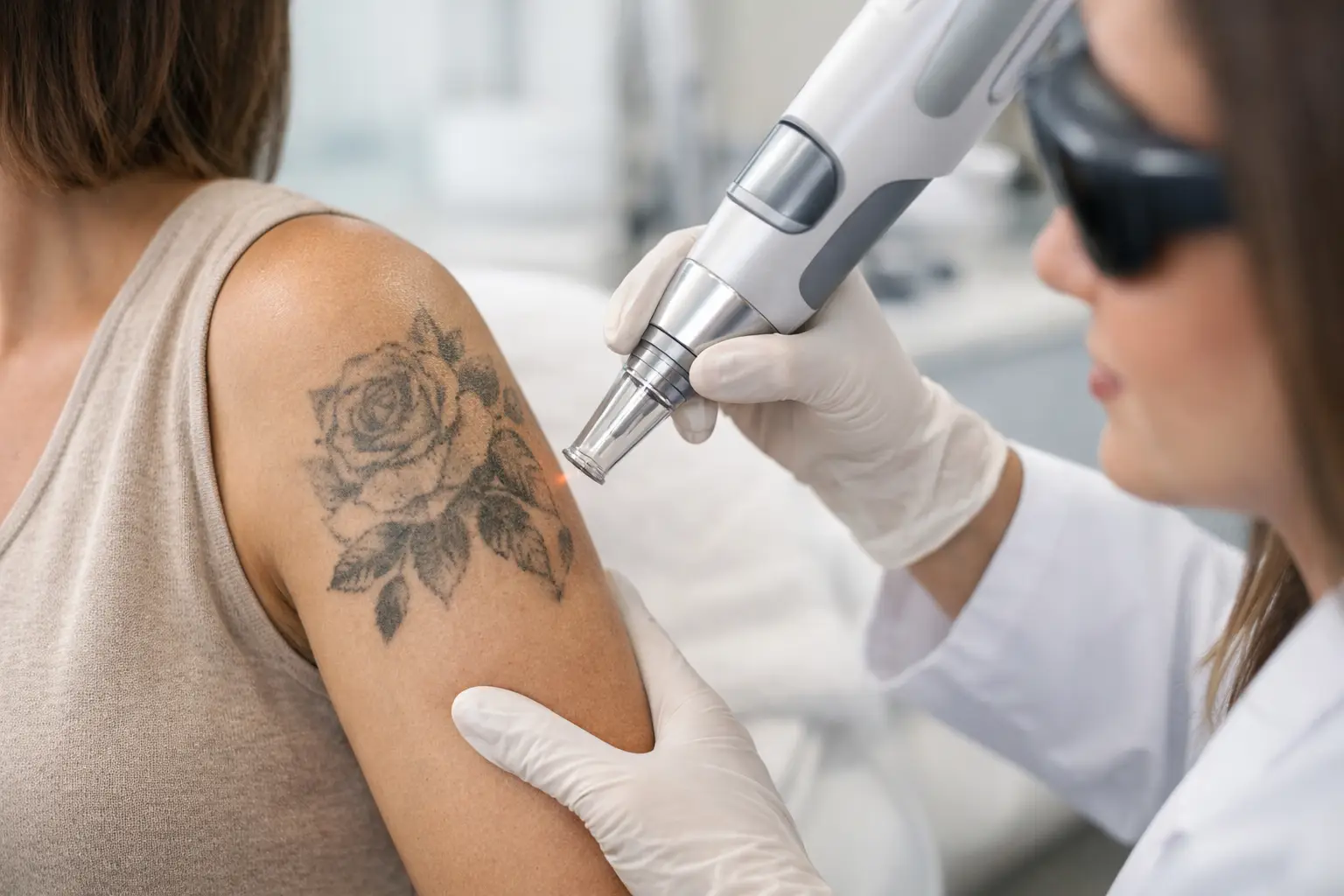
With professional laser treatment, short bursts of light energy are directed into the tattoo. The pigment absorbs that energy, and the larger ink particles break into smaller fragments. Once those fragments are small enough, your body’s natural clearing processes can start removing them bit by bit. This is why fading happens progressively rather than all at once.
A safe approach respects both parts of the process – the laser response and the body’s healing response. If treatment is too harsh, too frequent or unsuitable for the skin type and tattoo, the risk of irritation, blistering, pigment change and scarring goes up. Effective treatment is not the same as aggressive treatment.
Why safe fading is never one-size-fits-all
Two tattoos can look similar on the surface and respond very differently in treatment. Ink colour, tattoo age, depth of pigment, density, body placement and your skin tone all play a role in how quickly fading occurs and how carefully settings need to be chosen.
Black ink often responds more readily because it absorbs laser energy well. Colours such as green, blue and some reds can be more stubborn. Professional tattoos may contain denser, more deeply placed pigment than amateur tattoos, which can mean more sessions. Tattoos on areas with stronger circulation can sometimes fade more efficiently than those on hands, feet or lower legs.
Your medical history and skin history also matter. If you are prone to pigmentation changes, have active skin irritation in the area, are using certain medications or have recent sun exposure, treatment planning needs to take that into account. This is where a proper consultation becomes essential rather than optional.
What a safe consultation should cover
Before any treatment starts, a qualified practitioner should assess the tattoo, your skin and your goals. That includes whether you want complete removal or fading for a cover-up, because those are related but not identical treatment pathways.
A thorough consultation should look at the tattoo’s colours, size, age and placement, while also discussing your health history, previous treatments, tanning habits and how your skin typically heals. It should also include realistic guidance on session numbers. No responsible clinic can promise an exact number without seeing how your body responds over time.
Just as importantly, you should leave that appointment understanding the likely timeline, expected aftercare and possible side effects. Safe. Effective. treatment starts with clear expectations.
How tattoo fading works safely over multiple sessions
One of the biggest misconceptions about tattoo removal is that more treatment, closer together, means faster results. In reality, your skin needs time to recover and your immune system needs time to process the broken-down ink.
That is why sessions are spaced apart. The gap between appointments is not dead time. It is part of the treatment. Much of the visible fading happens in the weeks after a session, not on the day itself.
Rushing treatments can increase the chance of unwanted skin reactions without giving you better clearance. A carefully spaced treatment plan usually produces safer, steadier results. For clients wanting a cover-up, this can be especially helpful because the aim is often enough fading to give the tattoo artist more freedom, not necessarily to erase every trace of pigment.
Why professional equipment and training matter
When people ask how tattoo fading works safely, the real question is often who should be doing it. The answer is simple: it should be performed by trained professionals using suitable medical-grade technology in a properly regulated setting.
Different lasers and wavelengths target different pigments. Choosing the right settings involves more than matching a machine to a tattoo. The practitioner needs to assess skin tone, ink response, treatment history and the area’s healing capacity. That level of judgement is difficult to replace with generic advice or bargain-based treatment decisions.
Licensing and clinical standards matter too. A QLD Health licensed environment gives clients an extra level of reassurance that safety protocols, equipment standards and treatment procedures are being taken seriously. That matters when your skin is healing from repeated energy-based treatments.
Side effects versus warning signs
Some skin response is expected after laser tattoo fading. Temporary redness, whitening or frosting, mild swelling and sensitivity in the area can all be part of the normal short-term reaction. Some clients may also notice light crusting or blistering, depending on the tattoo and treatment intensity.
That said, normal does not mean something to ignore. You should always know what your aftercare instructions are and when to contact the clinic. Increasing pain, spreading redness, unusual discharge or delayed healing should be reviewed promptly.
A professional clinic does not just perform the treatment and send you on your way. It should guide you through aftercare clearly and be available if healing does not look or feel right.
The role of aftercare in safe fading
Aftercare is not a minor detail. It has a direct effect on healing and on how safely your skin moves through the treatment process.
The area needs to be kept clean, protected from friction and managed according to the instructions you have been given. Picking, scratching or trying to speed up peeling can interfere with healing and increase the chance of marks or infection. Sun protection is also a major factor. Recently treated skin can be more vulnerable, and excess sun exposure can increase the risk of pigmentation issues.
Hydration, general health and immune function can also influence progress. While aftercare does not replace the treatment itself, it supports the skin’s recovery and gives each session the best chance to do its job properly.
Fading for removal versus fading for a cover-up
Not every client wants the same end point, and this is where a tailored approach becomes especially important. If your plan is complete removal, the treatment strategy may focus on gradual clearance across the full tattoo until little to no visible pigment remains.
If your goal is a cover-up, the approach can be more selective. You may only need enough fading to soften heavy lines or reduce dense dark sections so a tattoo artist can work more cleanly over the top. In some cases, fewer sessions are needed. In others, strategic fading is still a longer process than expected because the existing ink is particularly saturated.
This is why good advice matters. The safest plan is the one built around your actual goal, rather than a generic package.
What can affect your final result
Tattoo fading can achieve excellent results, but it is best understood as a process with variables rather than a fixed formula. Some tattoos clear very well. Others leave a faint shadow, slight textural change or residual pigment in certain colours.
That does not mean treatment has failed. It means biology, ink composition and skin response all influence the outcome. Older tattoos may respond better than fresh ones, but not always. Smaller tattoos may seem easier, yet very dense blackwork can still take time. Lighter skin and darker ink can create favourable contrast for some laser systems, but experienced treatment planning is still essential across a wide range of skin tones.
An honest clinic will talk you through these trade-offs early. Reassurance is important, but so is transparency.
Choosing a clinic with confidence
If you are considering treatment on the Sunshine Coast, look for a clinic that treats tattoo fading as a clinical service, not a quick cosmetic add-on. You want practitioner experience, suitable technology, proper licensing, realistic treatment planning and clear aftercare support.
You should also feel comfortable asking questions. A caring clinic will explain what is possible, what is less predictable and what your skin needs between sessions. That kind of guidance often makes the difference between feeling unsure and feeling supported.
At Coastal Skin Clinic, that supportive approach is part of what helps clients feel confident enough to begin.
Tattoo fading is rarely about erasing the past overnight. More often, it is about creating space for what comes next, with the right advice, the right treatment pace and skin that is cared for properly at every step.