If you are weighing up facial peel vs laser resurfacing, you are probably not looking for a trendy treatment. You want clearer, smoother, healthier-looking skin and you want to choose well. The tricky part is that both options can improve tone, texture and signs of ageing, but they work in very different ways and suit different skin concerns, skin types and downtime limits.
A good consultation should make this decision feel simpler, not more confusing. The right treatment is not just about what sounds stronger or more advanced. It is about what your skin actually needs, how much recovery time you can manage and what result matters most to you.
Facial peel vs laser resurfacing: what is the difference?
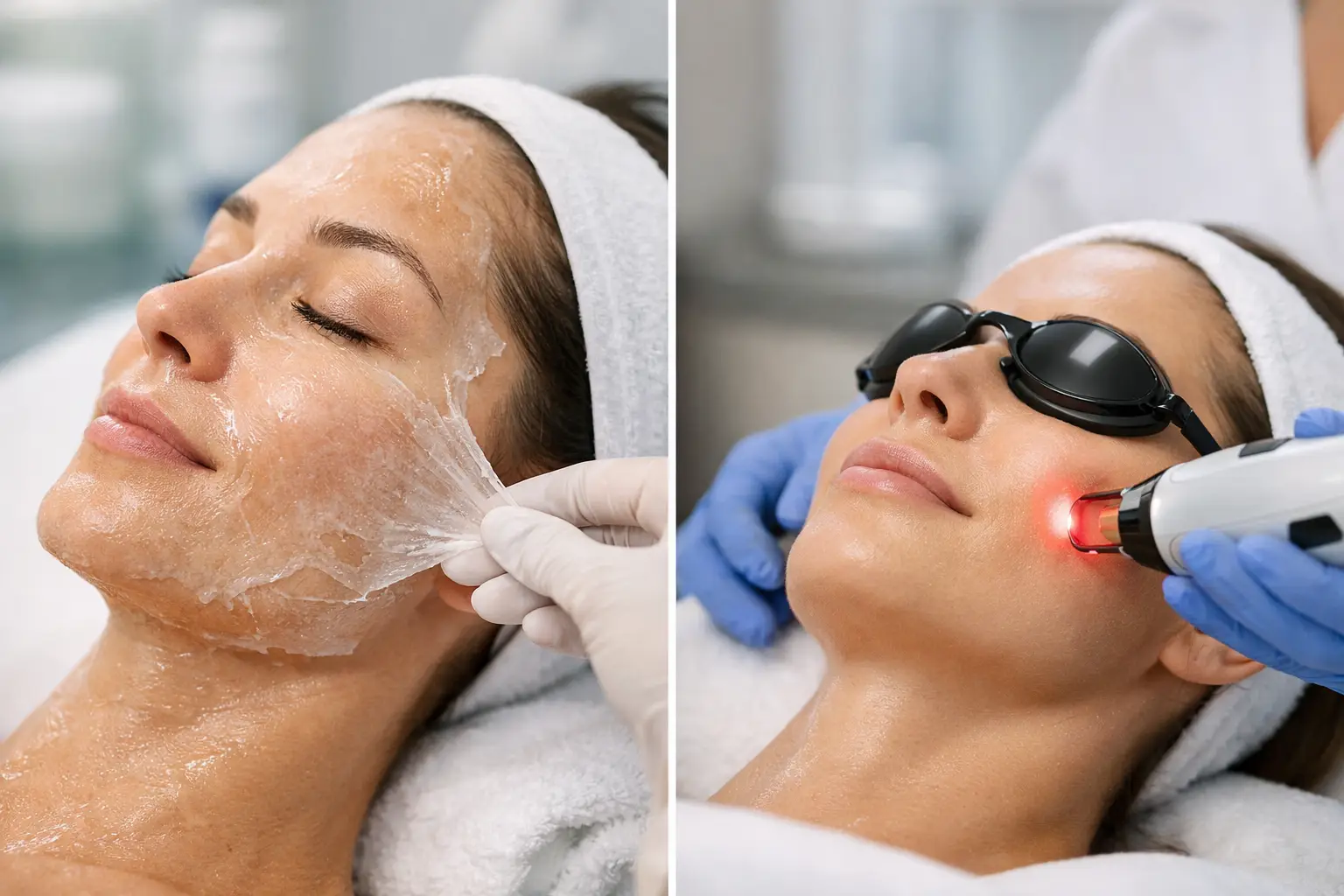
A facial peel uses a chemical solution to exfoliate the skin in a controlled way. Depending on the type and strength, it can target dullness, uneven pigment, congestion, acne, fine lines and overall skin refreshment. Some peels work very superficially, while others reach deeper layers for more corrective results.
Laser resurfacing uses concentrated light energy to create controlled injury in the skin, stimulating renewal and collagen production. Some lasers target the surface more directly, while others work deeper to improve texture, sun damage, scarring and wrinkles. CO2 laser resurfacing, for example, is often chosen when more visible correction is needed.
That means the main difference is not simply peel versus laser. It is the depth of treatment, the level of correction and how precisely the treatment can be tailored to your skin condition.
When a facial peel is often the better fit
Facial peels are often an excellent starting point for clients who want visible improvement without significant downtime. They can brighten tired skin, improve mild pigmentation, support acne-prone skin and soften early signs of ageing. For many people, a peel feels like a practical middle ground between a relaxing facial and a more intensive corrective treatment.
If your concerns are relatively mild to moderate, a peel may be all you need. This is especially true if your skin feels rough, looks dull, breaks out regularly or has uneven tone from sun exposure or post-inflammatory pigment.
Peels can also be useful if you prefer a gradual treatment plan. Rather than one stronger procedure, some clients do better with a series of professional peels spaced over time. This can create steady improvement with less interruption to work, social plans and exercise.
Another advantage is flexibility. There are different peel formulations for different skin behaviours, so treatment can be adjusted to suit sensitive, oily, acne-prone or ageing skin. That personalised approach matters, because not every skin concern needs the strongest option available.
When laser resurfacing may give better results
Laser resurfacing is often better suited to clients who want a more corrective outcome. If your main concerns are deeper lines, acne scarring, sun damage, crepey texture or more advanced skin ageing, laser treatment can often achieve results that a peel cannot match.
This is largely because laser technology can work with greater precision and, in many cases, stimulate more significant collagen remodelling. That makes it particularly useful for texture changes and structural concerns in the skin.
For some clients, laser resurfacing can also deliver a bigger result in fewer sessions. That does not always mean it is the better option, but it can be appealing if you are ready for a more committed treatment plan and some recovery time.
The trade-off is that laser resurfacing is usually more intensive. There may be more redness, heat, peeling or social downtime, depending on the device used and the treatment depth. It also requires careful assessment, because not every laser is suitable for every skin tone or condition.
Facial peel vs laser resurfacing for common skin concerns
If you are mainly concerned about dullness, roughness, minor breakouts or mild uneven pigment, a facial peel is often a strong choice. It can refresh the skin, help regulate congestion and create a brighter overall appearance without pushing the skin too hard.
If acne scarring or deeper textural irregularities are the issue, laser resurfacing often has the edge. This is where collagen stimulation becomes especially valuable, because the goal is not only smoother skin at the surface but structural improvement over time.
For fine lines, the answer depends on how established they are. Early fine lines may respond well to a series of peels, especially when combined with a good home skincare plan. More pronounced lines and sun-related ageing often respond better to laser treatment.
Pigmentation is a little more nuanced. Some pigment responds beautifully to peels, while some cases do better with laser-based treatment. But pigmentation also needs caution, particularly if the skin is prone to post-inflammatory hyperpigmentation. This is one reason a professional skin assessment matters so much. Treating pigment without a proper plan can make it more noticeable instead of less.
Downtime, comfort and recovery
For many clients, the real decision comes down to recovery.
A light to medium facial peel may involve some tightness, dryness or flaking for a few days. In some cases, you may simply look a little pink and then gradually brighter. Deeper peels can involve more peeling and a longer healing period, but many professional peels fit comfortably into a busy routine.
Laser resurfacing usually asks more of you during recovery. Depending on the treatment type, you may experience redness, swelling, heat, peeling and a stronger feeling of skin sensitivity. Some laser treatments are quite manageable, while others require a more obvious period of healing before the skin settles.
Neither option should be chosen based on downtime alone, but it is a practical part of the decision. If you have work events, family commitments or simply do not want visible recovery, that should be part of the conversation from the start.
Safety matters more than trends
Skin treatments are not one-size-fits-all, and stronger does not automatically mean better. Safety depends on choosing the right treatment for the right person, performed by someone with the training and technology to assess your skin properly.
This is especially important if you have sensitive skin, a history of pigmentation, active acne, rosacea, melasma, recent sun exposure or a deeper skin tone. These factors do not rule out treatment, but they do change what is appropriate.
A qualified practitioner should ask about your skin history, current skincare, medications, previous treatments and the result you want. They should also be honest about what is realistic. Sometimes a peel is the wiser first step before moving to laser later. Sometimes laser is the treatment that makes the most sense from day one. And sometimes a combined plan, spaced correctly, gives the best result of all.
Why consultation-led treatment plans work best
Online comparisons can only take you so far. Two clients can both search facial peel vs laser resurfacing and need completely different advice.
One person may have mild sun damage and want a fresher look before an event. Another may be trying to improve long-standing acne scarring and texture. One may be new to professional skin treatments and want a gentle start. Another may be ready for a stronger corrective option because they have already tried peels and reached a plateau.
That is why personalised planning matters. In clinic, the skin can be assessed properly, your goals can be prioritised and a treatment plan can be built around your timeline, tolerance and budget. At Coastal Skin Clinic, that tailored approach is a big part of helping clients feel confident in their decision rather than pressured into a treatment that is not the right fit.
So which one should you choose?
Choose a facial peel if your goals are refreshment, brightness, mild pigment correction, acne support or early anti-ageing with lighter downtime. Choose laser resurfacing if you want stronger correction for texture, deeper lines, acne scarring or more visible sun damage and you are prepared for a more intensive treatment and recovery.
The better question, though, is not which treatment is better overall. It is which treatment is better for your skin right now.
When skin treatment is done well, it should feel clear, calm and personalised. If you are unsure where to start, a professional consultation can take the guesswork out of the process and give you a plan that fits both your skin and your life.