Rough skin texture often shows up where you least want it: make-up catching around the cheeks, a dullness that does not lift with your usual skincare, or small dry-looking patches that make skin feel less smooth than it used to. Microdermabrasion for rough texture is a professional exfoliation treatment that can help refresh the skin’s surface and support a softer, brighter-looking complexion without significant downtime.
At Coastal Skin Clinic, we approach texture concerns with care rather than a one-size-fits-all facial. Roughness can have several causes, from a build-up of dead skin cells and dehydration to sun exposure, congestion, acne scarring or changes in skin as it matures. Understanding what is happening in your skin is the best starting point for a treatment plan that feels safe, effective and realistic.
What causes rough skin texture?
Skin naturally sheds dead cells, but this process can slow or become uneven. When old cells remain on the surface, the complexion may look dull and feel coarse. Dehydration can make fine lines and flaky areas more noticeable, while congestion may create a bumpy feel across the forehead, nose, chin or jawline.
Sun exposure also plays a role. Over time, it can affect the quality and appearance of the skin, contributing to uneven tone and texture. Previous breakouts may leave behind marks or shallow textural changes, which can be frustrating long after active acne has settled.
This is why rough texture is not always just an exfoliation issue. A facial treatment may be the right option for one person, while another may benefit from a different approach, such as a medical-grade peel or laser rejuvenation. A professional consultation helps separate a surface-level concern from a more complex one.
How microdermabrasion for rough texture works
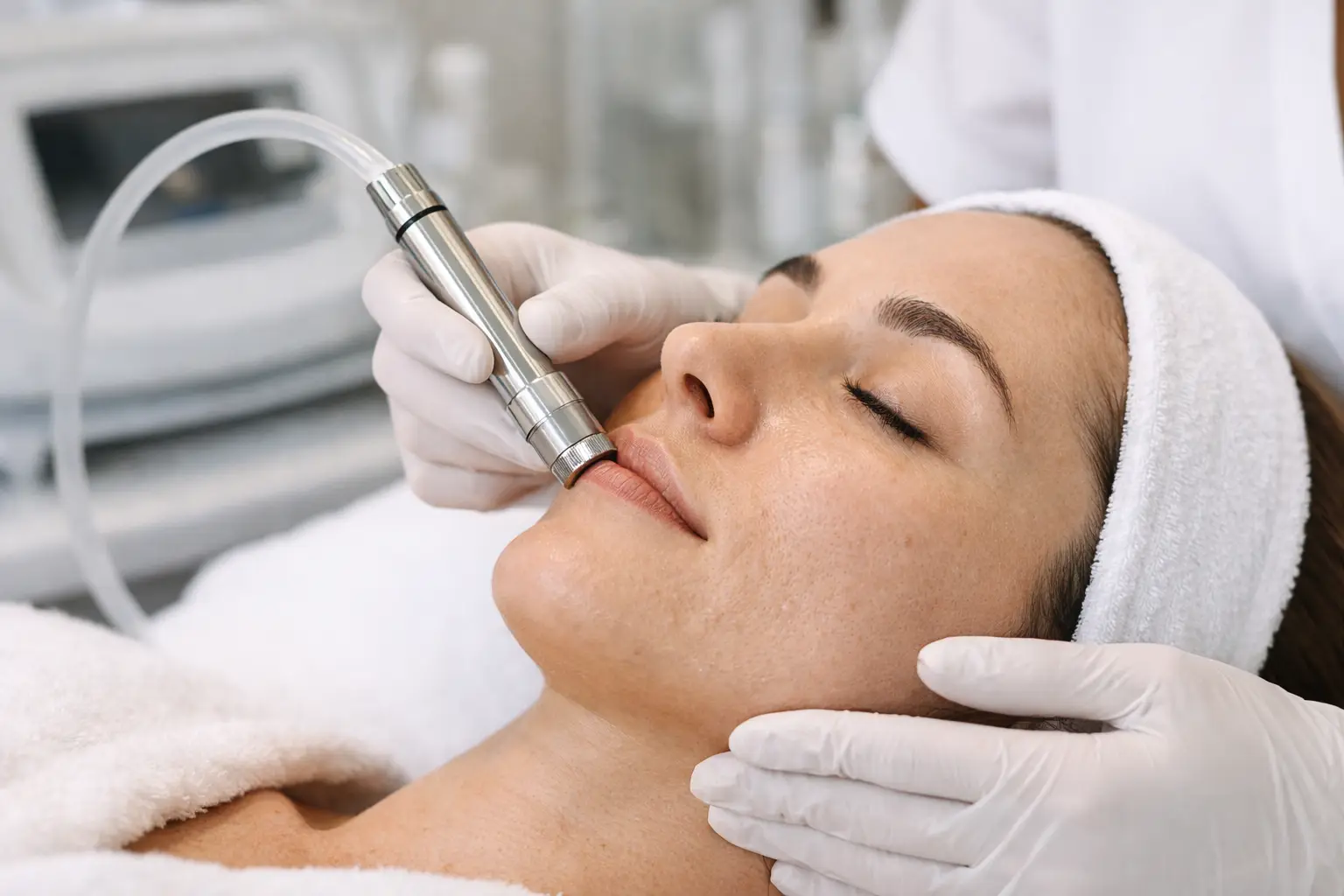
Microdermabrasion is a controlled mechanical exfoliation treatment. Using a professional device, your practitioner gently removes the outermost layer of dead skin cells while suction helps clear away the loosened debris. The treatment is designed to refine the feel and appearance of the skin’s surface, not to aggressively strip it.
Most clients describe the sensation as a light scratching or vacuum-like feeling. It is generally comfortable, and treatment can be adjusted according to the sensitivity and condition of your skin. Afterwards, your skin may look mildly pink, similar to a light flush after exercise, but this usually settles quickly.
By clearing excess surface build-up, microdermabrasion can leave the skin feeling smoother and looking more refreshed. It may also help skincare products sit more evenly on the skin. For clients who feel that make-up looks patchy or that their complexion has lost its glow, this can be a welcome change.
What results can you expect?
Many people notice a smoother feel and brighter appearance soon after their first appointment. The clearest results tend to build over a course of treatments, particularly when roughness has developed gradually or is linked to ongoing congestion and uneven shedding.
Microdermabrasion can be a useful choice for mild rough texture, dullness, superficial congestion and dry-looking surface build-up. It can also be used as part of regular skin maintenance for people who enjoy the polished, fresh feeling that professional exfoliation provides.
However, it is important to keep expectations grounded. Microdermabrasion will not erase deep acne scars, tighten significant loose skin or treat every cause of uneven texture. Deeper textural scarring and more advanced sun-related changes may respond better to a different rejuvenation treatment or a staged plan that combines treatments over time. Honest advice matters, especially when you are investing in your skin.
Is microdermabrasion suitable for your skin?
Suitability depends on your current skin health, sensitivities and goals. Microdermabrasion may be appropriate for many skin types, but it is not the right treatment at every appointment. If your skin is irritated, sunburnt, actively inflamed, experiencing a rosacea flare or has open lesions, it may be best to wait or choose a gentler option.
Clients using strong active skincare products may also need tailored advice before treatment. Retinoids, exfoliating acids and some acne products can increase sensitivity, so your practitioner may recommend pausing certain products beforehand. This is one reason professional treatment is different from simply using a harsh scrub at home.
Skin with darker pigmentation needs thoughtful assessment too. Any exfoliation treatment must be selected and performed carefully to minimise unnecessary irritation, which can sometimes contribute to post-inflammatory pigmentation. Your practitioner should assess your skin, discuss your history and recommend a plan that puts skin health first.
When a different treatment may be better
If roughness is paired with deep scarring, significant pigment changes, persistent redness or active acne, microdermabrasion may not be the full answer. It can still have a place in your routine, but it should not be presented as a cure-all.
A consultation allows us to look at the depth of the concern, the condition of your skin barrier and the outcome you would like to achieve. In some cases, a carefully selected peel or laser skin rejuvenation treatment may be more appropriate. In others, the best first step is simply restoring hydration and calming the skin before introducing active treatments.
Preparing for your appointment
Keeping your skincare routine gentle before microdermabrasion helps your skin arrive in a settled condition. Avoid tanning, prolonged sun exposure and at-home exfoliation in the days leading up to your treatment. If you are unsure about a product you use, bring it up during your consultation rather than guessing.
It is also helpful to arrive with clean skin where possible and to let your practitioner know about any recent changes, including breakouts, sensitivity, medications or other facial treatments. This information is not a formality. It helps your treatment be adjusted for your skin on the day.
Aftercare makes a difference
Your skin is more receptive after professional exfoliation, but it can also be temporarily more sensitive. A simple, supportive routine is usually best. Use a gentle cleanser, moisturiser and broad-spectrum sunscreen, particularly in the Sunshine Coast climate where UV exposure is part of everyday life.
For a few days, avoid scrubs, exfoliating acids, retinoids and other strong active products unless your practitioner advises otherwise. Skip excessive heat where possible, including saunas and very hot showers, if your skin feels warm or flushed. Do not pick at any dry areas – allow the skin to settle naturally.
The goal is not to chase an over-exfoliated glow. Healthy skin should feel comfortable, hydrated and balanced. If you experience unexpected irritation or have any concern after your appointment, contact your clinic for guidance.
Building a plan for smoother-looking skin
A single microdermabrasion treatment can be a lovely reset before an event or when skin feels dull, but ongoing texture concerns often respond best to consistency. The ideal frequency varies based on your skin condition, sensitivity and the treatments you are combining. More is not always better.
At Coastal Skin Clinic, treatment plans are personalised around your skin, your lifestyle and your confidence goals. We will explain what microdermabrasion can reasonably achieve, when another treatment may offer greater benefit, and how to care for your results at home. You should feel informed, comfortable and never pressured.
Smoother skin is rarely about one dramatic appointment. It is often the result of thoughtful professional care, daily sun protection and choosing treatments that respect what your skin needs right now.