Your skin may look brighter straight after a peel, then feel tight, dry or mildly sensitive over the following days. That shift can be surprising, particularly if you were expecting instant, polished results. This guide to post peel skincare is designed to help you protect your skin while it renews, minimise unnecessary irritation and know when to ask your therapist for support.
A professional peel is a controlled treatment, but your aftercare has a real influence on how comfortably your skin recovers. The exact advice will depend on the type and strength of peel you have had, your skin concerns and how your skin responds. Your personalised aftercare instructions should always come first.
What your skin is doing after a peel
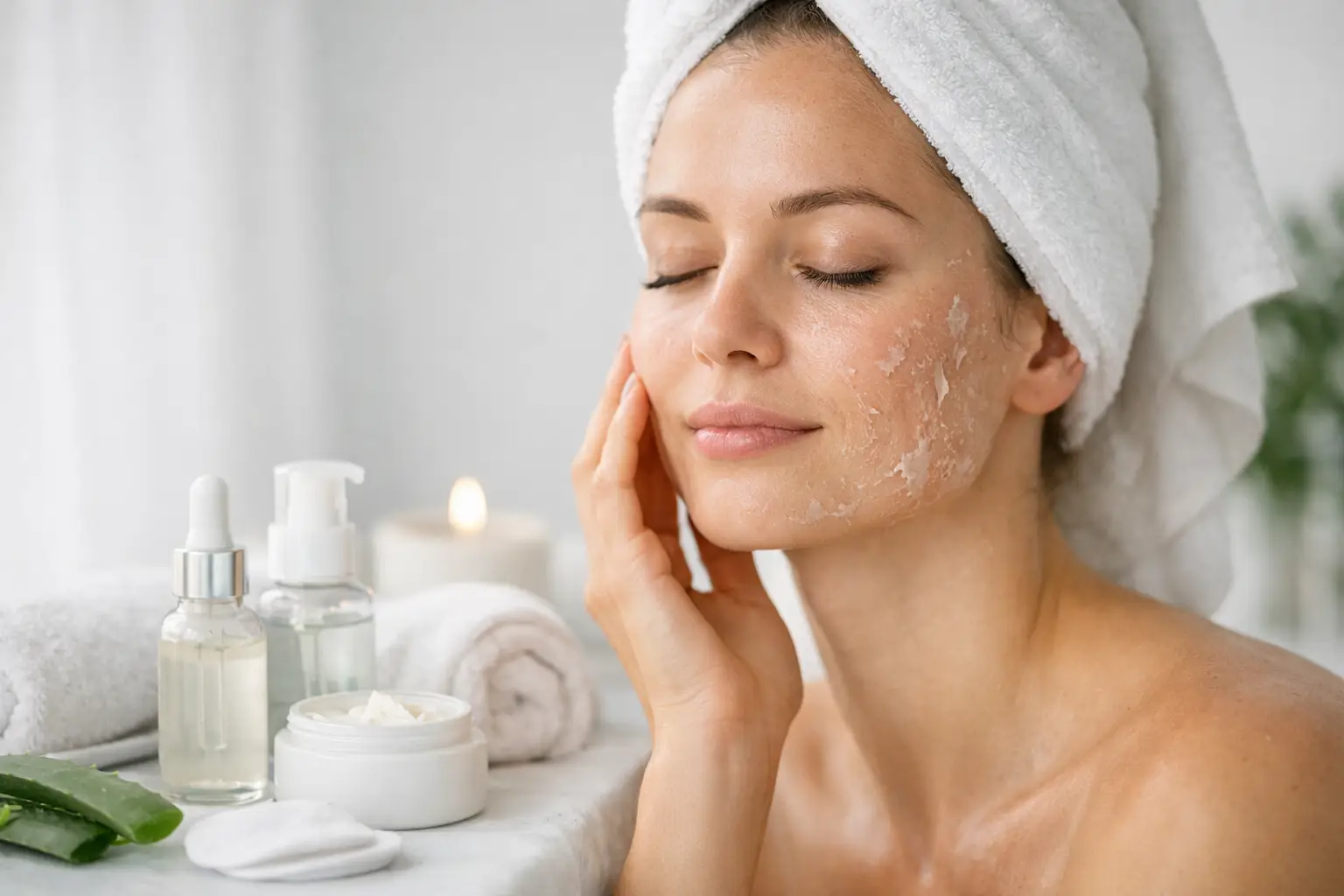
A peel encourages the skin to shed damaged surface cells and begin a renewal process. Depending on the treatment, you may experience redness, warmth, dryness, light flaking or visible peeling. Some clients peel very little, while others notice more obvious shedding around the nose, mouth and chin.
More peeling does not automatically mean a better result. Skin does not need to visibly shed in sheets for a peel to be working. The goal is healthy, supported skin that can recover properly, not forcing the process along.
For many superficial peels, redness and tightness settle within a day or two, followed by mild dryness or flaking. Stronger professional treatments may involve a longer recovery period. Your therapist will explain what is normal for your specific treatment before you leave the clinic.
The first 24 hours: keep your routine calm
Think of the first day after a peel as a time to reduce heat, friction and unnecessary product use. Your skin barrier is temporarily more vulnerable, so simple care is usually best.
Cleanse only as directed, using cool to lukewarm water and a gentle, non-active cleanser if you have been advised to use one. Pat your face dry with a clean, soft towel rather than rubbing. Follow with the recommended moisturiser or recovery product to support hydration and comfort.
Avoid hot showers, saunas, steam rooms, vigorous exercise and anything that leaves your face hot or flushed. A hard workout, a long hot shower or a day in the Sunshine Coast heat can intensify redness and sensitivity. If your skin feels warm, stay cool and give it time.
It is also wise to keep make-up to a minimum immediately after treatment. If you need to wear it, follow your therapist’s guidance and use clean brushes or applicators. Freshly treated skin is not the time to test a new foundation, facial oil or trending active serum.
A guide to post peel skincare: what to use
The best post-peel routine is usually short, gentle and consistent. Use the products recommended by your treating professional, particularly in the first several days. They understand the peel used, your treatment goals and any history of sensitivity, pigmentation or breakouts.
In most cases, your routine will focus on three basics: a mild cleanser, a soothing moisturiser and daily sun protection. Hydration can ease the tight, papery feeling that sometimes follows a peel, while moisturiser helps support the skin barrier as it recovers.
Sunscreen is non-negotiable. Apply a broad-spectrum SPF 50+ sunscreen every morning, even if you are mostly indoors or it is overcast. Reapply when you are outdoors, especially after sweating, swimming or spending time near windows. A hat and shade add another layer of protection.
After a peel, new skin can be more susceptible to sun damage and post-inflammatory pigmentation. This is especially relevant for anyone treating uneven tone, sun damage or pigmentation. Protecting your skin from UV exposure helps preserve the result you have invested in.
What to pause until your skin has recovered
There are several products and treatments that are helpful at other times but can be too stimulating after a peel. Pause exfoliating scrubs, cleansing brushes and at-home peel pads. Avoid retinol and prescription-style active products unless your therapist has told you otherwise.
You may also need to temporarily stop products containing exfoliating acids, benzoyl peroxide, strong vitamin C formulations or fragranced ingredients. These can sting or cause avoidable irritation when the skin barrier is healing. Do not restart your usual active routine simply because your skin looks calm on day one.
Avoid waxing, facial hair removal creams, microdermabrasion and other exfoliating treatments until your therapist confirms it is suitable. If you have another facial, laser or cosmetic treatment booked, let the clinic know about your recent peel so the timing can be assessed properly.
Fake tan is another common trap. Applying it over flaking skin can lead to a patchy result and may encourage you to scrub or rub at the area. Wait until your skin is fully settled.
Do not pick, peel or scrub
When visible peeling begins, it can be tempting to help it along. Resist the urge. Picking at loose skin can create irritation, prolong redness and increase the risk of marks or uneven pigmentation.
Instead, moisturise as instructed and allow the skin to shed naturally. If a small area feels dry, press moisturiser gently over it rather than rubbing. Keeping your hands off your face is one of the simplest ways to support a smooth recovery.
This can be harder than it sounds, especially around the mouth and nose where skin may catch slightly. Plan ahead by keeping your recommended moisturiser nearby and avoiding close-up magnifying mirrors, which can make minor flaking feel more noticeable than it is.
When post-peel symptoms need professional advice
Mild redness, tightness, dryness and light flaking can be expected. However, increasing pain, significant swelling, blistering, weeping, a widespread rash or persistent burning are not symptoms to ignore. Contact your treating clinic promptly if you are concerned, rather than trying to correct the issue with more products at home.
It is also worth checking in if you are unsure when to restart your active skincare, have an upcoming event or notice changes that feel outside the recovery process explained to you. A quick conversation can prevent a small concern becoming a frustrating setback.
If you are prone to cold sores, have a history of eczema, react easily to skincare or are managing an active skin condition, make sure this is discussed before future treatments. These details help your practitioner tailor both the peel and your aftercare plan.
Getting the best result from your peel
A peel is rarely a one-off fix for every concern. For texture, congestion, pigmentation or signs of ageing, results are often built through a considered treatment plan and appropriate home care. The right timing between treatments matters just as much as the treatment itself.
Be honest about your routine, sun exposure and any products you use. That gives your therapist the information needed to recommend a realistic plan that suits your skin and lifestyle. At Coastal Skin Clinic, personalised guidance is part of ensuring treatment feels safe, effective and manageable from the day of your peel through to your next appointment.
Give your skin permission to recover slowly. Gentle care, daily SPF 50+ and a little patience can make the days after a peel far less stressful, while helping your fresh, renewed skin show its best result.