A professional peel can leave your skin looking brighter and feeling incredibly smooth, but the days afterwards are where good results are protected. This facial peel aftercare guide explains what your skin may do, what to avoid and how to care for it gently while it recovers.
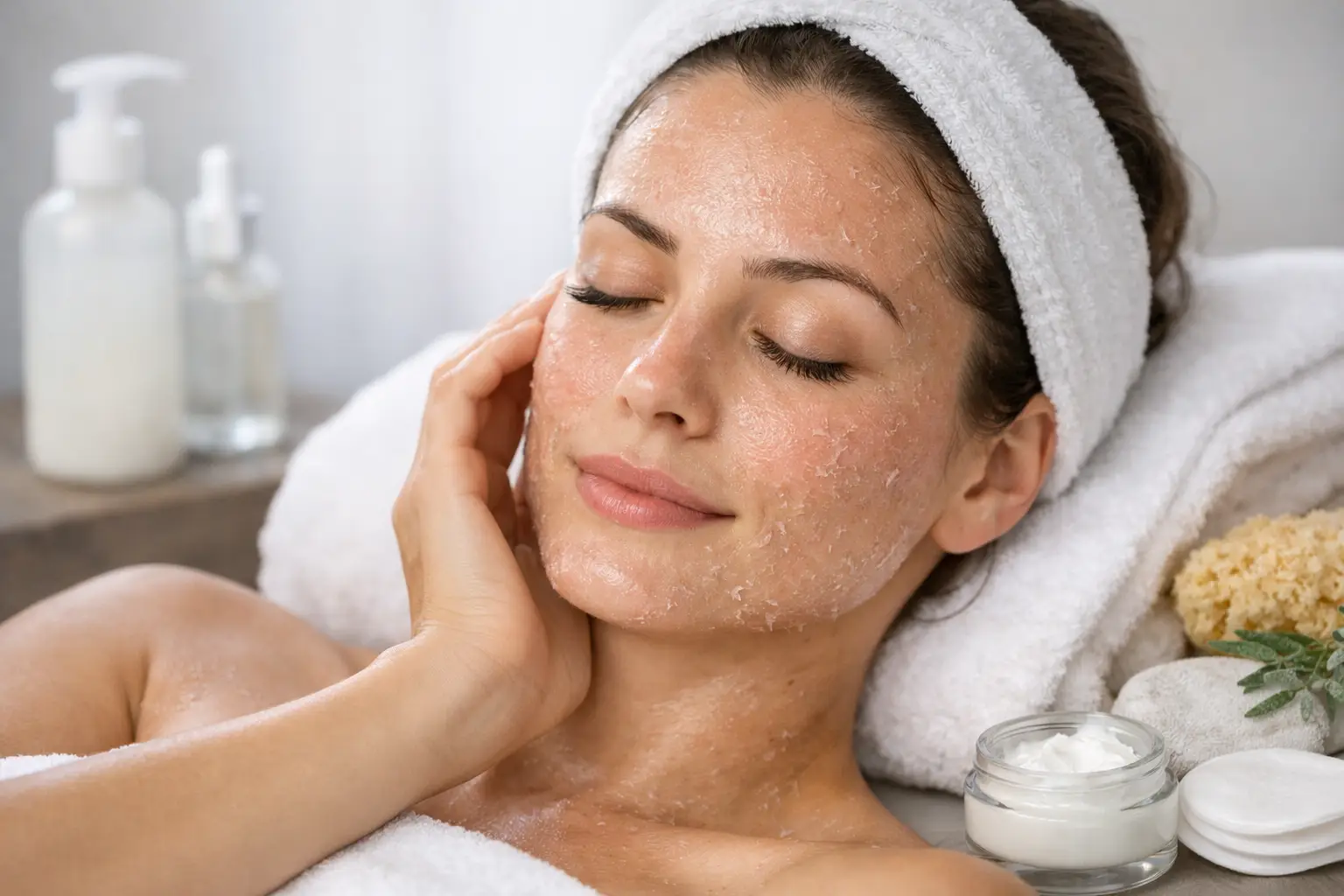
Peeling, flaking, mild redness and a temporary feeling of tightness can all be normal. The exact response depends on the type and strength of peel used, your skin condition and the concerns being treated. A light superficial peel may settle quickly, while a more active treatment can involve several days of visible flaking. Your practitioner’s individual instructions should always come first.
Facial peel aftercare starts with a gentle approach
After a peel, your skin barrier is temporarily more sensitive. Think of it as freshly polished rather than ready for a full skincare routine. The goal is not to speed up peeling. It is to keep the skin comfortable, clean and protected while the natural renewal process takes place.
For the first 24 hours, keep your routine simple. Use only products recommended by your practitioner, usually a gentle cleanser, a soothing moisturiser and broad-spectrum SPF50+ sunscreen during daylight hours. Wash with cool to lukewarm water, pat dry with a clean towel and apply products with clean hands.
Avoid rubbing your face with a washcloth, cleansing brush or exfoliating pad. Even products that are usually suitable for your skin may sting after a peel, so less is often more in the first few days.
What to expect during the first week
Day one: warmth, tightness and mild redness
Your skin may look pink or feel warm, particularly if you have had a stronger peel or naturally sensitive skin. This should be manageable rather than painful. Keep your face cool and comfortable, but avoid applying ice directly to the skin. A clean, cool compress can be soothing if your practitioner has advised it is appropriate.
Skip makeup where possible on the day of treatment. If you need to wear it the following day, choose clean applicators and gentle, non-irritating products. Heavy makeup can make dry areas more noticeable and may not feel comfortable on newly treated skin.
Days two to four: dryness and flaking
This is often when flaking begins. It may appear around the nose, mouth, chin or areas of congestion first. Some clients peel in fine, powdery flakes while others notice small patches lifting. Either response can be normal.
The most useful rule is simple: do not pick, pull or scrub peeling skin. Removing flakes before they are ready can cause irritation, prolong redness and increase the chance of uneven healing. Apply your recommended moisturiser as directed and let the skin shed on its own timetable.
Days five to seven: settling and rebuilding
By the end of the first week, many people notice that the skin feels smoother and looks more even. However, it may still be more reactive than usual. Continue sun protection and avoid returning to active skincare too quickly just because the visible peeling has eased.
Some treatment plans involve a series of peels, especially when targeting concerns such as congestion, uneven texture, pigmentation or dullness. Results build gradually, and consistent aftercare supports that process.
Products and activities to pause
Your practitioner will let you know when to restart your regular products. As a general guide, avoid active ingredients until your skin is no longer peeling, stinging or tender, and you have been advised it is suitable to resume them. This commonly includes retinol and other vitamin A products, exfoliating acids, benzoyl peroxide and physical scrubs.
For several days after your peel, it is also wise to avoid:
- Direct sun exposure, tanning and solariums
- Saunas, steam rooms, hot yoga and very hot showers
- Swimming pools, spas and ocean swimming
- Waxing, threading, depilatory creams and facial shaving over treated skin
- Microdermabrasion, dermaplaning or other exfoliating treatments
These temporary pauses are not about being restrictive. Heat, friction, chlorine, salt water and extra exfoliation can all irritate skin that is already working through a controlled renewal process.
If you exercise regularly, choose a lighter session for the first day or two. Sweat and heat can make freshly treated skin feel stingy, especially in Sunshine Coast humidity. Once redness and sensitivity have settled, you can return to your usual routine.
Sun protection is non-negotiable
Freshly peeled skin is more vulnerable to UV exposure. Sun exposure can worsen irritation and may contribute to unwanted pigmentation, which can work against the reason you chose a peel in the first place.
Apply a broad-spectrum SPF50+ sunscreen every morning, even when the weather is overcast or you are mostly indoors. Reapply when you are outside, sweating or spending extended time near windows. A wide-brimmed hat and shade offer useful extra protection, particularly during the first week.
This is one area where aftercare continues well beyond the visible peeling stage. Daily sunscreen is one of the best ways to maintain the clearer, more refined look a professional peel can help achieve.
When should you contact your practitioner?
Mild redness, dryness and flaking are expected responses for many peels. Strong discomfort is not something you should simply push through. Contact your treating clinic promptly if you experience increasing pain, significant swelling, blistering, weeping skin, a widespread rash or signs of infection.
It is also worth checking in if you are unsure whether a product is safe to use. A quick question is always preferable to guessing, especially if you use prescription skincare, have a history of cold sores, are prone to sensitivity or are treating a specific skin concern.
At Coastal Skin Clinic, peel treatments are planned around your skin, your goals and your tolerance rather than a one-size-fits-all protocol. That personalised approach matters just as much after treatment as it does during the consultation.
A better result does not come from more peeling
It can be tempting to believe that dramatic peeling means a peel has worked better. That is not necessarily true. Some very effective professional peels create little visible shedding, while others produce more obvious flaking. The aim is controlled skin renewal, not irritation.
Resist the urge to add extra exfoliants, face masks or spot treatments to make your skin peel faster. Calm, supported skin is better positioned to recover evenly. Follow the home-care plan, protect your skin from the sun and allow enough time between treatments for your practitioner to assess your response.
If you are planning a wedding, holiday, special event or important photos, book your peel with enough recovery time. Your practitioner can help you choose an option that suits both your skin goals and your schedule.
Your skin does not need punishment to look refreshed. Give it a few quiet days, keep its routine gentle and let professional guidance shape each step of your recovery.