If your skin feels dull, uneven or a bit rough no matter what you use at home, the question often becomes facial peel vs microdermabrasion. Both are popular professional treatments for refreshing the skin, but they work in different ways and suit different concerns. Choosing well matters, because the right treatment can improve texture, brightness and clarity, while the wrong one may leave you underwhelmed or irritated.
For most people, this is not about which treatment is “better” in general. It is about which treatment is better for your skin, your goals and how much downtime you are comfortable with. That is where professional advice makes a real difference.
Facial peel vs microdermabrasion: the main difference
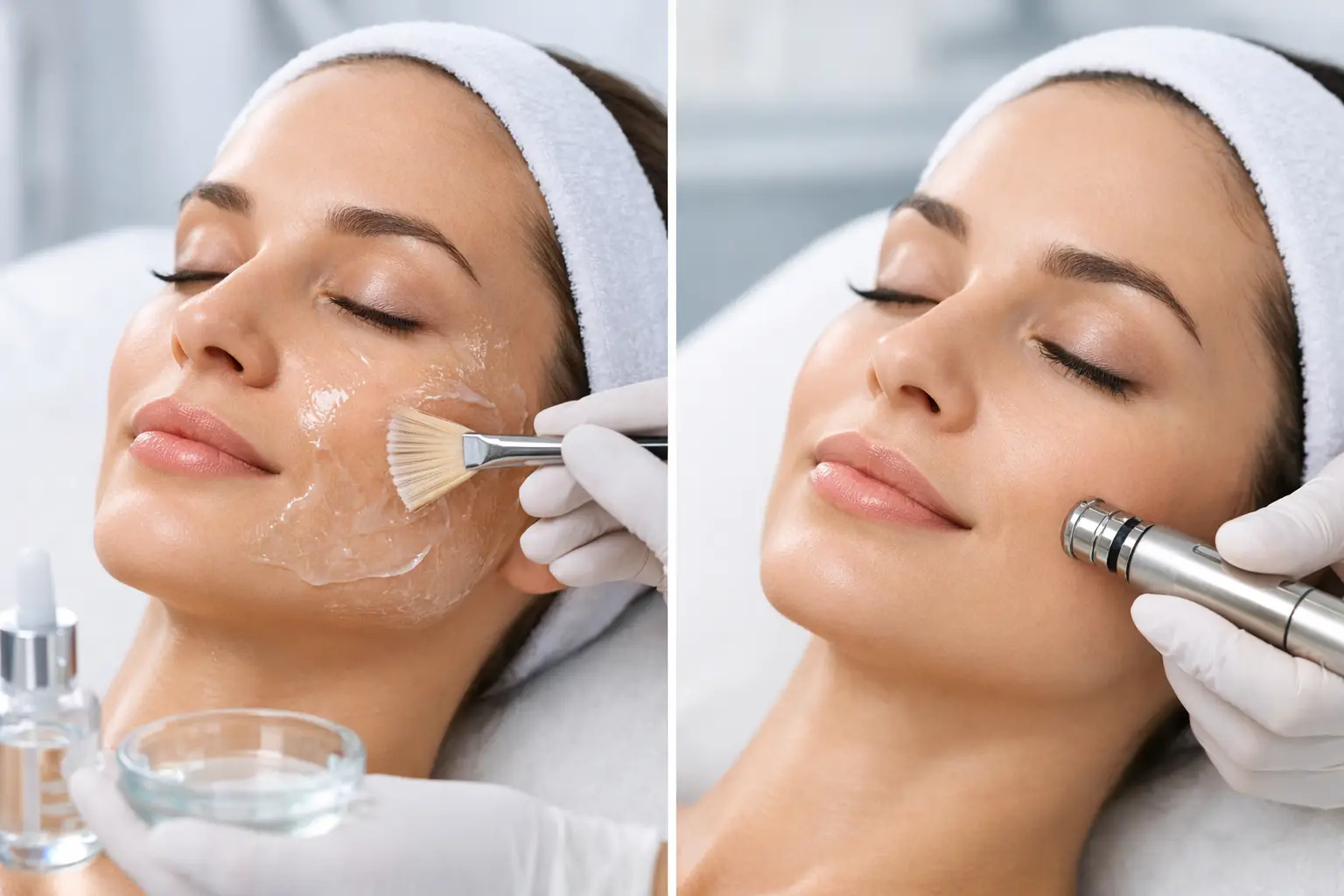
A facial peel uses active ingredients to exfoliate the skin chemically. Depending on the type and strength, a peel can help loosen dead skin cells, improve cell turnover and target concerns such as pigmentation, congestion, acne and early signs of ageing. Some peels are very light and designed for a fresh glow. Others are stronger and more corrective.
Microdermabrasion is a physical exfoliation treatment. It gently buffs away the outer layer of dead skin cells using a specialised device, while also vacuuming away debris from the skin’s surface. The result is smoother-feeling skin, improved brightness and often a more polished look straight after treatment.
In simple terms, microdermabrasion works on the surface by mechanically exfoliating. A facial peel can work more deeply depending on the formulation used. That one difference shapes almost everything else, from who each treatment suits to how noticeable the result may be.
What a facial peel is best for
A professional facial peel can be a very effective option when the goal is more than just surface smoothing. Many clients choose peels to address uneven skin tone, post-acne marks, mild pigmentation, congestion, fine lines and a tired-looking complexion.
Because there are different types of peels, the treatment can often be tailored. A lighter peel may be suitable for regular maintenance and brightening. A stronger medical-grade peel may be chosen when the skin needs a more corrective approach. This is one of the biggest advantages of peels – they are adaptable when prescribed properly.
That said, stronger is not always better. If your skin is reactive, dry or easily irritated, an aggressive peel is unlikely to be the right starting point. In those cases, a gentler plan usually gets better long-term results with less risk.
Expected results from a peel
After a peel, skin often looks fresher and more radiant once any initial dryness settles. Over a series of treatments, clients may notice clearer pores, more even tone and smoother texture. If the concern is pigmentation or acne, it usually takes multiple sessions and a consistent home care plan to see meaningful change.
Downtime varies. Some light peels involve little more than mild redness. Stronger peels can bring flaking or visible peeling for several days. That is not necessarily a problem, but it is something to plan around.
What microdermabrasion is best for
Microdermabrasion suits clients who want a gentle refresh with little downtime. It is often a good option for dullness, rough texture, minor congestion and general skin maintenance. If your skin just looks flat and tired, microdermabrasion can give it a cleaner, smoother finish without the commitment of peeling or recovery.
It is also a treatment many first-time clients feel comfortable with. The idea is straightforward, the treatment itself is usually well tolerated, and the skin often feels softer immediately. For special events or regular upkeep, that can make it appealing.
Where microdermabrasion is less effective is with deeper pigmentation, active acne inflammation, more pronounced scarring or concerns that need stronger correction. It can improve the feel and appearance of the skin surface, but it does not replace a more targeted treatment plan when the concern sits beyond that top layer.
Expected results from microdermabrasion
Most people notice smoother skin and a brighter complexion straight away. Makeup can sit more evenly and skin care products may absorb better afterwards. With regular treatments, it may help keep the skin clearer and more refined.
Downtime is usually minimal. Some clients have mild pinkness for a few hours, but many return to normal activities straight after. That convenience is a big part of its appeal.
Which treatment is better for specific skin concerns?
If your main concern is pigmentation, post-acne marks or uneven tone, a facial peel is often the stronger option. Because peels use active ingredients chosen for the skin concern, they can do more corrective work over time.
If the concern is rough texture, dullness or general maintenance, microdermabrasion may be enough. It gives quick visible improvement without asking much of your schedule.
If acne is active and inflamed, the answer depends on the severity and the skin’s sensitivity. In many cases, a carefully selected peel is more useful than microdermabrasion. Physical exfoliation is not always ideal for inflamed breakouts, especially if the skin barrier is already compromised.
If you have sensitive skin, rosacea or a history of irritation, neither treatment should be chosen on assumption alone. Some people with sensitive skin do very well with gentle peels. Others are better suited to very conservative exfoliation or a different treatment entirely. This is where a proper consultation matters more than a trend or recommendation from a friend.
Facial peel vs microdermabrasion for downtime and comfort
If low downtime is your top priority, microdermabrasion usually wins. It is commonly described as comfortable, quick and easy to fit into a normal week. You may leave a little pink, but usually not enough to disrupt plans.
A peel can still be low downtime, but not always. Light peels may cause only temporary redness or tightness. Medium or stronger peels can lead to visible peeling, dryness and sensitivity for several days. For some clients that trade-off is worthwhile because the treatment can do more. For others, especially if work or social commitments are front of mind, microdermabrasion is the easier choice.
Comfort during treatment also varies by person. Microdermabrasion often feels like a mild scratching or suction sensation. A peel can create tingling, warmth or stinging depending on the formula and strength. Neither should feel unsafe when performed correctly, but they are different experiences.
Safety matters more than the trend
Both treatments are widely used, but professional assessment is still essential. Skin type, barrier health, current products, medical history and recent sun exposure all affect what is suitable. A treatment that looks simple online can lead to irritation, pigmentation issues or poor results if it is not chosen properly.
This is especially relevant in Australia, where sun exposure is part of everyday life. Skin that is already sensitised by heat, UV or active home products may need a more cautious approach. Good treatment planning includes not only the procedure itself, but also timing, skin preparation and aftercare.
At a professional clinic, the real value is not just access to the treatment. It is the guidance around whether you should have it at all, how strong it should be, and what sequence of treatments will give the safest and most visible result.
How to choose between a peel and microdermabrasion
A simple way to think about it is this: choose microdermabrasion when you want a freshen-up, smoother texture and minimal downtime. Lean towards a facial peel when you want to treat a more specific concern such as pigmentation, acne, congestion or visible unevenness.
But there is also a middle ground. Some clients start with microdermabrasion because they want a gentle introduction to professional skin treatments. Others move into peels once they are ready for more corrective work. In some treatment plans, both may have a role at different stages.
That is why the best answer is often not a fixed one. Your skin in winter may need a different approach from your skin after summer. Hormones, sensitivity, work schedules and budget all shape what makes sense.
When a consultation is the smartest next step
If you are weighing up facial peel vs microdermabrasion and still feel unsure, that is completely normal. On paper, both sound like exfoliation treatments. In practice, they can lead to very different outcomes depending on the condition of your skin and what you are hoping to achieve.
A personalised consultation helps narrow the choice quickly. Instead of guessing, you get advice based on your skin, your concerns and how much downtime you can realistically manage. For clients on the Sunshine Coast who want safe, effective treatment with clear guidance, that professional support can save both time and disappointment.
Good skin treatment should feel considered, not rushed. The best choice is the one that fits your skin today and supports where you want it to go next.