Acne may settle down, but the marks it leaves behind can linger far longer than most people expect. When clients ask us about facial treatments for acne marks, they are usually not looking for hype. They want to know what can genuinely improve pigmentation, texture and confidence, and what is actually worth their time and money.
The first thing to know is that acne marks are not all the same. Some are flat and discoloured, sitting on the skin as red, brown or uneven patches. Others are textural, with shallow or deeper indentations that catch the light and make skin look rough. The right treatment depends on which type of mark you are dealing with, how sensitive your skin is, and whether active acne is still part of the picture.
Why facial treatments for acne marks need a tailored plan
A single facial is rarely the complete answer for acne marks. In most cases, visible improvement comes from choosing the right treatment type and repeating it at sensible intervals. Skin responds best when treatment is matched to the cause of the marking rather than applied as a one-size-fits-all option.
Post-acne pigmentation often responds well to resurfacing and brightening treatments. Textural scarring is more complex and usually needs a stronger corrective approach. Some clients benefit from beginning with gentler treatments to restore skin function and calm inflammation before moving into more advanced options.
This is why a proper consultation matters. A treatment that helps one person can irritate another, particularly if there is underlying sensitivity, rosacea, darker skin tone considerations, or a habit of picking at breakouts. Safe. Effective. Those two goals should always come before chasing fast results.
The main types of acne marks
Before choosing treatment, it helps to understand what you are seeing in the mirror.
Post-inflammatory pigmentation
These marks are flat and left behind after a pimple heals. They may appear red, pink, brown or purplish depending on your skin tone. They are not true scars, but they can be stubborn and slow to fade.
Textural acne scarring
This includes shallow rolling scars, boxcar scars and narrower pitted scars. These changes happen when inflammation affects the deeper structure of the skin. They do not usually fade away with skincare alone.
Ongoing congestion with marks
Sometimes the challenge is both active breakouts and old marks at once. In that situation, treatment needs to address current acne while also supporting skin repair. Going too hard, too quickly, can make things worse.
Facial treatments for acne marks that can make a real difference
Not every treatment belongs in every plan, but there are several professional options that consistently help when used appropriately.
Medical-grade facial peels
Peels are often one of the most useful starting points for acne marks, especially when pigmentation and dull texture are the main concerns. A professional peel works by accelerating exfoliation and encouraging fresh skin turnover. This can help soften discolouration, smooth uneven texture and improve overall skin clarity.
The strength and type of peel matter. Some formulas are better suited to oily, acne-prone skin, while others are chosen for sensitive or more mature skin that still carries post-acne marking. A properly selected series of peels can produce gradual, visible changes without the downtime of more intensive resurfacing.
That said, peels are not a quick fix for deep pitted scars. They are more effective for surface-level improvement and are often best used as part of a broader treatment plan.
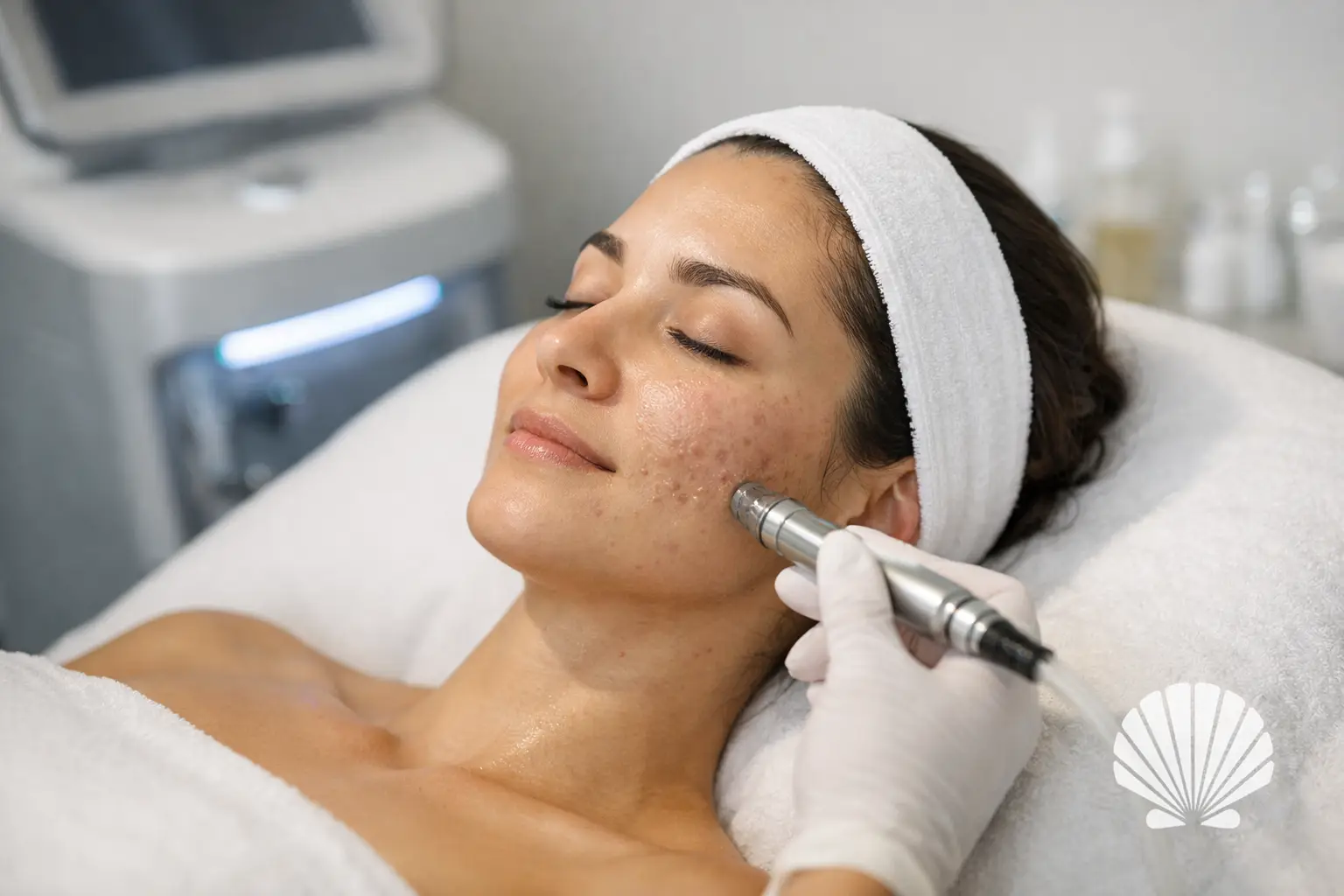
Microdermabrasion
Microdermabrasion can be a good option for mild superficial marks, roughness and congestion. It gently exfoliates the outer layer of skin, helping to improve texture and brightness while supporting product absorption.
For clients who want a lighter-entry treatment or who are not ready for stronger resurfacing, microdermabrasion can be a practical place to begin. It tends to suit those with mild residual marking rather than significant scarring. If the skin is inflamed, broken out or highly reactive, it may not be the right choice at that moment.
Laser skin rejuvenation
Laser treatments are often where more significant change becomes possible, particularly for persistent pigmentation, uneven tone and some forms of acne scarring. By stimulating skin renewal and collagen production, laser can help improve both the colour and texture left behind by acne.
Different laser technologies suit different concerns, so this is not an area for guesswork. Some laser treatments are designed for gentler rejuvenation with minimal downtime, while others are more intensive and target deeper textural change. The benefit of a clinical setting is that treatment can be selected based on your actual skin condition, not just a trend you saw online.
Laser can be very effective, but it also comes with considerations. You may need to avoid sun exposure, pause certain active skincare ingredients, and commit to aftercare properly. Results are often built over a course of treatments rather than one session.
CO2 laser resurfacing
For more pronounced textural scarring, CO2 laser resurfacing can be one of the stronger options available. It works deeper within the skin to encourage collagen remodelling, which can soften the appearance of certain acne scars over time.
This treatment is not suitable for everyone, and it does involve more downtime than lighter facials or peels. Skin type, scar type, healing ability and lifestyle all matter here. For the right client, though, it can be a meaningful step forward when shallow treatments have not delivered enough change.
What to expect from treatment
One of the most common concerns we hear is whether acne marks can be fully removed. The honest answer is that it depends. Pigmentation can often be improved significantly, and in some cases cleared very well. Textural scarring can usually be softened and refined, but complete erasure is not always realistic.
A good treatment plan aims for visible, confidence-building improvement. That might mean smoother skin, more even tone, less obvious pitting and better overall skin quality. Often, clients notice that their skin looks healthier and makeup sits better long before every mark is gone.
Timing also matters. Fresh red or brown marks respond differently from older, established scarring. If you are still breaking out regularly, controlling the acne itself needs to be part of the plan. There is little value in treating old marks aggressively while new ones continue to form.
How to choose the right treatment for your skin
The best facial treatment is not necessarily the strongest one. It is the one your skin can tolerate, recover from and benefit from consistently.
If your main issue is pigmentation, peels or laser rejuvenation may be more appropriate than jumping straight to an aggressive resurfacing option. If texture is the concern, a stronger collagen-stimulating treatment may be needed. If your skin is sensitive, a staged approach often gives better long-term results than trying to force fast progress.
Budget and downtime should be part of the conversation as well. Some clients prefer a gradual plan with minimal interruption to work and social life. Others are happy to commit to stronger treatment if it means targeting scarring more directly. Neither approach is wrong. It simply comes down to what is realistic for you.
For clients on the Sunshine Coast who want guidance rather than guesswork, an in-clinic assessment can help make the process far less overwhelming. It gives you a clearer idea of what your skin needs now, what can wait, and what kind of result is actually achievable.
Aftercare matters more than most people think
Professional treatment is only part of the picture. If aftercare is poor, skin can become irritated, inflamed or slow to heal. Sun protection is especially important, as freshly treated skin is more vulnerable to pigmentation changes.
It is also worth being realistic about home skincare. Strong acids, scrubs and active serums all layered together can leave the skin barrier compromised, which makes marks harder to manage. In many cases, a calmer and more consistent routine supports better results from in-clinic treatment.
Patience is part of the process too. Skin remodelling takes time, particularly when collagen stimulation is involved. Small improvements that build steadily are often a far better sign than dramatic short-term reactions.
When professional advice is the better option
If you have tried over-the-counter products for months with little change, or if your acne marks are affecting how you feel about your skin day to day, it may be time for professional advice. That does not mean you need the most advanced treatment available. It means you deserve a plan based on your skin, your comfort level and your goals.
At Coastal Skin Clinic, this is where a personalised approach becomes valuable. Rather than treating every acne mark the same way, the focus is on understanding what kind of marking is present, what your skin can handle safely, and which treatment pathway is most likely to give visible improvement.
Clearer, smoother skin rarely happens by accident. It usually comes from the right treatment, at the right pace, with the right support – and that can make all the difference when you are ready to move on from acne marks for good.