
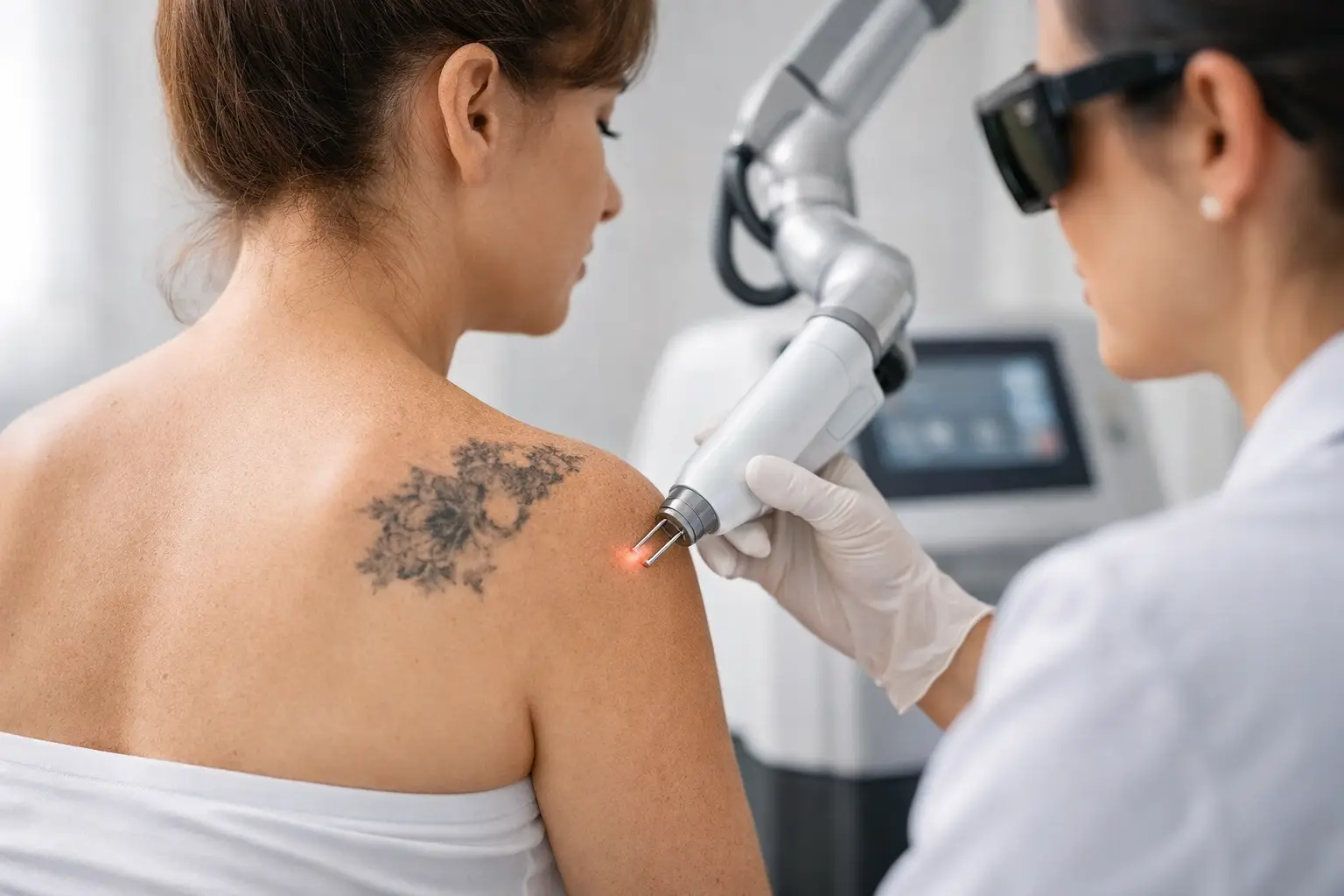
A small fine-line tattoo can fade far faster than a dense sleeve, which is why one of the first questions clients ask is how many tattoo removal sessions they will need. The honest answer is that there is no universal number. What matters is the tattoo itself, your skin, your health, and the type of laser being used.
If you are hoping for a quick fix, it helps to reset expectations early. Professional laser tattoo removal works by breaking ink into smaller particles so your body can gradually clear them. That process takes time, and spacing treatments properly is just as important as the treatment itself.
How many tattoo removal sessions do most people need?
Most people need somewhere between 6 and 12 tattoo removal sessions for significant clearance, but that range can shift up or down. A simple black tattoo may respond more quickly, while layered, colourful or heavily saturated tattoos can take more sessions.
This is why a proper consultation matters. Two tattoos of a similar size can behave very differently once treatment begins. One may fade evenly after a few appointments, while another may hold colour in certain areas and need extra work. Safe. Effective. treatment planning is always personalised.
Why the number of sessions varies so much
Tattoo removal is not only about the size of the tattoo. Ink depth, colour, age, placement and how your body processes the shattered pigment all play a part.
Ink colour makes a big difference
Black ink is usually the easiest to treat because it absorbs laser energy well. Dark blue can also respond reasonably well. Colours such as green, teal, light blue and yellow are often more stubborn and may need more sessions or more specialised settings.
If your tattoo includes several colours, expect different parts to fade at different rates. This is normal and does not mean treatment is not working.
Professional tattoos often take longer than amateur tattoos
Professional tattoos tend to place more ink deeper and more evenly into the skin. That usually means more sessions are needed. Amateur tattoos can sometimes clear more quickly because the ink is often patchier and less dense.
That said, a professionally done tattoo can still respond very well. It may simply need more patience.
Older tattoos can be easier to remove
An older tattoo has often already faded a little over time. If the ink has naturally broken down, laser treatment may have less work to do. Newer tattoos can be more vibrant and concentrated, which can increase the session count.
Body placement affects fading
Tattoos closer to the heart and with better circulation, such as those on the upper body, may fade more efficiently than tattoos on the hands, feet or lower legs. Areas with slower circulation can take longer to clear.
This is one reason ankle, finger and foot tattoos can be frustratingly slow, even when they are small.
Your immune system matters
Laser breaks the ink apart, but your body does the clearing. Clients with a strong immune response, healthy circulation and good aftercare habits often see better fading between appointments.
Smoking, poor healing, inconsistent aftercare or rushing sessions too close together can all slow progress.
How long between tattoo removal sessions?
Most clinics recommend spacing tattoo removal sessions around 6 to 8 weeks apart, and sometimes longer depending on healing and tattoo response. More time between sessions does not mean treatment has stalled. In many cases, additional fading continues well after the appointment.
This can be one of the hardest parts for clients. Once you decide you want a tattoo gone, it is natural to want it removed as quickly as possible. But pushing treatment too fast can increase skin stress without improving the end result.
A careful schedule gives your skin time to recover and your body time to flush out disrupted pigment. That is better for both safety and results.
What to expect after each session
Straight after treatment, the area may look frosted, red or slightly raised. This is a common laser response. Over the following days, you may notice sensitivity, mild swelling or small scabs depending on the tattoo and your skin.
Visible fading is usually gradual, not dramatic overnight. Some sessions produce a clear shift in tone, while others seem subtle until you compare photos over time. Progress is often easier to see across several months than from one week to the next.
This is why clinical guidance is so valuable. When you are looking at the tattoo every day, it is easy to underestimate how far it has already come.
Can a tattoo be fully removed?
Many tattoos can be removed very successfully, but full clearance is not guaranteed in every case. Some tattoos leave behind a faint shadow, a slight change in skin tone, or a trace of stubborn pigment. Cover-up history, scar tissue, unusual ink mixes and certain colours can all affect the final outcome.
A good clinic should be upfront about this. Promising complete removal for every tattoo is not realistic. The better approach is to assess your tattoo honestly, explain what is likely, and tailor a treatment plan around your goal.
For some clients, the goal is full removal. For others, it is enough to fade the tattoo for a cleaner cover-up. If the end goal is a cover-up tattoo, fewer sessions may be needed than if you want complete clearance.
Signs your tattoo may need more sessions
Sometimes the likely session count becomes clearer only after treatment starts. A tattoo may need more sessions if the fading is uneven, certain colours remain strong, or there is evidence of previous layering or rework.
Raised or textured tattoos can also be more complex, especially if scar tissue is present. Scarred areas do not always hold or release ink in the same way as unaffected skin. That does not rule treatment out, but it can change the pace.
This is another reason not to compare your progress too closely with someone else’s. Tattoo removal is highly individual.
How to give yourself the best chance of faster results
You cannot change the age of the tattoo or the type of ink used, but you can support the process. Following aftercare properly, avoiding sun exposure on the treated area, staying hydrated and keeping your sessions on schedule all help.
It also helps to avoid picking at the skin or using harsh products on the area while it heals. Healthy skin responds better to ongoing treatment.
Choosing a qualified clinic is just as important. The right technology, the right settings and experienced hands all affect how efficiently and safely your tattoo can be treated. At Coastal Skin Clinic, clients are guided through that process with personalised advice rather than a one-size-fits-all estimate.
When to book a consultation
If you are asking how many tattoo removal sessions you will need, you are already at the point where general online estimates can only take you so far. A consultation gives you a more accurate idea of likely treatment numbers, expected fading, spacing, cost and whether your goal is realistic.
It also gives you a chance to ask practical questions. Will this work on my colours? How long will it take before I can cover it up? What will healing look like on my skin? Those details matter more than a generic number.
For clients on the Sunshine Coast, seeing the tattoo in person is often the difference between guessing and planning properly. A tailored assessment can save a lot of uncertainty and set the right expectations from the start.
The best place to begin is not with a promise of a magic number, but with an experienced assessment and a treatment plan that fits your tattoo, your skin and your goals.