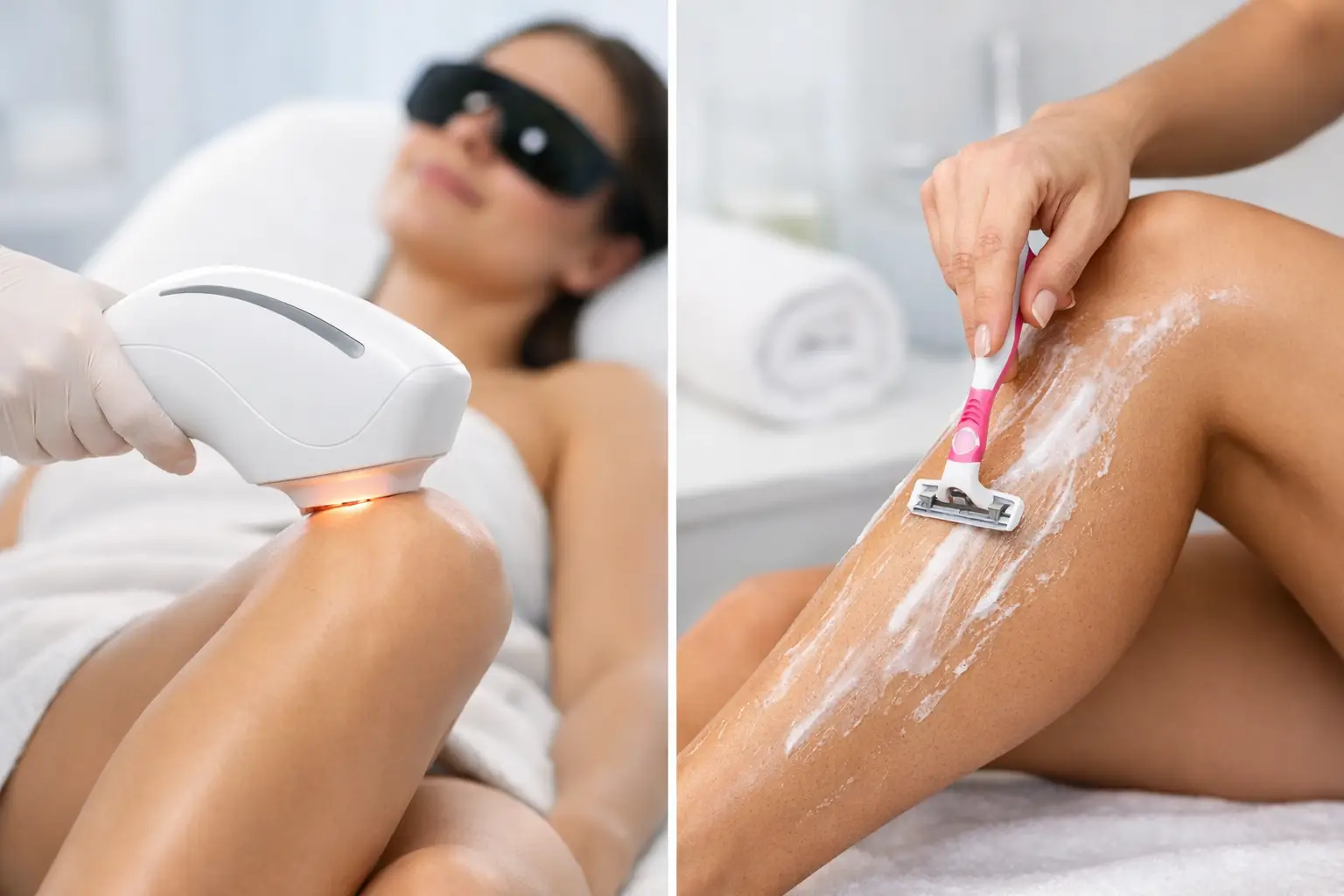
If you are weighing up ipl hair reduction or shaving, the real question is not which one removes hair faster today. It is which option fits your skin, your routine, your budget over time and how much ongoing maintenance you are happy to do. For some people, shaving is perfectly fine. For others, the constant regrowth, irritation and time spent keeping up with it makes IPL a far better long-term choice.
The best decision usually comes down to what result you want. If you only want a quick fix before the beach or gym, shaving does the job. If you are tired of daily or weekly upkeep and want smoother skin with less regrowth, IPL hair reduction is usually the more rewarding option.
IPL hair reduction or shaving – what is the difference?
Shaving cuts the hair at skin level. It does not affect the follicle, which is why regrowth comes back quickly. Depending on the area, that might mean stubble within a day or two. It is simple, familiar and low commitment, but it is a short-term method.
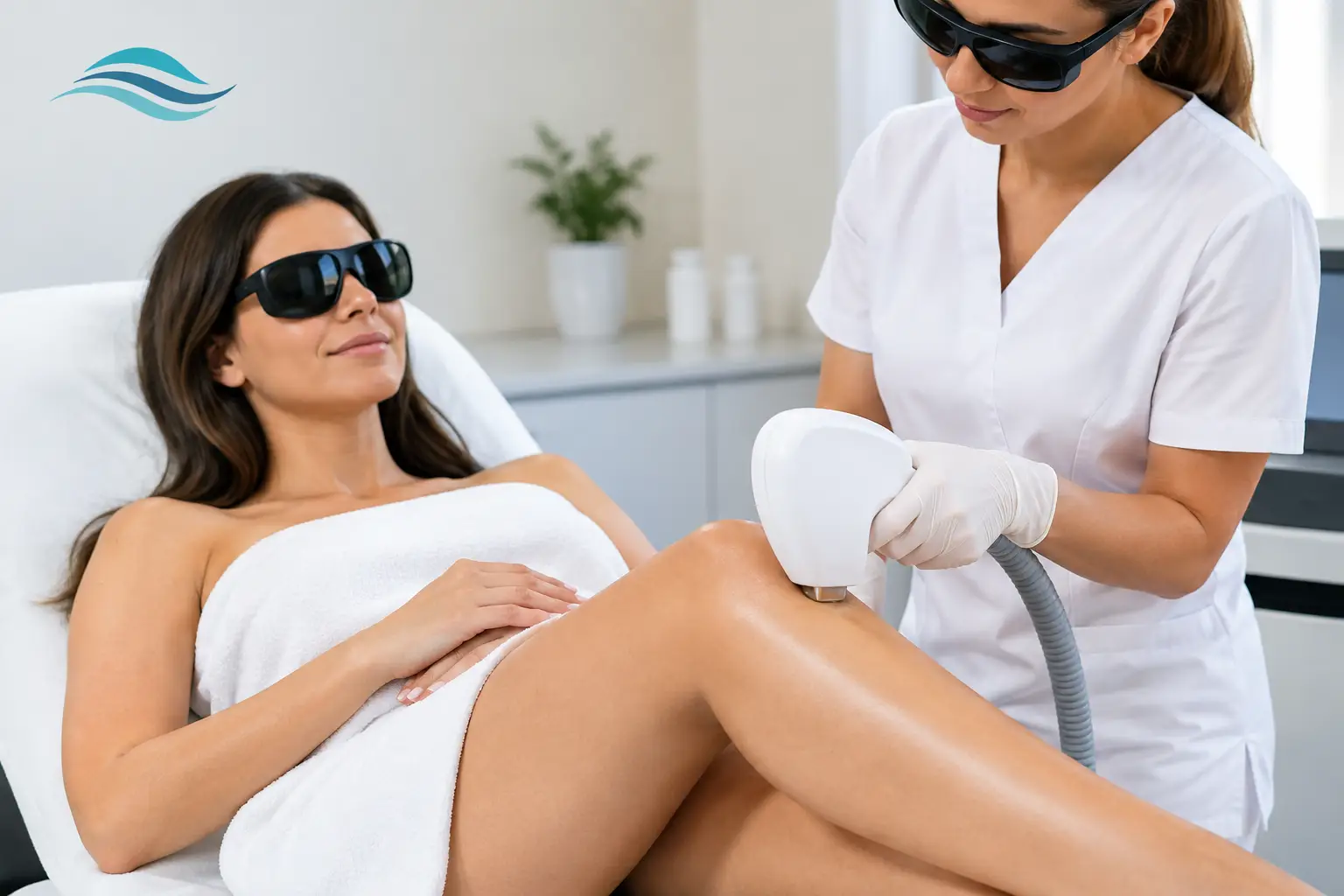
IPL hair reduction works differently. IPL stands for Intense Pulsed Light. The light targets pigment in the hair and delivers heat down into the follicle. Over a course of treatments, this reduces the hair’s ability to grow back in the same way. The goal is not a once-off removal of every hair forever. It is a gradual reduction in hair growth, with many clients seeing finer, patchier and slower regrowth.
That difference matters because it shapes your expectations. Shaving is immediate but temporary. IPL is progressive but longer lasting.
When shaving makes sense
Shaving still has a place, and not every client needs to jump straight into a treatment plan. If your hair is light, sparse or only bothers you occasionally, shaving may be enough. It is also the easiest option if you are not ready to commit to multiple appointments.
Some people prefer shaving because it is cheap upfront and can be done at home in a few minutes. If your skin tolerates it well and you are happy to keep doing it, there is nothing wrong with that.
The trade-off is the maintenance. Areas like underarms, legs, bikini and face often need regular attention, and repeated shaving can lead to irritation, razor bumps, ingrown hairs and that rough regrowth feeling many people find frustrating.
Why many clients move from shaving to IPL
Most people start considering IPL after they become fed up with the cycle. Shave, regrow, shave again. It is not always the shaving itself that is the issue. It is the constant repetition.
IPL is popular because it can reduce how often you need to think about hair removal at all. Instead of planning around regrowth, many clients notice they can go much longer between maintenance. Hair often comes back softer and less dense, and some follicles stop producing visible hair altogether.
For clients prone to shaving rash or ingrown hairs, this can make a big difference. Less regrowth usually means less friction, less inflammation and smoother skin over time.
That said, IPL requires patience. Hair grows in cycles, and treatment only works effectively when the follicle is in the right phase. That is why a series of sessions is needed rather than a single appointment.
IPL hair reduction or shaving for sensitive skin
If you have sensitive skin, the answer depends on what triggers your irritation. Shaving can be harsh for some skin types, especially if you are dealing with dryness, eczema-prone areas, folliculitis or post-shave redness. The blade creates friction and can disturb the skin barrier, particularly if you shave often or rush the process.
IPL may be a better fit if your main problem is repeated irritation from shaving. Many clients find their skin settles once they are no longer dragging a razor across it every few days.
On the other hand, IPL is still an advanced light-based treatment, so it should be approached professionally. Skin tone, hair colour, medical history, sun exposure and the area being treated all matter. This is where a proper consultation becomes important. It allows the treatment to be tailored safely, rather than guessing based on what worked for someone else.
Which one gives better results?
If by better results you mean immediate smoothness today, shaving wins. It is fast and the result is instant.
If by better results you mean less hair over time, less effort and fewer ingrowns, IPL generally wins for the right candidate. It offers a longer-term improvement rather than a same-day fix.
The word better really depends on what annoys you most. If your biggest issue is time, shaving might feel easier in the short term. If your biggest issue is ongoing regrowth, skin irritation or the inconvenience of constant upkeep, IPL tends to offer more value.
It is also worth being realistic. IPL is called hair reduction for a reason. Hormones, genetics and treatment consistency all play a role. Some people achieve a dramatic reduction and only need occasional maintenance. Others still get regrowth, but much less of it. Professional guidance helps set realistic expectations from the start.
Cost now versus cost over time
Shaving seems cheaper because the upfront cost is low. A razor and shaving product are easy to buy and easy to replace. But shaving is ongoing. Over months and years, the cost adds up, especially if you are maintaining multiple areas.
IPL involves a greater initial investment because it is performed as a course of treatments. For many clients, though, that cost starts to make more sense when they compare it with years of razors, shaving creams, waxing appointments or the time spent managing regrowth.
There is also the value of convenience. For some people, less maintenance is not just a beauty preference. It is a lifestyle benefit.
What to expect if you choose IPL
IPL is not complicated from the client side, but it does work best when you follow the plan recommended for your hair growth cycle. Treatments are spaced out across several weeks, and you may be asked to shave the area before your appointment. That is because the light needs to target the follicle under the skin rather than long hair sitting above it.
After treatment, hair does not disappear overnight. It sheds gradually, and reduction becomes more noticeable over a series of sessions. This is where consistency matters. Missing treatments or stopping too early can affect your results.
A professional clinic will also assess whether IPL is right for your skin and hair type in the first place. Not every person is an ideal candidate, and honest advice is part of safe treatment.
Areas where the choice matters most
For legs, underarms and bikini areas, IPL often appeals to clients who are tired of frequent shaving and want longer periods of smoothness. These are also the areas where shaving irritation tends to be most common.
For facial hair, the decision can feel more personal. Some clients shave small areas without an issue, while others feel self-conscious about visible regrowth or struggle with sensitivity. In these cases, a personalised approach matters because the cause of facial hair growth and the right treatment pathway can vary.
For areas with coarse, dark hair, IPL often delivers particularly satisfying results. For finer, lighter hair, results may be less predictable. Again, this is why assessment matters more than assumptions.
So, should you choose IPL or keep shaving?
Choose shaving if you want a quick, low-commitment option and your skin handles it well. It is simple, accessible and useful when you only need temporary hair removal.
Choose IPL if you are over the maintenance, want to reduce regrowth, struggle with ingrown hairs or shaving rash, and are ready to invest in a treatment plan with longer-term benefits.
For many clients, it is not really a debate between good and bad. It is a choice between temporary convenience and longer-lasting change. The right option depends on your skin, your hair, your expectations and how much effort you want to keep putting in.
If you are unsure, a professional consultation can save a lot of guesswork. At Coastal Skin Clinic, that conversation is about more than hair removal alone. It is about choosing the safest and most suitable option for your skin, so you can feel comfortable, informed and confident in the path you take.