That first evening after treatment is when most people start second-guessing everything. Is the redness normal? Should you cover it? Can you shower? Good aftercare makes a real difference, and the right laser tattoo removal aftercare steps can help your skin settle well between sessions while reducing unnecessary irritation.
At Coastal Skin Clinic, we see this part of the process as just as important as the treatment itself. Laser tattoo removal works by targeting pigment in the skin, but your body still needs time to clear the fragmented ink and repair the treated area. That healing window is where aftercare matters most.
Why laser tattoo removal aftercare steps matter
Laser treatment creates a controlled response in the skin. Some redness, warmth, mild swelling and sensitivity are expected, particularly in the first 24 to 72 hours. In some cases, you may also notice frosting immediately after treatment, or small blisters later on. That can look alarming if you are not expecting it, but it is often a normal part of the healing process.
The goal of aftercare is simple – protect the skin, avoid added trauma and lower the chance of complications such as infection, prolonged irritation or changes in pigmentation. It also helps keep you comfortable. If the area is rubbed, overheated or exposed to strong sun too soon, healing can take longer and your next session may need to be pushed back.
The first 24 hours
The first day is all about keeping the area clean, cool and undisturbed. Your clinician may apply a dressing straight after treatment, depending on the size and location of the tattoo and how your skin has responded. If you have been advised to keep the area covered for a period, follow that instruction closely rather than removing it early.
A cool compress can help with heat and swelling, but it should be gentle. Do not apply ice directly to the skin. Wrap the cold pack in a clean cloth and use short intervals. If the area feels tender, choose loose clothing that will not rub.
It is usually fine to shower, but keep the water lukewarm rather than hot. Skip long hot showers, saunas, spas and steam rooms. Heat can increase inflammation in the treated area and may make you more uncomfortable.
Days two to seven
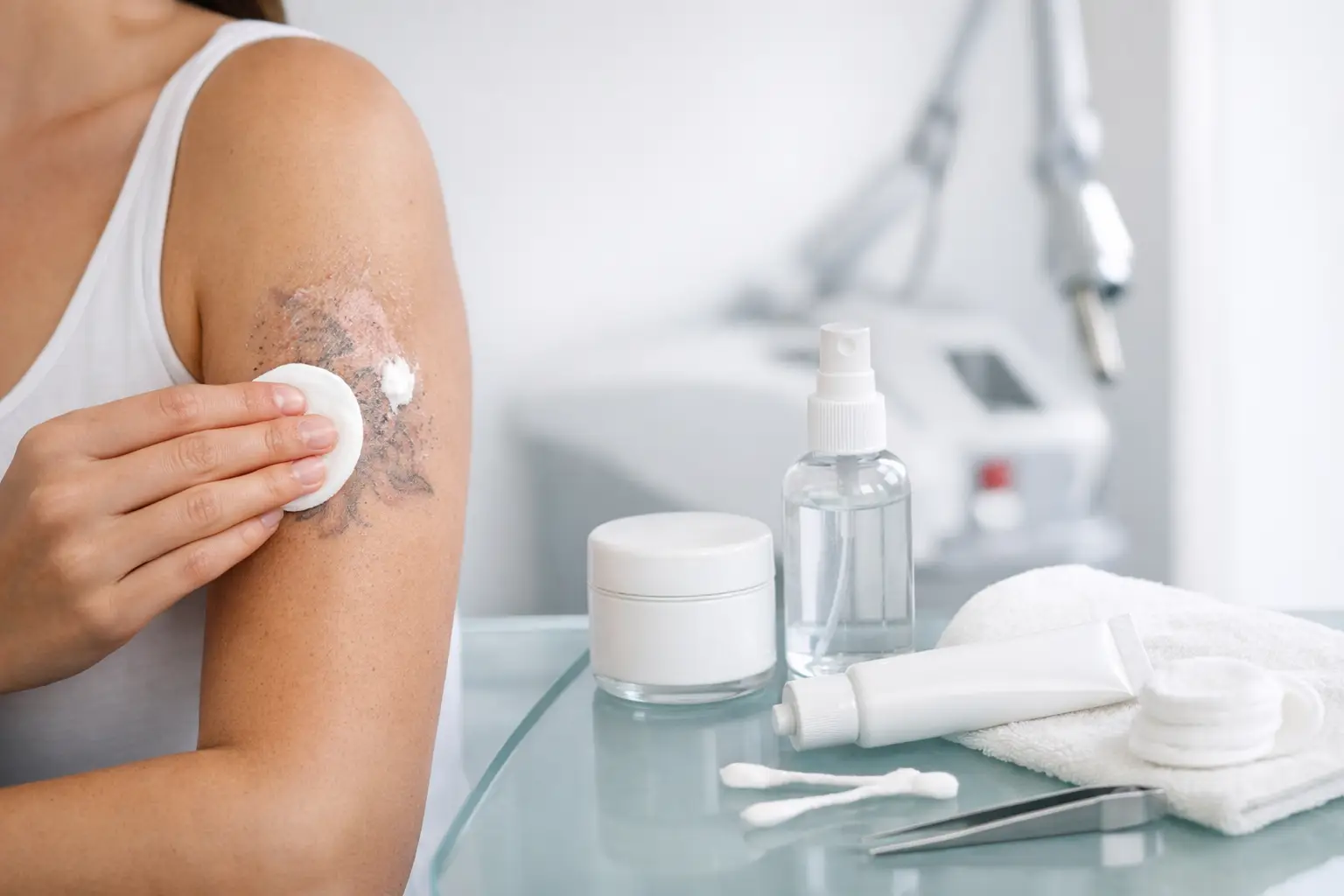
This stage often brings the most questions. The skin may feel dry, itchy or slightly tight. Some people develop light scabbing or small blisters. Others heal with very little visible reaction. Both can be normal. The key is not to interfere with the skin while it is recovering.
Clean the area gently with mild soap and water if advised by your clinician, then pat dry with a clean towel. Avoid scrubbing, exfoliating gloves and active skincare on or near the treated tattoo. If you have been given a recommended aftercare product, apply it exactly as directed. More is not always better. Heavy occlusive products used without guidance can trap heat or moisture if the skin is too fresh.
If blistering occurs, leave it alone. Do not pop blisters, pick at peeling skin or remove scabs. That raises the risk of infection and can increase the chance of textural change or scarring. It can also interrupt the natural healing process your skin needs after laser.
What to avoid while the area heals
The most useful aftercare advice is often about what not to do. Friction, heat and sun are the usual problems.
Exercise can be a grey area. A light walk is usually very different from a hard gym session, hot yoga class or long coastal run in the midday sun. If exercise will cause heavy sweating, repeated rubbing or overheating around the treatment site, it is generally worth giving it a short break. How long depends on the area treated and how reactive your skin is.
Swimming should also wait until the skin surface has settled. Pools, ocean water and spas can all irritate freshly treated skin. If there is blistering or any open area, staying out of the water is especially important.
You will also want to avoid tanning. This includes direct sun exposure and fake tan on the treated area. Tanned skin can be more reactive, and sun exposure before or after treatment may increase the risk of pigment changes.
Sun protection is non-negotiable
If there is one part of laser tattoo removal aftercare steps that matters every single session, it is sun protection. Freshly treated skin is more vulnerable, and UV exposure can slow healing and contribute to post-inflammatory pigmentation.
Once the skin is intact and your clinician says it is appropriate, use a broad-spectrum sunscreen on exposed areas. Until then, physical protection is often the safest option – think loose clothing or a breathable cover if the tattoo is on an area that will catch the sun. This is especially relevant on the Sunshine Coast, where incidental exposure adds up quickly even on ordinary days.
If your tattoo is on the forearm, shoulder, ankle or another exposed spot, plan ahead. It is much easier to protect the area properly than to manage avoidable irritation later.
What is normal and what is not
A lot of unnecessary worry comes from not knowing what to expect. Common short-term responses include redness, warmth, mild swelling, tenderness, itching, frosting immediately after treatment, and occasional blistering or crusting. The intensity varies from person to person and can also vary from one session to the next.
What is less normal is worsening pain, spreading redness, significant pus, fever or a reaction that keeps escalating instead of gradually settling. Those signs need prompt clinical advice. If something feels off, it is always better to ask. Reassurance is part of good care, and so is early support if your skin is not behaving as expected.
Healing is not the same for every tattoo
Two people can have the same laser device used and still heal quite differently. Placement matters. Tattoos on areas with more friction, such as wrists, feet or waistbands, may feel more irritated afterwards. Larger or more densely inked tattoos can react more noticeably. Your general health, skin type, sun exposure and how closely you follow aftercare also play a part.
There is also a difference between healing well and fading quickly. Aftercare supports the skin, but fading depends on several factors, including ink colour, ink depth, tattoo age and your body’s own clearance process. This is why a personalised treatment plan matters. Quick results are not always realistic, and safe progress is better than pushing the skin too hard.
Before your next session
Good aftercare does not stop after the first week. Between sessions, keep the skin in good condition. Avoid sunburn, do not pick at any residual dry skin, and let your clinician know about any changes to your health, medications or skin response.
Spacing treatments properly is part of effective care. Many clients are keen to move fast, especially when they are ready to leave an old tattoo behind. But sessions that are booked too close together do not usually improve results. Your skin and immune system need time to do their work.
If you are ever unsure whether the area is healed enough for another appointment, ask before you come in. A professional clinic would always rather assess and adjust than treat skin that is not ready.
A practical aftercare mindset
The best approach is usually the simplest one. Keep the area clean. Keep it protected. Leave it alone. Follow the instructions you were given for your skin, not advice pulled from social media or a friend’s experience.
That matters because laser tattoo removal is not one-size-fits-all. Someone with a tiny faded tattoo on the upper arm may have a very easy recovery. Someone treating a saturated piece on the ankle may need to be more cautious with swelling, footwear and sun exposure. Tailored care is what keeps the process safe and effective.
If you are choosing a clinic for tattoo removal, aftercare support should be part of the conversation, not an afterthought. Clear guidance, realistic expectations and access to qualified advice can make the whole experience feel much more manageable.
Your skin does a lot of work after each session. Give it the right conditions, and you give yourself the best chance of a smoother recovery and stronger progress over time.