
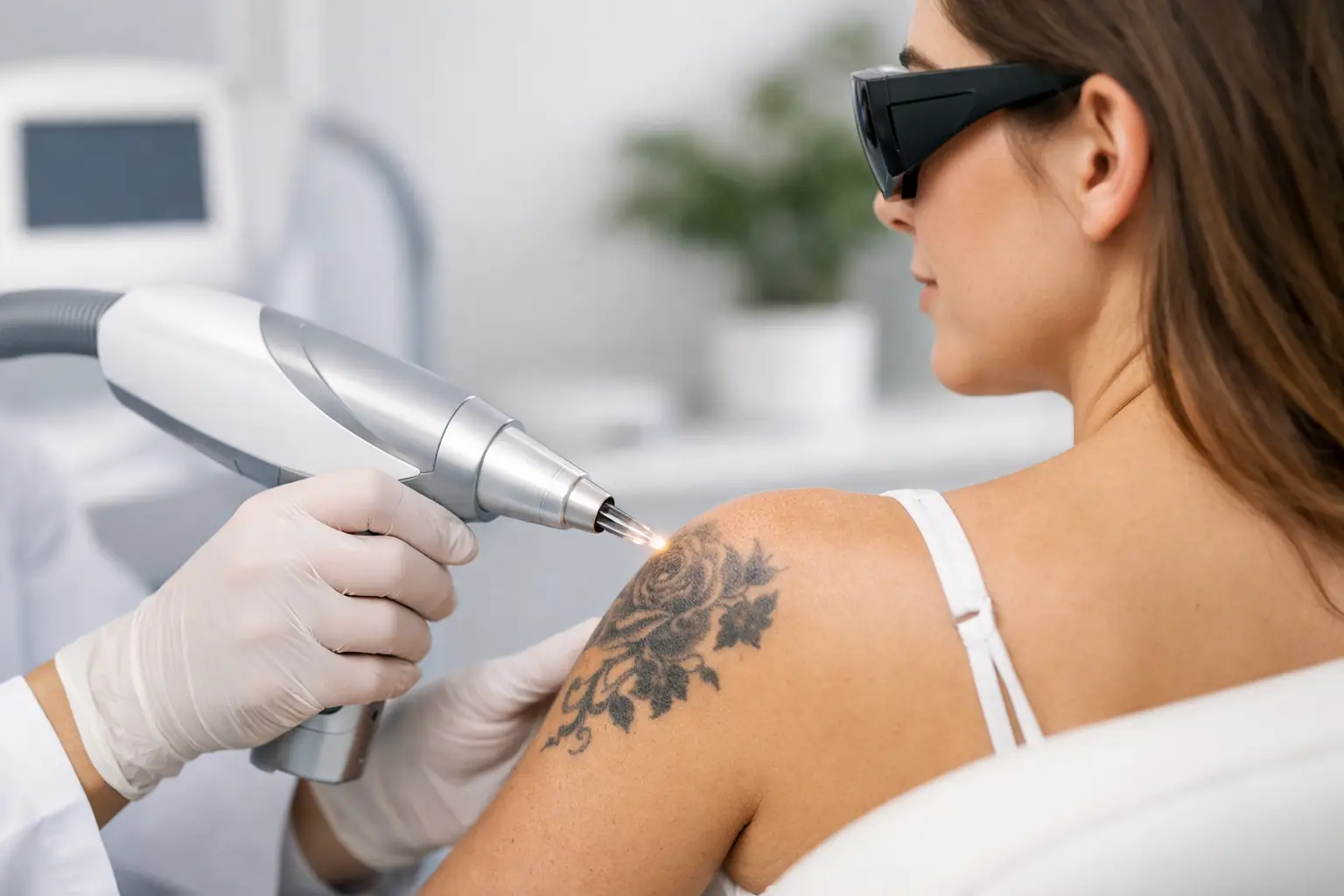
That tattoo may have suited a different chapter of your life, a different job, or a different version of you. Tattoo removal is often less about regret and more about moving forward with confidence. For some people, that means removing a name or design completely. For others, it means fading existing ink so a cover-up can be done properly.
The most helpful place to start is with realistic expectations. Laser treatment can be very effective, but it is rarely a one-session fix. Results depend on the tattoo itself, your skin, the type of ink used, and how your body responds over time. Good treatment is not just about using a laser. It is about using the right settings, spacing sessions properly, and having experienced guidance throughout the process.
How tattoo removal works
Laser tattoo removal works by sending short bursts of energy into the ink in your skin. That energy breaks the pigment into smaller particles, which your body can then gradually clear away. This is why the fading happens over weeks after each appointment rather than instantly on the day.
Different colours respond differently. Black ink is usually the easiest to treat because it absorbs laser energy well. Dark blue and some reds can also respond well. Lighter colours such as green, teal, yellow and white are often more stubborn and may require more sessions, partial fading, or a discussion about what result is realistically achievable.
Professional tattoos usually sit deeper in the skin and contain denser ink, so they often take longer to remove than amateur tattoos. Older tattoos may also respond differently from newer ones. A proper consultation matters because two tattoos that look similar at first glance can behave very differently once treatment begins.
What affects tattoo removal results?
The short answer is that it depends. Several factors influence how quickly a tattoo fades and how many sessions may be needed.
Ink colour is one of the biggest factors, but it is not the only one. The age of the tattoo, how heavily it was applied, where it sits on the body, and your general health all play a part. Areas with stronger circulation often respond better than areas further from the heart, such as hands, fingers, feet and ankles.
Your immune system also does some of the heavy lifting between appointments. The laser breaks the ink apart, but your body clears it. That is why treatment plans need spacing. More frequent sessions do not necessarily mean faster clearance. In many cases, they simply do not give the skin enough time to recover or the body enough time to process the broken-down pigment.
Scarring from the original tattoo or previous removal attempts can also affect the process. So can layered ink from cover-up work. If a tattoo has been reworked several times, complete removal may still be possible, but it often takes more patience and a more tailored plan.
What happens at your consultation
A consultation should feel clear, not rushed. This is where your practitioner assesses the tattoo, discusses your goals, checks your skin history, and explains what kind of result may be possible.
This is also the time to talk honestly about whether you want full removal or fading for a cover-up. Those are different goals, and the treatment approach can be adjusted accordingly. Fading for a cover-up often requires fewer sessions, but the amount of fading needed depends on the new design your tattoo artist has in mind.
You should also be told about likely session numbers, spacing, aftercare and cost in a straightforward way. No reputable clinic should promise instant clearance or guarantee identical results for every person. Safe, effective care starts with an honest plan.
Does laser tattoo removal hurt?
This is one of the most common questions, and the honest answer is yes, it can be uncomfortable. Most clients describe it as quick, sharp snaps against the skin, often compared to an elastic band flicking repeatedly. The good news is that appointments are usually quite fast, especially for smaller tattoos.
Comfort levels vary depending on the location of the tattoo, your own pain tolerance, and how large or detailed the design is. Areas over bone or with thinner skin can feel more intense. An experienced practitioner will talk you through the process and help make treatment as manageable as possible.
For many people, the emotional relief of removing unwanted ink outweighs the short-term discomfort. That said, you should never feel pressured to push through treatment without proper support or explanation.
What to expect after each session
Straight after treatment, the skin may look white or frosted for a short time. Redness, warmth, mild swelling and tenderness are also common. This is a normal response to the laser and usually settles with appropriate aftercare.
Healing matters. The better you care for the area, the better your skin is positioned to recover well between sessions. You will usually be advised to keep the area clean, avoid picking or scratching, and protect it from sun exposure. If the treated skin is exposed to too much sun, the risk of pigmentation changes can increase.
Some clients are surprised that the tattoo often continues to fade for several weeks after treatment. That delayed response is part of the process. It is also why patience is important. Results build gradually, not overnight.
How many tattoo removal sessions will you need?
This is the question almost everyone asks, and it deserves a careful answer rather than a rough guess. Some tattoos respond well in a relatively small number of sessions. Others need a much longer course of treatment. A simple black tattoo may fade far more predictably than a dense, colourful sleeve or a cover-up with multiple layers of ink.
In general, most clients should expect a series of appointments rather than a once-off treatment. Sessions are spaced out to allow the skin to heal and the body to clear fragmented ink. Trying to rush the process can increase the chance of irritation without improving the final result.
A good clinic will assess progress as you go rather than locking you into a one-size-fits-all estimate. That matters because response can change from session to session. Sometimes the first few treatments fade the tattoo quickly, then progress slows. In other cases, a tattoo seems stubborn early on and then starts clearing more noticeably later.
Is complete removal always possible?
Not always, and it is better to hear that upfront. Many tattoos can be removed very successfully, but complete clearance depends on the ink, the skin, and the tattoo history. Some colours are more resistant. Some tattoos leave a faint shadow or residual pigment. In other cases, the tattoo disappears well but the skin still shows slight textural change from the original tattooing process.
That does not mean treatment has failed. A very significant fade can still be a great outcome, especially if the goal is to clear visible ink, improve confidence, or prepare for new artwork. Success should be measured against your actual goal, not just an all-or-nothing idea of removal.
Why professional care matters
Tattoo removal is a medical-aesthetic treatment, not a casual beauty add-on. The quality of the laser, the practitioner’s training, and the clinic’s approach to safety all affect your experience.
Professional care means more than operating a machine. It means understanding skin responses, adjusting treatment settings carefully, screening for factors that may affect healing, and knowing when to proceed cautiously. It also means treating clients as individuals, not as identical cases on a booking sheet.
For clients on the Sunshine Coast, especially those who want reassurance as much as results, that personal approach can make a real difference. You want to feel informed, safe and supported from the first consultation through to the final session.
When is the right time to start tattoo removal?
Usually, the right time is when you are ready to commit to the process. If you have a tattoo you cover every day, feel self-conscious about, or want faded before a cover-up, there is value in getting proper advice sooner rather than later.
You do not need to have every answer before booking a consultation. You simply need a clear goal and a willingness to talk through your options with someone qualified. Whether you are removing one small tattoo or planning treatment for a larger piece, the best next step is an expert assessment based on your skin, your tattoo and your timeline.
A well-planned tattoo removal journey should feel steady, informed and achievable. With the right advice and realistic expectations, unwanted ink does not have to stay part of your story forever.