If you are considering skin resurfacing, a CO2 laser recovery timeline example can be one of the most useful ways to set expectations. Most people are less worried about the treatment itself than they are about what happens after – how red they will be, when they can return to work, and how long it takes to see smoother, fresher skin.
Recovery is not identical for everyone. Your healing time depends on the depth of treatment, the area treated, your skin type, your general skin health, and how closely you follow aftercare advice. Still, there is a very common pattern, and understanding that pattern helps you plan properly and feel more confident about the process.
A realistic CO2 laser recovery timeline example
Think of recovery in stages rather than a single finish line. Your skin moves through inflammation, repair, peeling, and then gradual improvement. The early days are the most noticeable socially, but the deeper healing continues for weeks after the surface looks better.
Day 1 to Day 3
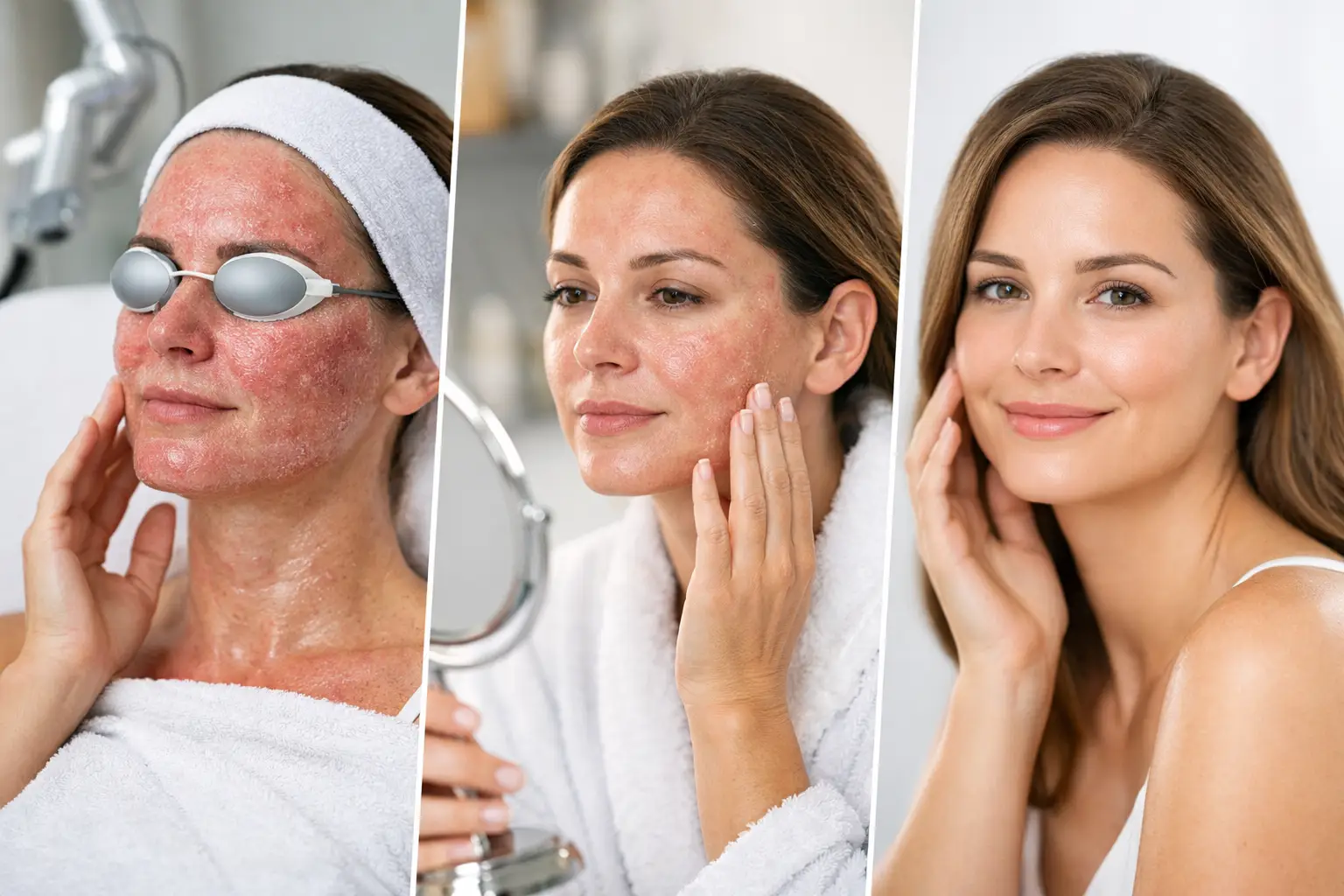
This is usually the most intense phase. Straight after treatment, the skin commonly feels hot, tight and sunburnt. Redness is expected, and swelling can range from mild to quite obvious, especially around the eyes if that area has been treated.
You may also notice oozing, pinpoint crusting or a bronzed appearance as the skin starts its healing response. At this stage, most clients want to stay home, rest, and focus on gentle aftercare. This is normal. Even when the treatment is planned and welcomed, the first few days can look more dramatic than people expect.
The key here is not to panic. Early redness and swelling do not mean anything has gone wrong. They are part of the controlled injury that makes resurfacing effective.
Day 4 to Day 7
This is often when the skin starts to feel dry, rough and flaky. Peeling usually becomes more obvious, and the surface may look patchy as old, damaged skin sheds. Some people describe it as a grid-like texture or tiny dark dots if a fractional CO2 laser has been used.
Redness is still common, but the heat tends to settle. Tightness and itchiness can increase a little during this stage because the skin barrier is repairing itself. It can be tempting to pick at peeling skin, especially around the mouth or jawline, but this is one of the easiest ways to create irritation and interfere with even healing.
For many people, this is still not the right time for social events. If you work face-to-face, you may want to allow a full week before returning.
Week 2
By the second week, the surface usually looks much calmer. Most of the active peeling has finished, and the skin often appears pink, fresh and more refined. This is the point where many clients feel they have turned a corner.
That said, pinkness can remain very noticeable depending on how strong the treatment was. If you are hoping for completely normal-looking skin by day ten, that may be realistic for a lighter treatment but not for a more intensive resurfacing session.
Make-up may be possible once your practitioner advises that the skin has healed enough, but it needs to be approached carefully. Heavy products, active skincare and unnecessary friction are still best avoided.
Weeks 3 to 4
At this stage, most people are back to normal daily activities. The skin usually feels smoother, and concerns such as rough texture, sun damage, enlarged pores or superficial lines may already be looking improved.
Lingering pinkness is still well within the normal range, especially in fair or sensitive skin. Some clients feel concerned because they expected all visible signs to be gone by now. In reality, deeper collagen remodelling is still underway, and recovery does not stop when the flaking does.
This is often the stage where results start to feel rewarding. The skin can look clearer, firmer and more even, although final outcomes are still developing.
Weeks 6 to 8
By this point, most of the obvious healing has settled. Redness generally fades further, texture continues to improve, and the skin often looks more refreshed and polished. If your treatment plan is targeting fine lines, acne scarring or more advanced sun damage, this is when the treatment begins to show its real value.
For some people, especially after deeper settings, traces of pinkness can linger beyond eight weeks. That does not automatically signal a problem. It simply reflects that stronger treatments create a longer healing timeline in exchange for more significant resurfacing.
Why recovery can vary so much
A CO2 laser recovery timeline example is helpful, but it should never be treated as a guarantee. There is a big difference between a light fractional treatment and a more aggressive resurfacing session. Both are called CO2 laser, yet the downtime can be quite different.
Your skin type matters too. Fairer skin may hold visible redness for longer. More reactive skin may feel itchier or tighter during healing. Lifestyle factors also play a role. Sun exposure, smoking, dehydration, poor sleep and using the wrong skincare too soon can all slow recovery or increase irritation.
This is why a personalised consultation matters. Safe, effective treatment is not only about the laser itself. It is also about selecting appropriate settings, preparing the skin properly and giving you realistic guidance for what comes next.
What helps the healing process
Aftercare can make a noticeable difference to both comfort and outcomes. The most important thing is to follow the instructions given by your treating practitioner rather than relying on generic advice online.
In general, the skin needs gentle cleansing, consistent hydration and strict sun protection once it is safe to apply it. Heat, sweating, active ingredients and exfoliation usually need to be avoided for a period of time. The skin is vulnerable while it repairs itself, so even products you normally tolerate well may sting or trigger extra inflammation.
Patience is part of aftercare too. Many clients focus on the peeling stage because it is the most visible, but the less obvious stage afterwards is just as important. Freshly resurfaced skin can still be delicate even once it looks much better in the mirror.
When to ask your clinic for advice
A certain amount of redness, swelling, flaking and sensitivity is expected. What matters is whether your healing is tracking as advised by your practitioner.
If you notice increasing pain, unusual discharge, spreading irritation, signs of infection or anything that feels well outside what you were told to expect, contact your clinic promptly. It is always better to ask early than sit at home worrying. Good clinical care should include support after treatment, not just on the day itself.
For first-time clients especially, reassurance matters. Knowing what is normal and having access to professional guidance can make the entire experience feel much more manageable.
Planning around work, events and daily life
One of the most practical parts of any CO2 laser recovery timeline example is understanding social downtime. If you have a wedding, photos, an important work meeting or a holiday planned, timing matters.
Most people should allow at least a week of visible downtime, and often longer if they want to feel fully comfortable in public. If the treatment is more intensive, it is wise to give yourself extra margin rather than trying to fit recovery into a tight calendar.
This is especially true in sunny parts of Queensland, where post-laser skin needs careful protection. If your schedule regularly involves outdoor sport, beach time or long periods in the sun, your practitioner may recommend waiting for a more suitable window.
The results are worth waiting for
CO2 laser resurfacing is not a lunchtime treatment, and that is exactly why realistic expectations matter. It asks for a period of healing, some planning and a willingness to be patient while the skin does its work.
For the right client, though, that trade-off can be well worth it. Smoother texture, improved tone and a fresher overall appearance usually do not appear overnight, but they build steadily as healing progresses. A supportive clinic, clear aftercare and a personalised treatment plan can make that journey feel far less daunting.
If you are weighing up whether CO2 laser is right for you, the best next step is not guessing from photos online. It is getting tailored advice based on your skin, your goals and the amount of downtime you can realistically manage. When expectations are clear from the start, recovery tends to feel much more straightforward.