Fine lines around the mouth, acne scarring that catches in side light, enlarged pores and uneven texture can all make skin feel harder to manage than it should. When comparing CO2 laser versus microneedling, the best choice is rarely about which treatment is “better” overall. It is about what your skin needs, how much recovery time you can allow, and how intensively you want to treat the concern.
Both treatments are used to support collagen renewal and improve skin texture. Their approach, recovery period and potential results are quite different. A professional consultation helps ensure your treatment is matched to your skin type, history and goals, rather than simply following a trend.
CO2 laser versus microneedling: the key difference
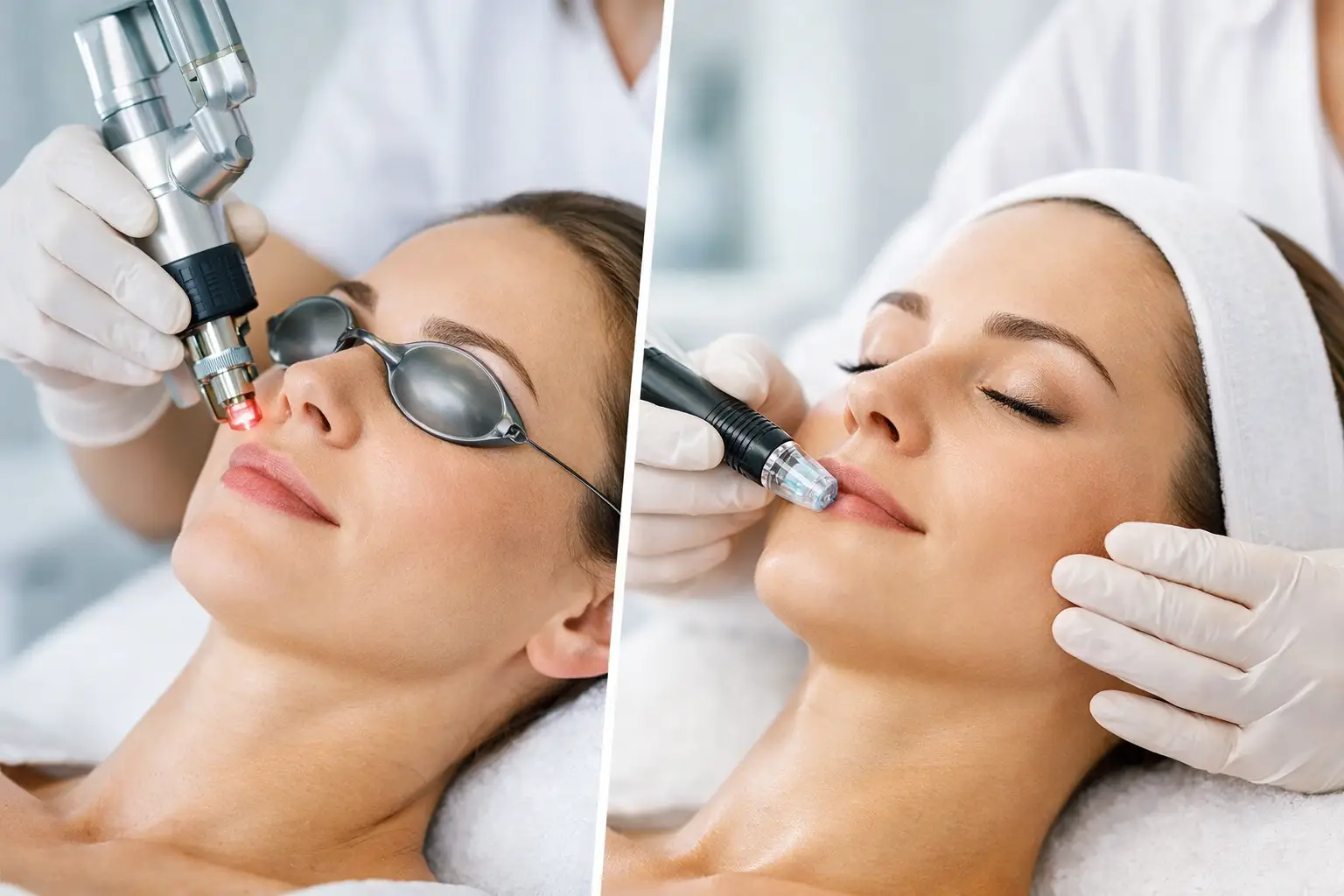
Fractional CO2 laser resurfacing uses carefully controlled laser energy to create tiny treatment channels in the skin. These channels trigger the body’s natural repair response while treating the surface and deeper layers of the skin. Because CO2 laser treatment is more intensive, it is often chosen for more established signs of ageing, pronounced sun damage, deeper acne scarring and significant textural concerns.
Microneedling uses fine, sterile needles to create controlled micro-channels in the skin. This also stimulates a repair response and supports collagen and elastin production, but without removing or vaporising the skin’s outer layer as a CO2 laser does. It is generally a gentler option with less downtime and can be a good fit for early texture changes, enlarged pores, mild scarring and overall skin refreshment.
Neither treatment is a one-size-fits-all solution. The depth of scarring, the condition of your skin barrier, your natural skin tone, sun exposure and your ability to follow aftercare all influence the right recommendation.
When CO2 laser may be the stronger option
CO2 laser resurfacing is often considered when the goal is more noticeable correction. It can be particularly valuable for clients concerned by etched-in lines, crepey texture, acne scars with deeper edges, rough sun-damaged skin or uneven skin tone and texture occurring together.
The treatment works by renewing the skin more intensively than microneedling. For suitable candidates, this can mean a more significant change in skin smoothness and quality after healing, although results develop progressively as collagen remodelling continues.
There is a trade-off: recovery is more involved. Redness, heat, swelling and peeling are expected parts of the healing process. Depending on the treatment settings and area treated, skin may need a period of focused care before it is ready for social events, work commitments or regular makeup. Sun protection is essential, both during recovery and long term.
CO2 laser is not automatically appropriate for every skin tone or every concern. Some clients have a higher risk of post-inflammatory pigmentation, particularly if they are prone to pigmentation changes or have had recent sun exposure. A careful assessment, appropriate treatment settings and diligent post-treatment care are central to safe outcomes.
What CO2 laser recovery can look like
Recovery is not just about staying home for a few days. It is a process of protecting healing skin. Your clinician will provide tailored aftercare, but this commonly involves gentle cleansing, prescribed or recommended supportive products, avoiding heat and exercise initially, resisting any urge to pick at flaking skin, and staying out of direct sun.
For people who can plan downtime and are seeking a more intensive treatment for established concerns, that recovery can be a worthwhile investment. If you have a wedding, holiday, important presentation or long days outdoors coming up, timing should be discussed before booking.
When microneedling may make more sense
Microneedling is often the practical choice for clients who want collagen-focused treatment with a shorter recovery window. The skin may look red and feel warm after an appointment, similar to a moderate sunburn, but this typically settles more quickly than the recovery associated with CO2 laser resurfacing.
It can suit mild to moderate acne scarring, early fine lines, enlarged pores, uneven texture and skin that has begun to look tired or less firm. It is also commonly used as part of an ongoing skin maintenance plan, with a series of treatments recommended according to your concerns and response.
The gradual nature of microneedling is both its strength and its limitation. It can produce a natural-looking improvement over time, but it may not create the same degree of resurfacing for deep scarring or more advanced textural damage. Multiple sessions are often needed, and patience matters.
Microneedling may also be considered for a wider range of skin tones, but suitability still needs professional assessment. Active acne, open lesions, infection, certain skin conditions, a history of abnormal scarring and some medications can affect whether treatment should proceed or be postponed.
The importance of a treatment series
One microneedling appointment can leave skin looking fresher, but collagen takes time to build. A treatment plan usually spaces appointments to allow the skin to repair and respond between sessions. This gives your clinician the opportunity to assess progress and adjust the plan if needed.
That measured approach is particularly useful for first-time aesthetic clients. You can start with a less intensive treatment, see how your skin responds and decide whether further sessions or a different approach better suits your goals.
Results, comfort and downtime compared
CO2 laser and microneedling both work with the skin’s healing response, but their experience is different. CO2 laser is usually the more intensive procedure and requires more recovery, while potentially delivering a stronger resurfacing effect in appropriate cases. Microneedling is generally less disruptive to daily life, but results are often more gradual and may require a course of treatments.
Comfort is managed differently depending on the procedure and treatment area. A topical numbing cream may be used where appropriate, and your clinician should explain what to expect before treatment begins. During a consultation, be open about your comfort concerns, previous treatment experiences and any tendency to feel faint or anxious. Good care includes making sure you feel informed and supported, not rushed.
It is also worth looking beyond the treatment itself. Your at-home skincare, sun habits, smoking status, skin hydration and consistency with aftercare can all influence healing and the longevity of results. Professional treatment is most effective when it sits within a realistic plan for your lifestyle.
Can you have both treatments?
Sometimes, yes. CO2 laser and microneedling may be used at different stages of a broader skin plan, but they should not be treated as interchangeable or booked back-to-back without clinical guidance. The skin needs adequate time to recover, and the order of treatments depends on the concern being addressed.
For example, a person with more significant acne scarring may benefit from an intensive resurfacing approach at one stage, then move to maintenance-focused treatments later. Someone with early texture changes may prefer to begin with microneedling and review their progress after a series. The right path depends on the skin in front of the clinician, not a generic timetable.
Choosing safely on the Sunshine Coast
The appeal of a quick fix is understandable, especially when you are frustrated by scars or skin changes that makeup cannot fully cover. Yet treatments that stimulate collagen and renew the skin should be planned carefully. Ask who will perform the procedure, how your skin type and medical history will be assessed, what downtime is realistic, and what support is available if you have questions during healing.
At Coastal Skin Clinic, treatment recommendations are personalised rather than based on a single device or a standard package. That means discussing your concerns honestly, examining your skin carefully and choosing the level of treatment that makes sense for your goals and lifestyle.
The most helpful next step is a consultation where you can bring your questions, talk through your timeline and get clear advice on whether CO2 laser, microneedling or another approach is the right fit. Feeling comfortable with the plan is just as valuable as feeling excited about the potential results.