A tattoo can look dramatically lighter after one session, then appear to pause between treatments. This is one reason clients often ask how laser settings affect fading. The answer is not simply that a stronger setting produces a faster result. Effective tattoo removal relies on choosing settings that suit your tattoo, your skin and the stage of treatment, while allowing your body time to clear fragmented ink safely.
At Coastal Skin Clinic, laser tattoo removal is approached as a personalised treatment journey. Your practitioner considers the colour, depth and age of the ink, as well as your skin type and how your skin responds over time. Safe. Effective. And never based on a one-size-fits-all setting.
How laser settings affect fading over time
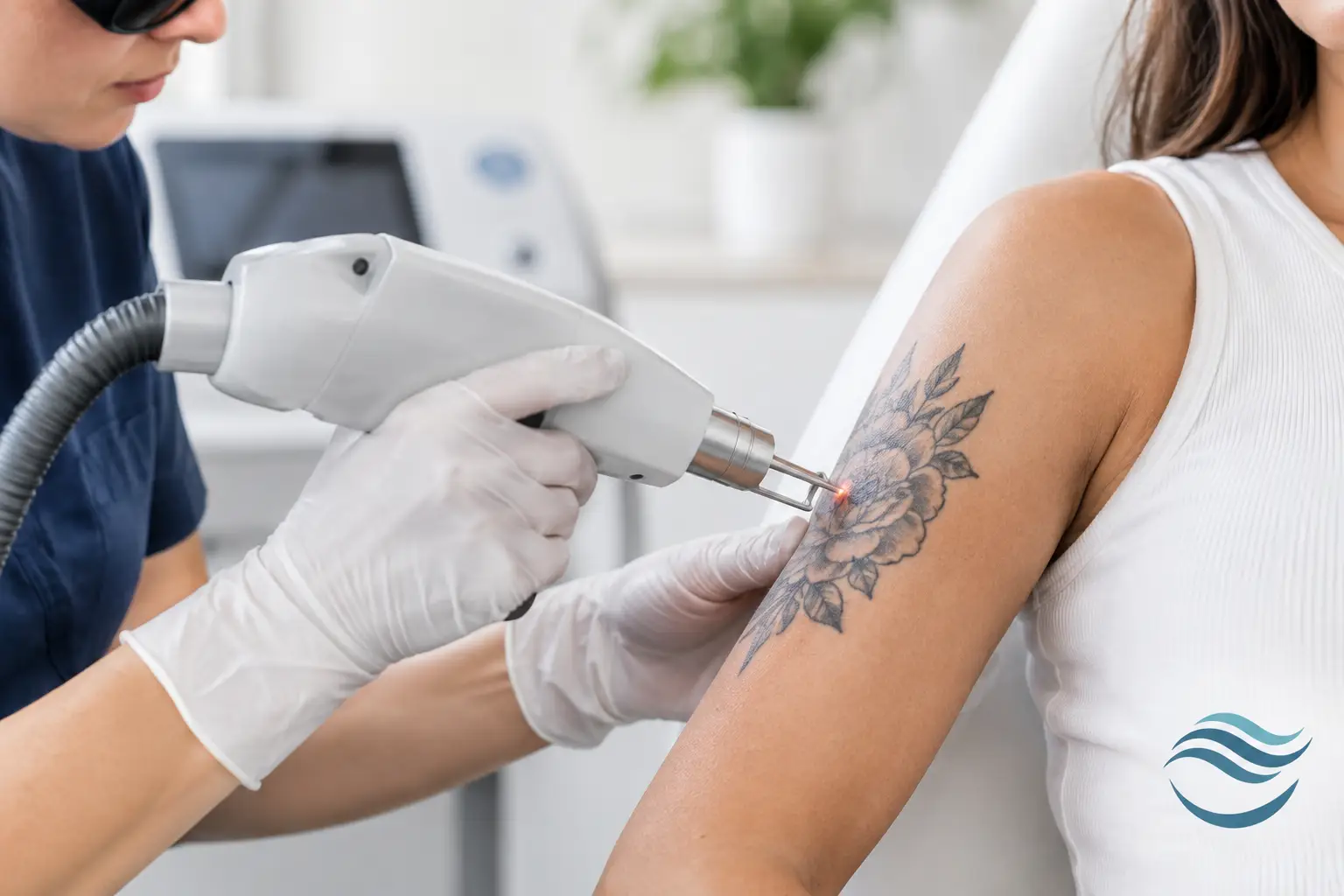
Laser tattoo removal works by directing short pulses of light into tattoo pigment. The pigment absorbs that energy, breaks into smaller particles and is gradually cleared by the body’s natural immune processes. The fading you see is therefore a combination of what happens during the appointment and what continues to happen in the weeks afterwards.
Laser settings control how that energy reaches the ink. They may include the wavelength used, fluence or energy level, spot size, and pulse duration. These settings are adjusted with a clear purpose: target as much unwanted pigment as possible while protecting the surrounding skin.
A setting that is ideal for one client may not be suitable for another. A small black tattoo on lighter skin can require a very different approach to a large, colourful tattoo, cosmetic tattoo or cover-up. Your practitioner is looking for a clinical response that indicates the pigment is reacting, without pushing the skin beyond what it can comfortably recover from.
More energy is not always better
It is understandable to think a higher energy setting will erase a tattoo more quickly. In reality, overly aggressive treatment can increase discomfort, prolong healing and raise the risk of unwanted skin changes, including blistering, pigmentation changes or scarring.
The goal is controlled, appropriate treatment rather than simply using the highest possible setting. A conservative approach may be particularly appropriate for darker skin tones, areas with delicate skin, or tattoos that have already had several sessions. As ink clears and the tattoo becomes lighter, settings may also need to change to continue treating the remaining pigment effectively.
A good treatment plan balances progress with skin health. A fading tattoo is encouraging, but clear, healthy healing is just as important.
Wavelength and why tattoo colours fade differently
Not all tattoo inks absorb the same type of laser light. Laser wavelength is selected according to the colour of pigment being treated. Black ink generally responds well because it absorbs a broad range of light, which is why black and dark blue tattoos often fade more predictably than lighter or brighter colours.
Green, blue, red, orange and yellow pigments can be more complex. Some colours need a specific wavelength to respond well, and some inks are more resistant because of their formulation, density or depth in the skin. White, flesh-toned and certain cosmetic inks can also behave unpredictably, occasionally darkening before they begin to fade.
This does not mean coloured tattoos cannot be treated. It means honest expectations matter. Your practitioner may recommend a test spot for certain pigments, particularly cosmetic tattoo ink, so the response can be assessed before a larger area is treated.
Ink density, depth and tattoo history matter
Laser settings are only one part of the fading picture. Professional tattoos often contain more densely packed pigment placed deeper in the skin, so they commonly need more sessions than amateur tattoos. Cover-ups can be especially challenging because they may contain multiple layers of dark ink.
Older tattoos may fade more readily than newer ones, but age alone does not determine the outcome. The original ink, technique, body location and any previous laser treatment all influence how the tattoo responds. A tattoo on an area with strong circulation may clear differently from one on the hands, feet or lower legs.
Your immune system also has an ongoing role. The laser breaks down the ink, but your body does the clearing. This is why visible fading can continue for several weeks after treatment and why rushing appointments is rarely helpful.
Why settings may change between appointments
A personalised plan is not fixed on day one. Your practitioner watches how the tattoo and surrounding skin heal after each session, then uses that information to guide future treatments.
Early appointments may focus on safely establishing how your skin and ink respond. As pigment begins to break up, the treatment area can look patchy or uneven. This is normal. Some parts of a tattoo may fade quickly while dense outlines, shaded sections or particular colours take longer.
If your skin heals well and the pigment response supports it, settings may be adjusted at a later session. In other cases, keeping settings consistent or taking a more measured approach may be the best choice. This clinical judgement is one of the key benefits of professional, practitioner-led treatment.
There is also a point where remaining ink becomes more difficult to target. Small traces of stubborn pigment can take longer to clear than the early, more obvious fading. Patience at this stage can help protect the skin and support the best possible outcome.
Treatment intervals support better fading
Leaving adequate time between sessions is not a delay in progress. It is part of the treatment. Your skin needs time to repair and your immune system needs time to process the disrupted pigment.
Treating again too soon does not necessarily speed up tattoo removal. It may create more inflammation before the previous session’s pigment clearance has had time to occur. Your practitioner will recommend an interval based on your tattoo, skin response and treatment goals.
During this time, protect the area from sun exposure, avoid picking or rubbing any scabbing, and follow the aftercare advice provided. Sun exposure can increase the risk of pigment changes and may mean treatment needs to be postponed until your skin is safe to treat.
The skin response your practitioner is looking for
Immediately after laser treatment, the tattoo may show a temporary whitening or frosting effect. This can be a normal sign that the laser energy has interacted with the pigment. Redness, tenderness and mild swelling are also common in the short term.
However, the visible response during treatment is only one indicator. Your practitioner will also consider how the area heals in the following days and weeks. If you experience unexpected or worsening symptoms, contact the clinic for guidance rather than trying to manage it alone.
A professional consultation should include discussion of your medical history, skin type, tattoo history and realistic expectations. It is also the right time to talk about whether complete removal, significant fading for a cover-up, or lightening of a cosmetic tattoo is your goal. Each outcome may call for a different plan.
What you can do to support your treatment plan
Your role is less about trying to influence the laser settings and more about preparing well and caring for your skin afterwards. Arrive with clean skin free from fake tan, avoid sun exposure before and after appointments, and share any changes to your health, medications or skincare routine with your practitioner.
It also helps to keep expectations grounded. Tattoo removal is a process, not an instant result. Some tattoos clear exceptionally well, while others retain a light shadow or traces of stubborn colour. A qualified practitioner will be open about these possibilities from the beginning rather than promising an exact number of sessions.
The most effective setting is the one selected for your tattoo at that particular appointment, with your skin’s safety at the centre of the decision. If you are considering tattoo removal on the Sunshine Coast, a consultation gives you the space to ask questions, understand the likely treatment pathway and feel supported before you begin.