If your skin feels dull, uneven or rough to the touch, the question usually comes up quickly – chemical peel or microdermabrasion? Both treatments are designed to improve skin texture and refresh the complexion, but they work in very different ways and suit different concerns.
Choosing the right one is less about what is more popular and more about what your skin is asking for. Some clients need gentle polishing and maintenance. Others need a more corrective treatment that can target pigmentation, acne, congestion or early signs of ageing. The best result comes from matching the treatment to your skin, not forcing your skin to fit the treatment.
Chemical peel or microdermabrasion: what is the difference?
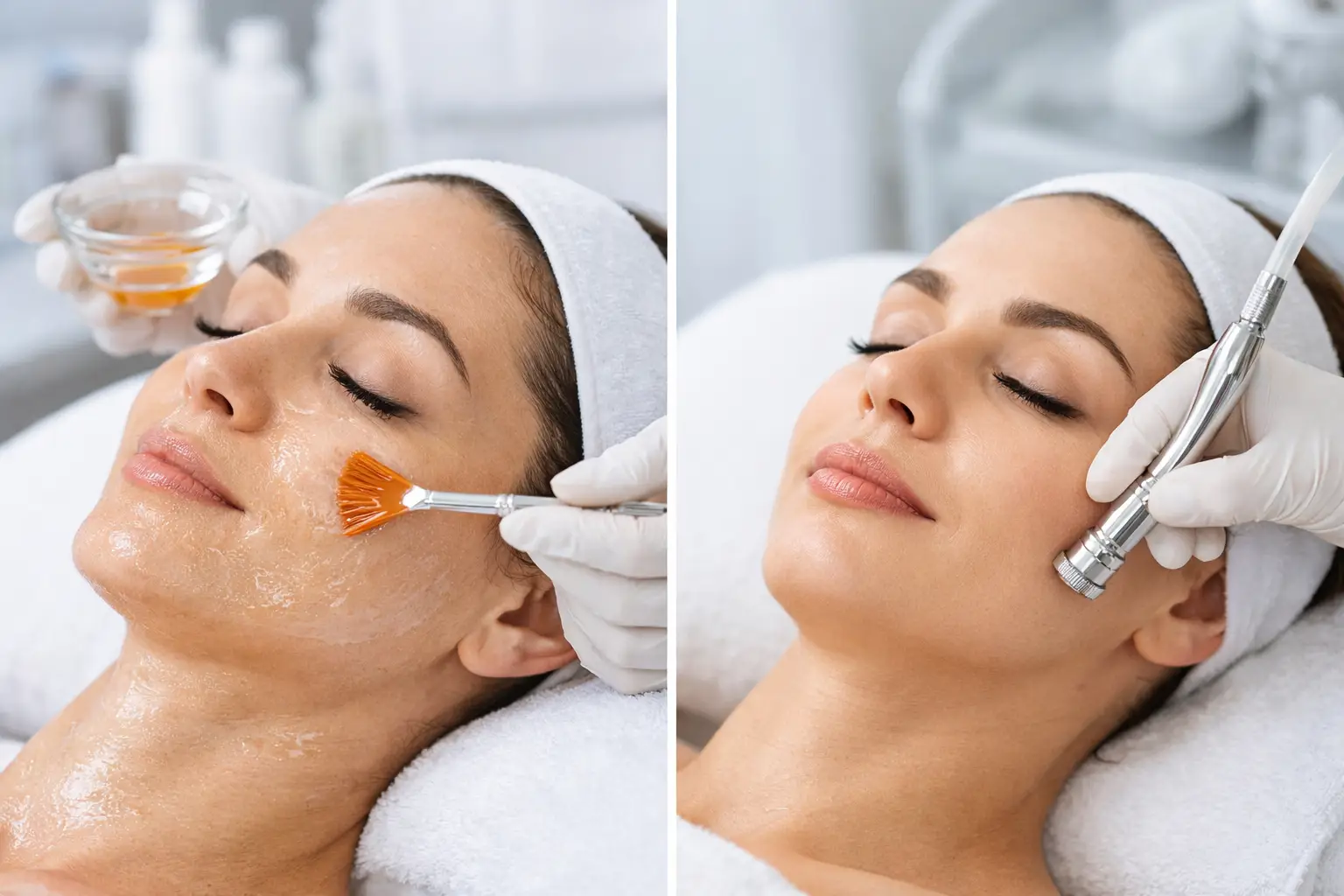
Microdermabrasion is a mechanical exfoliation treatment. It works on the surface of the skin, removing dead skin cells and helping to smooth texture, brighten dullness and improve the way skincare products absorb. It is often chosen by clients who want a fresh, clean feel with little to no downtime.
A chemical peel uses carefully selected acids to exfoliate the skin in a more targeted way. Depending on the type and strength of the peel, it can address concerns beyond surface dullness, including acne, pigmentation, uneven tone and some visible signs of sun damage. Medical-grade peels can also stimulate skin renewal more deeply than microdermabrasion.
In simple terms, microdermabrasion physically buffs the outer layer of skin, while a chemical peel uses active ingredients to encourage controlled exfoliation and regeneration.
When microdermabrasion may be the better fit
Microdermabrasion often suits clients who want a gentle refresh rather than a more intensive corrective treatment. If your skin is looking tired, feels a little rough, or needs a maintenance treatment between more advanced services, it can be a very good option.
It is commonly suited to mild congestion, dry surface build-up, uneven texture and lack of radiance. Many people also like it before an event or as part of a regular skin maintenance plan because the skin usually looks fresher quite quickly.
Another advantage is that it is generally easy to fit into a busy routine. There is usually minimal recovery time, and the treatment itself feels more like a deep exfoliation than a significant procedure. For first-time clients who feel nervous about skin treatments, that can make microdermabrasion feel like a comfortable starting point.
That said, gentle does not always mean best. If your main concerns are stubborn pigmentation, active acne or more noticeable ageing changes, microdermabrasion may not give you the level of correction you are hoping for on its own.
What microdermabrasion can help with
Microdermabrasion is usually best for superficial concerns. It can improve rough texture, dullness, minor congestion and flaky surface skin. It may also help the skin look smoother and more polished over time when performed as part of ongoing care.
What it does not do as effectively is treat deeper discolouration, inflamed acne or more advanced sun damage. In those cases, a peel or another professional skin treatment may be more appropriate.
When a chemical peel may be the better fit
A chemical peel is often the stronger option when the skin needs correction as well as refreshment. Different peels are formulated for different concerns, which is why professional assessment matters. One client may benefit from a brightening peel for pigmentation, while another may need a peel focused on acne and congestion.
For clients dealing with uneven skin tone, breakout-prone skin, post-acne marks or visible sun damage, a peel can often deliver more noticeable change than microdermabrasion. It can also be a better choice if the goal is to improve skin clarity and stimulate renewal rather than simply smooth the surface.
There is, however, more variation with peels. Some are very light and involve only mild flaking or dryness. Others are more active and can come with visible peeling for several days. That is not a bad thing, but it does mean your treatment needs to be selected carefully around your skin condition, lifestyle and comfort level.
What chemical peels can help with
Depending on the peel chosen, this treatment may help with acne, congestion, excess oil, pigmentation, uneven tone, rough texture and early signs of ageing. Some peels are designed to brighten and freshen. Others are selected for more targeted skin correction.
This is also why the phrase chemical peel can sound broader than it really is. Not all peels are the same, and results depend on the formulation, strength and how your skin is prepared and supported.
Downtime, sensitivity and what to expect
One of the biggest deciding factors is downtime. Microdermabrasion is usually the lower-commitment option. Most clients experience some mild pinkness at most, and the skin often settles quickly. It can be a practical choice if you want very little interruption to your week.
A chemical peel can range from very manageable to more noticeable, depending on the treatment performed. You may experience tightness, dryness, mild redness or peeling in the days after. For some clients, that trade-off is worth it because the treatment is more corrective. For others, especially if they have a busy social calendar or sensitive skin, a gentler option may feel more realistic.
Sun protection matters with both treatments, but especially after a peel. Freshly exfoliated skin is more vulnerable, so aftercare is part of the result, not an optional extra.
Sensitive skin changes the answer
If your skin is reactive, the choice between chemical peel or microdermabrasion is not always straightforward. Some sensitive skins do well with carefully selected peels because the treatment can be tailored to the concern and skin function. Others may respond better to a very gentle exfoliation approach or need barrier support before either treatment is considered.
This is where a proper consultation becomes valuable. Redness, stinging, dehydration and inflammation can all affect which option is safer and more effective. A treatment that sounds good online may not be the right one if your barrier is already compromised.
Which treatment gives better results?
That depends entirely on what you mean by better. If you want an immediate smoother feel and brighter look with minimal downtime, microdermabrasion can be an excellent choice. If you want a treatment that addresses more specific concerns such as acne, pigmentation or uneven skin tone, a chemical peel may give stronger long-term improvement.
For many clients, it is not an either-or decision forever. Skin needs change through the year and over time. Someone may have microdermabrasion as a maintenance treatment, then move into a series of peels when targeting a specific concern. Another client may begin with a gentle peel plan and later use microdermabrasion for upkeep.
The strongest treatment is not always the smartest treatment. Consistency, skin condition and professional guidance usually matter more than intensity.
Chemical peel or microdermabrasion for acne, pigmentation and ageing
For acne and congestion, a chemical peel often has the edge because it can do more than remove surface build-up. The right peel can help regulate oil, clear pores and support skin renewal. Microdermabrasion may help with mild congestion, but it is usually less targeted for active acne concerns.
For pigmentation and sun damage, peels are also often more effective because they can work on uneven tone in a more corrective way. This is especially relevant in Queensland, where sun exposure is part of everyday life and pigment can be stubborn.
For mild roughness, dull skin and routine maintenance, microdermabrasion remains a popular option because it is simple, familiar and easy to tolerate.
For early signs of ageing, both can play a role. Microdermabrasion can soften surface texture and brighten the complexion. A peel may be better if your goal is to address tone, clarity and overall skin renewal more meaningfully.
Why professional assessment matters
Two people can have what looks like the same problem and need completely different treatment plans. Pigmentation may be sun-related, post-inflammatory or linked to skin sensitivity. Breakouts may be caused by congestion, hormones or irritation. Dry, flaky skin might need exfoliation, or it might need barrier repair first.
That is why treatment-led care matters. At a professional clinic, the decision is based on your skin history, your current condition, your goals and how much downtime you can realistically manage. It is also about safety. Over-treating the skin can delay progress rather than speed it up.
A thoughtful plan may involve one treatment, a series, or a staged approach that changes as your skin improves. That kind of personalised guidance tends to produce better and more sustainable results than choosing from a treatment menu alone.
If you are deciding between chemical peel or microdermabrasion, the most useful question is not which one is better overall. It is which one is right for your skin right now. The right treatment should leave you feeling confident, cared for and clear about the next step.