
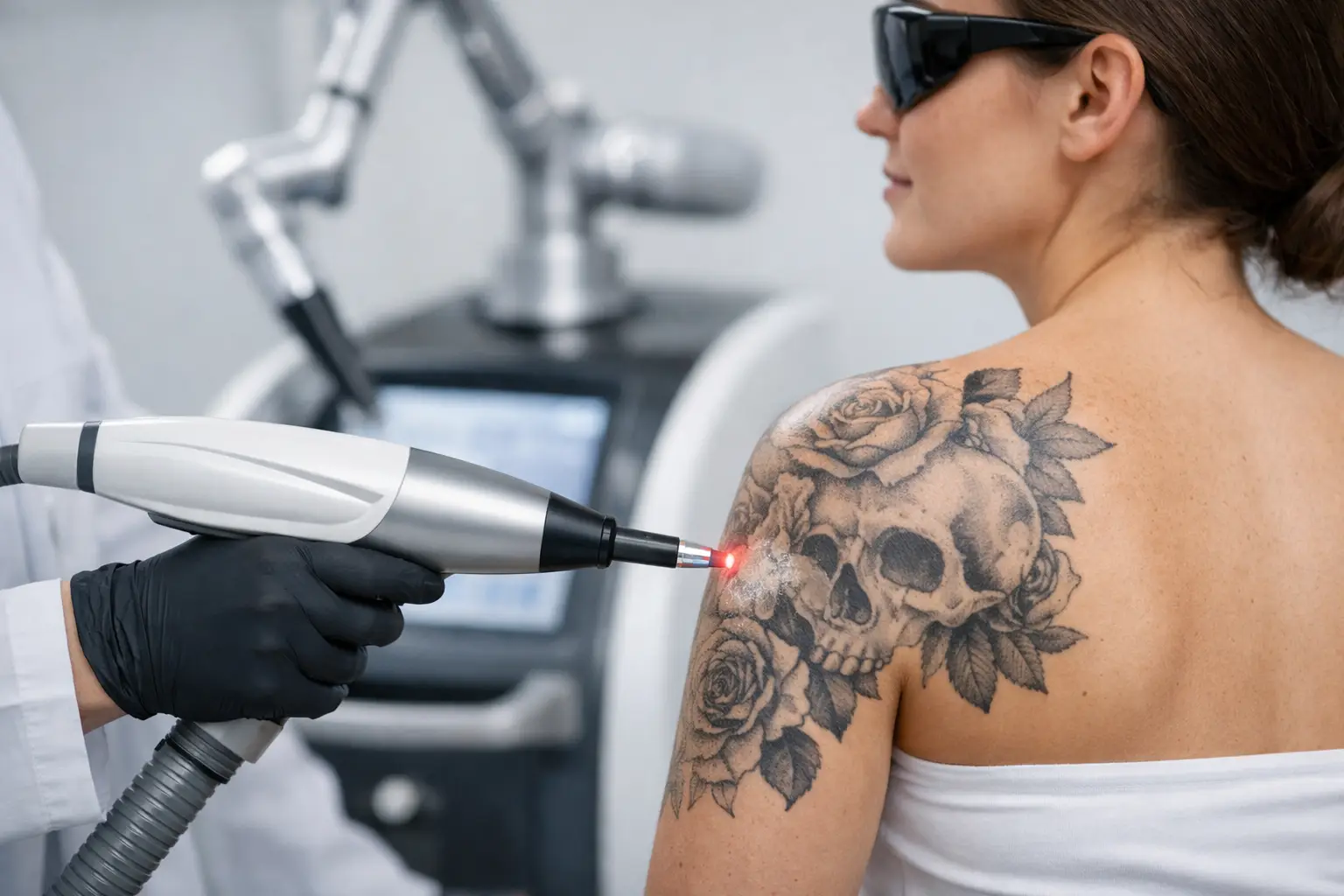
A tattoo that once felt right can start to feel out of step with the life you have now. For many people, that shift is what sparks interest in the future of laser tattoo removal – not just whether it works, but whether treatments are becoming safer, faster and easier to manage.
The short answer is yes, but with some healthy caution. Technology is improving, treatment planning is getting smarter, and client comfort is receiving far more attention than it did years ago. At the same time, tattoo removal is still a medical-aesthetic process that depends on your skin, your tattoo, and the quality of the device and practitioner behind it.
What the future of laser tattoo removal is likely to look like
The biggest change is not one miracle machine that removes every tattoo in a single visit. The real progress is more practical than that. Newer systems are helping practitioners target pigment more precisely while reducing unnecessary heat in the surrounding skin.
That matters because better precision often means a safer treatment experience and a stronger balance between results and skin protection. In a clinical setting, this can support better fading over a treatment series, particularly when the laser wavelength is well matched to the tattoo colours being treated.
We are also seeing a stronger shift towards customised treatment plans. Rather than treating all tattoos as if they respond the same way, experienced clinics increasingly assess ink density, colour mix, tattoo age, skin type and placement before deciding on settings and timing. This approach is not flashy, but it is one of the most important parts of modern tattoo removal.
Smarter laser technology, not just stronger laser energy
People often assume newer technology simply means more power. In reality, the future of laser tattoo removal is more about control than brute force.
Modern laser systems are designed to deliver energy in ways that can break down ink particles more efficiently while giving the skin less collateral stress. Depending on the device, that may involve different pulse durations, multiple wavelengths, or better calibration for specific pigment colours. Black ink usually responds best, while colours such as green, blue and certain reds can still be more challenging.
This is where expectations need to stay realistic. Better devices can improve outcomes, but they do not erase every variable. Amateur tattoos, faded tattoos and older ink often respond differently from professionally applied, heavily saturated tattoos. A small line-work tattoo on one person may clear more quickly than a dense, layered tattoo on another, even with the same machine.
Better comfort during treatment
One of the most welcome changes for clients is the increasing focus on comfort. Tattoo removal has never had a reputation for being relaxing, and honesty matters here. Even with advanced technology, laser treatment can still be uncomfortable.
What is improving is how that discomfort is managed. Cooling systems, careful technique and treatment pacing can make a noticeable difference. A well-run clinic will also prepare clients properly before treatment and talk through aftercare so the skin has the best possible chance to recover well.
This may sound simple, but it is part of what separates a rushed service from a professional one. Feeling informed and supported often reduces anxiety as much as the physical comfort measures themselves.
More accurate treatment planning from the start
In the past, some people began tattoo removal with a vague idea of how many sessions they might need. That uncertainty is still part of the process to some degree, because no practitioner can promise an exact number with total certainty.
Still, consultations are becoming more sophisticated. Good assessment now involves more than a quick glance at the tattoo. Skin tone, scar tissue, ink depth, cover-up history, sun exposure habits and immune response all play a role in how the tattoo may fade over time.
This is a meaningful step forward because better planning helps clients make better decisions. It gives a clearer sense of likely progress, realistic spacing between appointments, and whether full removal or lightening for a cover-up is the more practical goal.
The growing role of skin safety
As technology advances, skin safety is becoming even more central to treatment decisions. That is a good thing. Most clients are not only asking, “Will my tattoo fade?” They are also asking, “How will my skin look afterwards?”
The future of laser tattoo removal is closely tied to protecting the skin barrier, reducing the risk of unwanted pigment changes and managing the treatment in a way that respects healing time. This is particularly important for clients with darker skin tones, sensitive skin, or tattoos in areas where healing can be slower.
Safer treatment does not always mean the most aggressive settings. Often, it means knowing when to be conservative, when to wait longer between sessions, and when a client needs a revised plan rather than simply more of the same.
Why expertise will matter even more
As devices improve, the value of practitioner judgement becomes more obvious, not less. Technology can support good outcomes, but it does not replace clinical decision-making.
An experienced practitioner understands that successful tattoo removal is rarely about chasing the fastest possible fade at every appointment. It is about reading the skin response, adjusting the treatment plan when needed and keeping the long-term result in focus.
That is especially important when tattoos are complex. Cover-ups, cosmetic tattoos, mixed colours and old scarring all require careful assessment. In these cases, the practitioner’s training and experience can have a major effect on both safety and visible results.
For clients on the Sunshine Coast considering treatment, this is one reason licensed, consultation-led care matters. A proper assessment can save time, reduce frustration and help set expectations that feel grounded rather than sales-driven.
Will tattoo removal become faster?
Probably in some cases, but not in the way people often hope. The idea of dramatically fewer sessions is appealing, yet the body still needs time to clear fragmented ink particles after each treatment. No device can completely bypass that biological process.
What may improve is efficiency across a full treatment plan. Better targeting can mean stronger fading over time. More precise settings may also reduce setbacks caused by overtreatment or poorly timed sessions. So while many clients will still need a series of appointments, the journey may become more predictable and better managed.
That distinction matters. Faster is only useful if the skin tolerates it well and the result remains cosmetically acceptable.
The rise of more personalised care
One of the strongest trends in aesthetic medicine is personalisation, and tattoo removal is following the same path. Clients increasingly expect care that reflects their individual skin, schedule, goals and comfort level.
That might mean building a treatment plan around an upcoming event, preparing the skin before treatment begins, or focusing first on fading a particular section for a cover-up. It may also mean recognising when complete removal is not the only successful outcome.
This more tailored model suits clients who want expert guidance rather than generic promises. It also reflects a broader change in the industry, where consultations are no longer treated as a formality but as a key part of safe, effective care.
What clients should watch for as the industry evolves
New technology tends to bring bigger claims. Some will be fair, and some will be more marketing than medicine. That is why asking good questions remains essential.
A trustworthy clinic should be able to explain what device is being used, why it suits your tattoo, what risks need to be considered and what kind of progress is realistic. If the message sounds too certain, too fast or too cheap to be credible, it probably is.
The future of laser tattoo removal should be more advanced, but it should also be more transparent. Better treatment starts with better conversations.
For most people, the most promising part of what comes next is not a futuristic promise of instant removal. It is the steady move towards treatment that is more precise, more personalised and more respectful of your skin. When that care is delivered by trained professionals in a supportive setting, the process feels less like a gamble and more like a well-guided next step.