
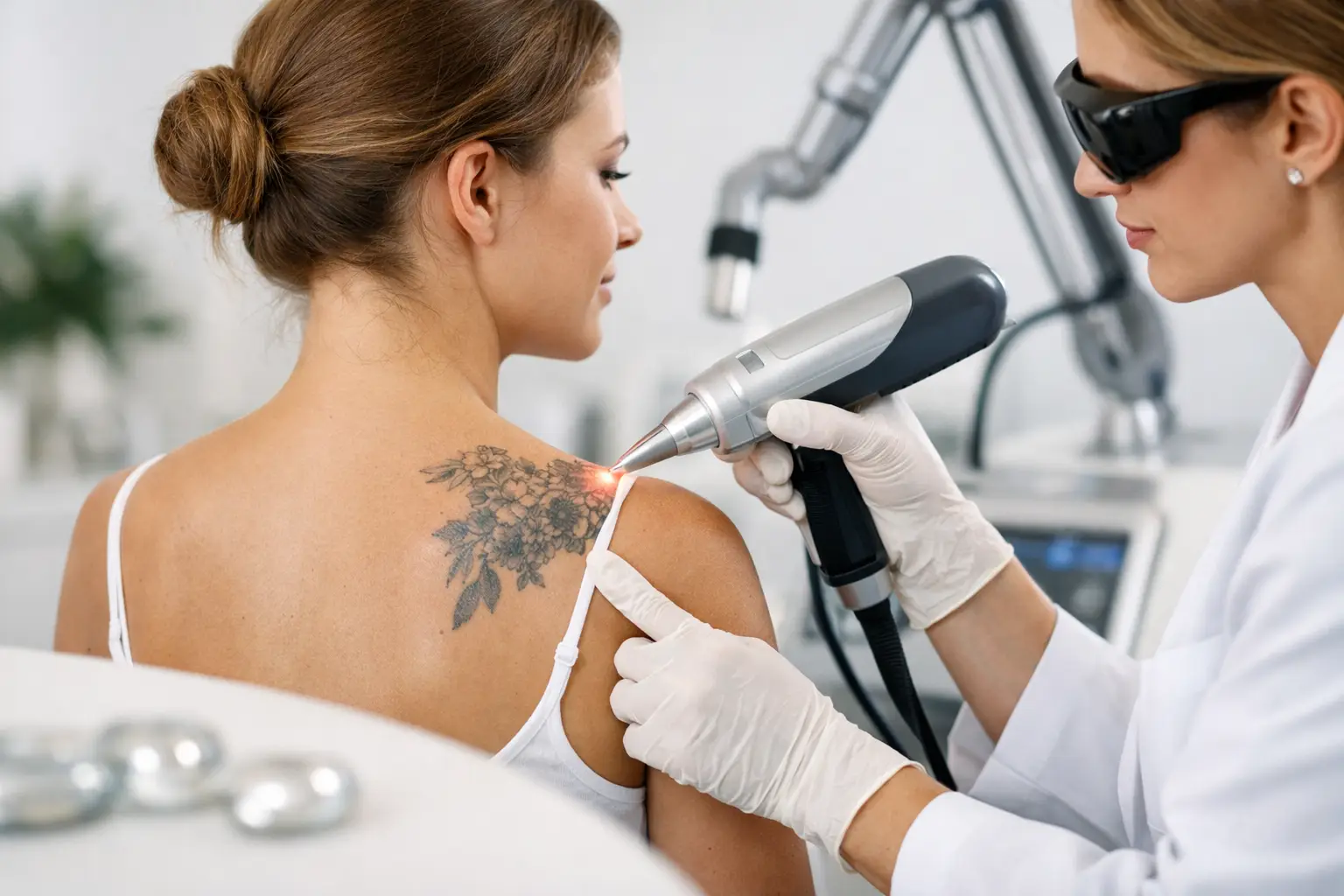
If you are asking how many tattoo removal sessions you will need, you are usually asking two things at once – how long this will take, and how completely the tattoo can fade. The honest answer is that most tattoos need multiple treatments, and the exact number depends on the ink, your skin, your immune response, and how your tattoo was originally done.
For many clients, a rough starting point is around 6 to 12 sessions. Some tattoos fade faster. Others take longer, especially if they are dense, layered, colourful, or older treatments have left scar tissue behind. That is why a proper consultation matters. It gives you a more realistic expectation from the beginning, rather than a generic promise that may not suit your tattoo at all.
How many tattoo removal sessions is normal?
In clinic, there is no single number that fits everyone. Professional tattoos usually take more sessions than amateur tattoos because the ink sits deeper and is packed more densely into the skin. A small black script tattoo may respond far more quickly than a large multicoloured piece with heavy shading.
As a guide, many people fall into these ranges:
- Light or amateur tattoos may respond in 4 to 6 sessions.
- Average professional tattoos often need 6 to 12 sessions.
- Dense, colourful, cover-up, or layered tattoos can need 12 or more sessions.
These are still only estimates. Tattoo removal is a process of gradual fading, not a one-time treatment. Each session breaks up more pigment, and your body then clears those fragmented particles over time.
Why the number of sessions varies so much
The biggest reason session counts vary is that tattoo removal is not only about the laser. It is also about how your body responds afterwards. Two people with similar tattoos can have noticeably different fading patterns because their immune systems clear ink at different rates.
Ink colour matters. Black ink typically responds best because it absorbs laser energy well. Dark blue and some reds can also respond well, while greens, light blues, and certain mixed pigments can be more stubborn. If your tattoo includes several colours, different parts may fade at different speeds.
Tattoo age also plays a part. Older tattoos often fade more easily because some pigment has already broken down over the years. Newer tattoos can be sharper, denser, and more resistant in the early stages of treatment.
Placement matters as well. Tattoos closer to the heart, such as those on the chest or upper arms, can sometimes clear faster than tattoos on the hands, feet, or lower legs. Areas with better circulation often respond more efficiently.
Skin condition is another factor. If there is existing scarring or the tattoo has been reworked or covered up, removal may take longer. Layered ink means more pigment for the laser and your body to deal with.
What happens between sessions matters too
A common misunderstanding is that more frequent treatments always mean faster results. In reality, your skin needs time to recover, and your body needs time to flush out the shattered pigment. Rushing sessions too closely together can increase irritation without improving the final outcome.
Most clients are treated with several weeks between appointments. This spacing allows healing and gives the fading process time to continue. It also helps your practitioner assess how the tattoo is responding before planning the next session.
Aftercare has a real impact here. Keeping the area clean, protected, and out of the sun supports healing. Picking at the area, ignoring aftercare advice, or returning to treatment before the skin is ready can slow progress and increase the chance of unwanted side effects.
How many tattoo removal sessions for complete removal?
When people ask how many tattoo removal sessions they need, they often mean complete removal. That can be possible, but complete does not always mean perfectly invisible. In some cases, a tattoo can fade to the point where it is very difficult to see. In other cases, a light shadow, slight pigment change, or texture difference may remain.
This is especially true for tattoos with bright colours, cover-ups, cosmetic ink, or pre-existing skin changes. Safe and effective treatment is about aiming for the best realistic result for your skin, not overpromising a perfect outcome.
If your goal is not full removal but enough fading for a cover-up, you may need fewer sessions. Many clients choose partial removal to lighten an existing tattoo so a tattoo artist has more freedom to create a better new design. That can be a very practical option if you do not want the full treatment journey.
Signs your tattoo may need more sessions
Some tattoos are clearly more likely to take longer from the outset. Heavily saturated blackwork, large coloured pieces, and tattoos that have been touched up several times usually need more patience. Professional tattoos with crisp outlines and dense fill tend to hold more pigment than lighter homemade work.
You may also need extra sessions if fading slows after the first few treatments. That does not necessarily mean treatment is not working. Often, the easier-to-target pigment clears first, while deeper or more stubborn particles take longer.
This is where personalised planning makes a difference. A careful practitioner will track your progress, adjust settings appropriately, and tell you honestly when the tattoo is responding as expected and when it may take longer than first estimated.
What a realistic treatment timeline looks like
Even if you only need 6 to 8 sessions, tattoo removal is usually a months-long process rather than something finished quickly. With appropriate spacing between appointments, complete treatment can take the better part of a year or longer. For more complex tattoos, it can extend well beyond that.
That may sound frustrating at first, but gradual treatment is part of safe treatment. The goal is to fade the tattoo while protecting the surrounding skin. Fast promises are not always the safest ones.
For clients balancing work, family, and social commitments, it helps to think of tattoo removal as a staged plan. You are not expected to have every answer on day one. You just need a clear assessment, a sensible schedule, and honest guidance on what your tattoo is likely to need.
Can you predict session numbers before starting?
A consultation can give you a strong estimate, but not an exact guarantee. Good clinics look at the size, colours, location, age, density, and any signs of scarring or previous cover-up work. From there, they can explain a likely range rather than a fixed promise.
That approach is worth far more than being told a low number just to get you through the door. Tattoo removal is highly individual. The safest and most professional advice is tailored advice.
At Coastal Skin Clinic, this is exactly why consultations are such an important first step. They give you the chance to understand what your own tattoo may involve, what progress could look like, and what treatment plan makes sense for your skin and goals.
Is there anything you can do to reduce the number of sessions?
You cannot change the original tattoo, but you can support the process. Following aftercare properly, keeping your appointments appropriately spaced, protecting the area from sun exposure, and looking after your general health can all help your skin recover well between treatments.
What you should not do is chase shortcuts. Harsh DIY methods, poor-quality devices, or treatment that is too aggressive can create more problems than progress. Tattoo removal should always balance results with skin safety.
For most people, the better question is not just how to get fewer sessions, but how to get the best result from each one. That is where practitioner experience, suitable technology, and a personalised treatment plan matter most.
The best way to think about session numbers
It is natural to want a neat answer. But with tattoo removal, the most accurate answer is a range, not a promise. Many tattoos need 6 to 12 sessions, some need less, and some need more. What matters most is understanding why your tattoo sits where it does on that scale.
If you are considering removal, try not to focus only on the number. Focus on the quality of the assessment, the safety of the treatment, and the honesty of the advice you are given. A clear plan and realistic expectations usually lead to a far better experience than chasing the fastest possible fix.
The right place to start is a professional consultation where your tattoo can be assessed properly, your questions can be answered clearly, and you can move forward knowing what is realistic for your skin.