Your brows sit at the centre of your expression. A small change to their height, arch or tail can make your eyes appear more open, soften strong features or create a more polished look each morning. That is why learning how to choose brow tattoo shape is less about following a trend and more about finding a shape that feels naturally yours.
A well-planned eyebrow tattoo should complement your face, skin and lifestyle without looking heavy or dated. The best result is rarely the boldest brow in a photo. It is the one that still looks balanced when you are bare-faced, smiling, talking and going about your day.
Start with your natural brow, not a template
Your existing brow hair provides the most useful starting point. Its direction, density, placement and natural arch all offer clues about the shape that will suit you. Working with your natural structure usually creates a softer result and means less tattooing is needed outside the area where brow hair naturally grows.
This does not mean you need naturally full or symmetrical brows to achieve a lovely result. Many clients have sparse areas from over-plucking, hormonal changes, ageing, scars or simply genetics. A skilled brow tattoo practitioner can restore definition and balance while keeping the design believable.
Perfect symmetry is not the goal. Faces are naturally asymmetrical, and brows are sisters, not twins. Trying to force identical brows can sometimes make them look less natural. Instead, the aim is visual harmony when your face is relaxed and in motion.
How to choose brow tattoo shape for your face
Face shape can guide a brow design, but it should never be treated as a strict rule. Bone structure, eye placement, forehead height and your individual expression all matter just as much. During a proper consultation, your practitioner should assess the whole face rather than simply categorising it as oval, round or square.
Round faces
A gently lifted arch can add length and definition to a rounder face. The key word is gently. An overly high or sharply peaked arch may look surprised rather than flattering, particularly once pigment settles. A softly angled brow often creates a refined, natural lift.
Oval faces
Oval faces tend to suit many brow styles, but that does not mean every current trend will work. A soft arch that follows the natural brow line is usually a safe choice. Very thick, flat brows can overwhelm delicate features, while extremely thin brows may make the face appear longer.
Square or angular faces
If your jawline or facial features are more defined, a brow with a soft curve can bring balance. This does not need to be rounded from end to end. A controlled, subtle arch can preserve structure while avoiding a harsh appearance. The colour choice is equally important here, as a very dark brow can make strong features appear more severe.
Long faces
A slightly straighter brow with a longer, softly tapered tail can help create the impression of width. A very high arch can visually lengthen the face further, so proportion is especially important. Your practitioner will assess where the brow should begin, rise and finish in relation to your eyes and facial proportions.
Heart-shaped faces
A low-to-medium, soft arch often works beautifully with a wider forehead and narrower chin. Keeping the front of the brow light and avoiding an overly extended tail helps the shape remain balanced and fresh.
Consider your eyes and expression
Your eye shape and brow-to-eye distance deserve just as much attention as your face shape. Brows that sit too low can make the upper eye area feel crowded, while an arch placed too high can look disconnected from your natural features.
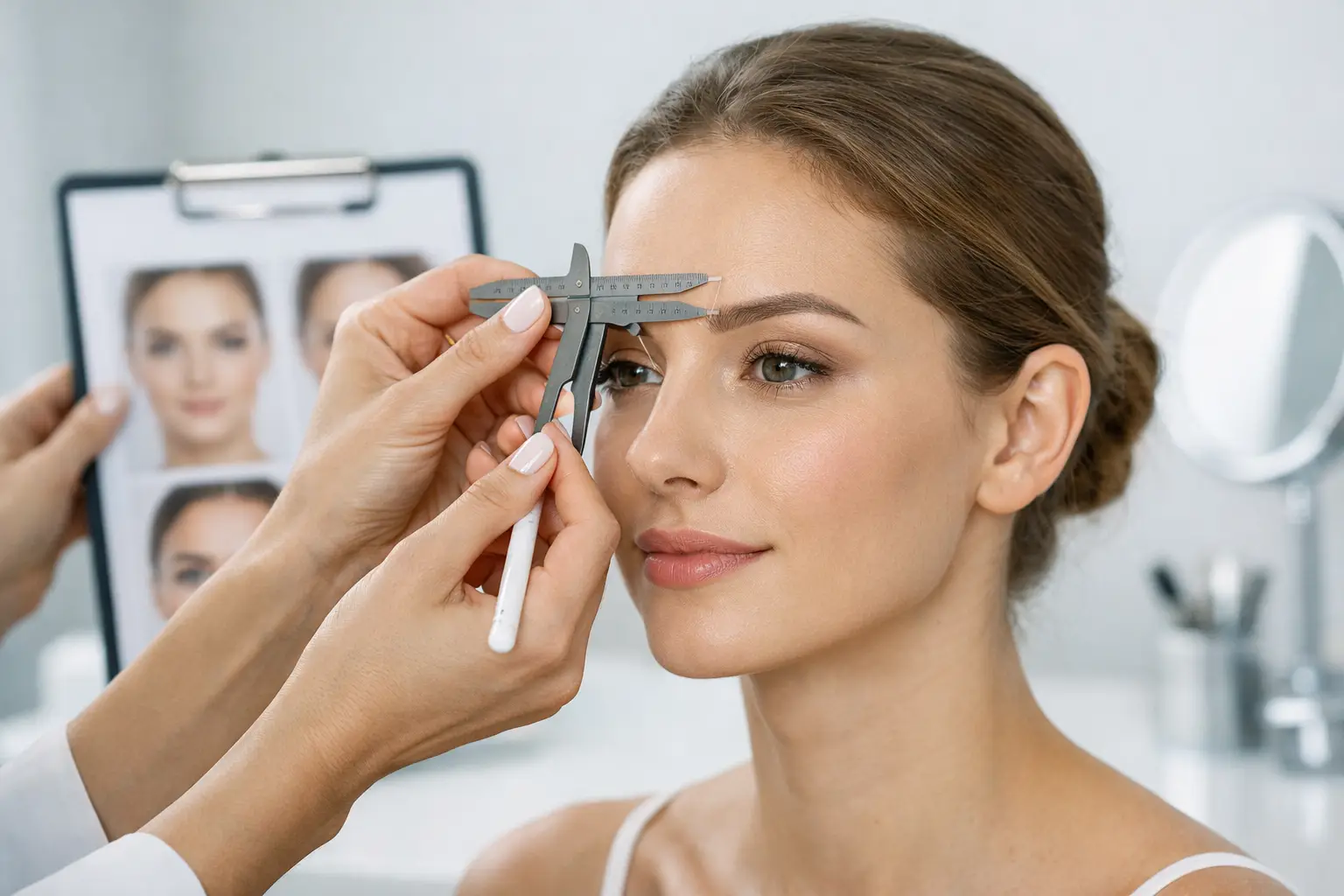
For hooded or mature eyelids, thoughtful placement can help create an open, rested appearance. This requires careful mapping while you are sitting upright and relaxed. A design drawn while lying down, or copied directly from an online image, may not reflect how your features sit naturally.
Your usual expression matters too. Some people naturally lift one brow, frown slightly or have one side of the forehead that moves more strongly. These details influence the final shape. A personalised appointment allows your practitioner to account for them before pigment is placed.
Choose a style that fits your everyday life
Brow tattoo styles should be chosen for more than appearance on day one. Consider how much make-up you typically wear, how defined you like your brows and whether you want a barely-there effect or a more polished finish.
A soft, powder-style brow can suit clients who regularly fill their brows with pencil or powder and enjoy a makeup-ready look. It can also be a good option for oily skin, where very fine hair-stroke work may soften or blur more quickly over time. For clients who prefer a subtle result, a lighter, airy design with gentle definition may be the better choice.
The right approach depends on your skin type, existing brow hair and desired finish. It also depends on realistic expectations. Fresh brow tattoos often look darker and more defined during the healing period, then soften as the skin recovers. The healed result, not the first-week result, is what should guide your decision.
Be careful with trends and reference photos
Reference photos are helpful when they show the finish you are drawn to, such as soft fronts, a defined arch or a fuller tail. They are less helpful when treated as an exact blueprint. The brow shape that suits a person on social media may not suit your bone structure, skin or natural hair pattern.
Trend-led brows can also date quickly. Extra-long tails, extremely blocky fronts and very dark pigment may feel fashionable now but may not reflect how you want to look in several years. Brow tattooing is a semi-permanent cosmetic treatment, so a timeless, tailored shape is generally the wiser investment.
Bring a few images to your consultation, but also be ready to explain what you like about them. Is it the fullness? The softness? The arch? This gives your practitioner more useful direction than asking for a direct copy.
Colour and thickness change the shape
Shape is not only about the outline. Colour, saturation and thickness determine whether a brow looks soft, bold, youthful or heavy. A brow that is technically well-shaped can still feel too strong if it is too dark for your hair, skin tone or usual makeup style.
For many clients, it is better to begin conservatively. A slightly softer colour or slimmer design can be built upon at a perfecting appointment if needed. Removing or correcting pigment is more complicated than adding subtle definition, so restraint is a valuable part of a safe treatment plan.
Your hair colour can be useful guidance, but it is not the only factor. Skin undertones, natural brow hair and how your complexion changes through the year all play a role. An experienced practitioner will select pigment with the expected healed colour in mind, rather than simply matching the shade straight from the bottle.
Ask the right questions at your consultation
A brow tattoo consultation should feel collaborative, not rushed. You should have time to discuss your goals, medical history, previous cosmetic tattooing and any concerns about shape, colour or healing. The practitioner should map the proposed brows before starting and invite your feedback on the design.
Ask how the chosen technique suits your skin type, what healing is likely to involve and whether a perfecting session is recommended. Be honest if you are nervous about going too bold. A good practitioner will value that information and guide you towards a result that feels comfortable.
At Coastal Skin Clinic, the focus is on personalised brow tattoo planning in a warm, professional setting. Your treatment should be shaped around your features and preferences, not a one-size-fits-all stencil.
The most flattering brow tattoo is one you do not have to think twice about. It should bring balance to your face, reduce time in front of the mirror and still feel like you when you catch your reflection in natural light.