
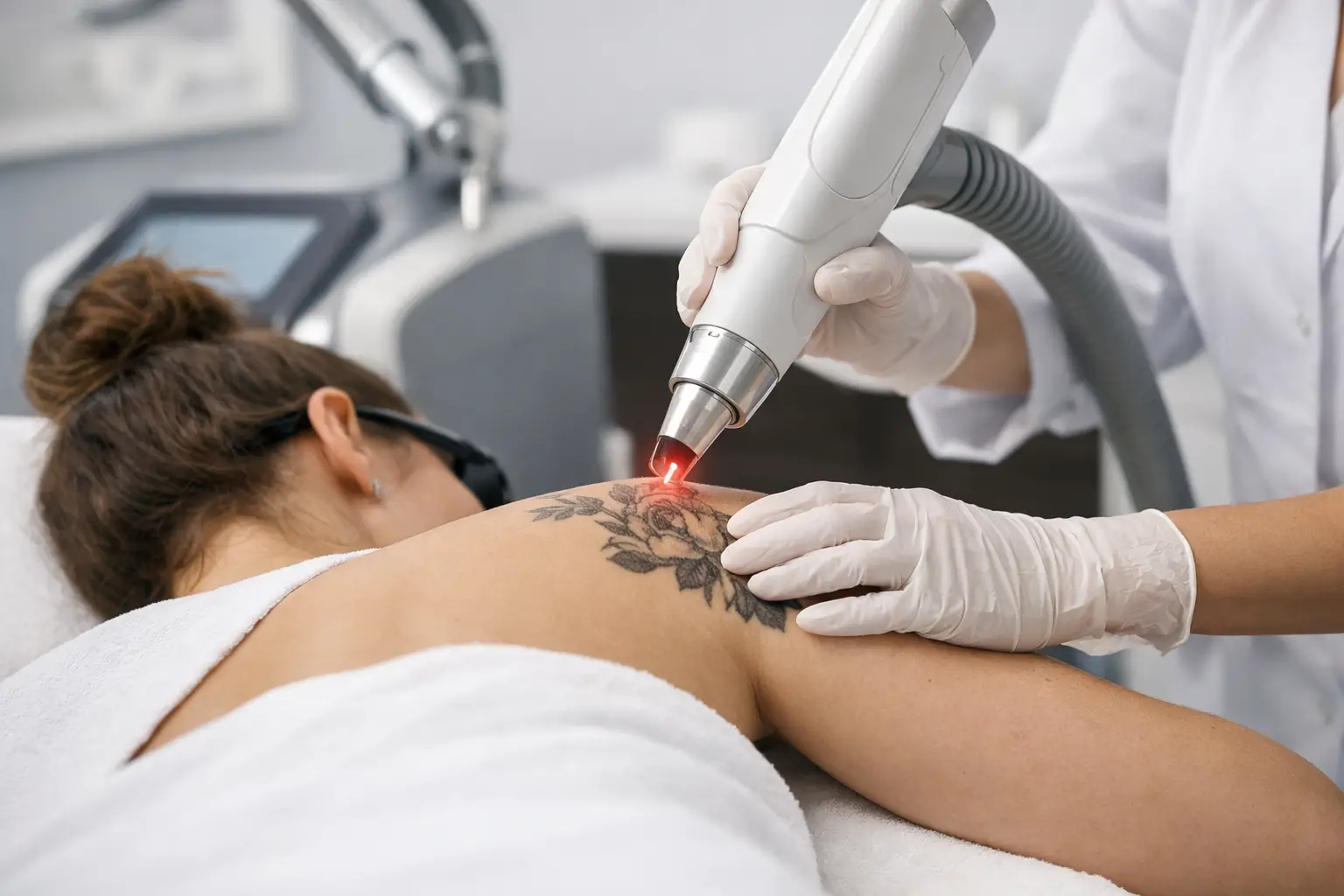
You usually know quite quickly when a tattoo no longer feels like you. What takes longer is working out whether removal is worth it, what results are realistic, and how to tell the difference between a careful clinic and a sales pitch. This laser tattoo removal review guide is here to help you make that decision with clear expectations, not guesswork.
What a good laser tattoo removal review guide should actually tell you
Most people looking into tattoo removal are not just asking, “Does it work?” They are asking whether it will work for their tattoo, their skin, their timeline and their budget. Those are different questions, and they matter.
A useful review of laser tattoo removal should look beyond before-and-after photos. Photos can be encouraging, but they do not show the full story. They rarely tell you how many sessions were needed, how well the client followed aftercare, whether the ink was layered over older work, or how the tattoo responded in the first few months. Results depend on a combination of the laser used, practitioner experience, your skin response and the tattoo itself.
That is why a professional consultation matters. It gives you a treatment plan based on facts, not averages pulled from the internet.
How laser tattoo removal works in real terms
Laser tattoo removal works by delivering light energy into the tattoo pigment. That energy breaks the ink into smaller particles, and your body gradually clears those particles away over time. This means removal is not instant. Even after a strong session, your body still needs weeks to process the fragmented ink.
The idea sounds simple, but there are variables. Different ink colours absorb light differently. Black ink is usually the easiest to treat. Green, blue and some red pigments can also respond well, but certain shades are more stubborn. White, yellow and fluorescent tones can be more difficult and may not fully clear. Amateur tattoos often fade faster than professional tattoos because the ink is usually less dense, but that is not a rule without exceptions.
If you have had cover-up work, cosmetic tattooing, or a tattoo with heavy saturation, expect the process to be more complex. In those cases, a clinician should be upfront with you about likely progress and possible limitations.
What most clients really want to know before booking
The big concerns tend to be pain, cost, number of sessions and whether the skin will look normal afterwards. All four are fair questions.
On discomfort, most clients describe laser tattoo removal as sharp and quick rather than constant. It is often compared to a rubber band flicking the skin, though larger tattoos and sensitive areas can feel more intense. The good news is that sessions are usually fast, especially for smaller pieces. A well-run clinic will talk you through comfort measures and pace the treatment appropriately.
On cost, there is no honest flat answer without seeing the tattoo. Size matters, but so do ink density, age, placement and whether the goal is full removal or fading for a cover-up. Cheaper treatment is not always better value if the settings are ineffective or the plan is poorly managed. Safe, effective treatment should be judged on outcomes and skin response, not just the price per session.
On sessions, most tattoos need multiple treatments spaced over time. It is common for removal to take months rather than weeks. Some tattoos respond impressively in the early stages and then slow down. Others seem steady from the start. That does not necessarily mean something is wrong. It is simply how individual tattoos behave.
As for skin recovery, normal healing matters just as much as the treatment itself. Temporary redness, frosting, mild swelling and tenderness can be expected. Most skin settles well when treated properly and cared for correctly, but there is always some degree of risk with any laser procedure. This is one reason practitioner skill and proper assessment are so important.
A practical laser tattoo removal review guide for choosing a clinic
If you are comparing clinics, start with safety and experience before you look at pricing. The laser is only part of the equation. The person using it matters just as much.
Look for a clinic that explains the process clearly, including what may limit results. If a provider promises complete removal for every tattoo, that is a red flag. Responsible practitioners talk in terms of likely outcomes, not guarantees. They should ask about your medical history, previous laser exposure, skin sensitivity, scarring, medications and whether the tattoo has been touched up or covered over.
The consultation should feel tailored, not scripted. You should leave knowing what type of result is realistic, how many sessions may be needed as a starting estimate, how often those sessions are usually spaced, and what aftercare you will need to follow.
It is also worth asking about licencing, training and the type of equipment used. In a clinical setting, those details are not marketing extras. They are part of safe treatment. For clients on the Sunshine Coast, this can offer real peace of mind because local follow-up care is easier when your clinic is accessible and treatment is handled as an ongoing plan rather than a one-off appointment.
What reviews often miss about results
Online reviews can be useful, but they tend to reflect emotion at a single point in time. A happy review after one session might be genuine, but it does not tell you how the tattoo looked six months later. A negative review after minimal fading may also miss the fact that some tattoos simply need longer treatment intervals or more sessions than expected.
What is more helpful is a pattern. Do clients mention feeling informed, supported and well cared for? Do they say the clinic set realistic expectations? Do they mention professionalism, cleanliness and follow-up advice? In aesthetic treatment, trust is built as much through communication as it is through the procedure itself.
A good clinic experience should not leave you confused about what happened or what comes next. You should know how to care for the area, what signs are normal during healing, and when to contact the clinic if you have concerns.
Why some tattoos fade faster than others
There is no single removal timeline because tattoos are not all created equal. Older tattoos often lighten more quickly because some ink has already broken down over time. Areas with better circulation can also respond better because your immune system plays a role in clearing the disrupted pigment. This is one reason tattoos on the arms or upper body may behave differently from tattoos on the lower legs or ankles.
Lifestyle factors can also influence progress. General health, smoking, sun exposure and aftercare habits may affect how smoothly the skin heals and how efficiently the body processes the ink particles. That does not mean clients need perfect habits to get good results, but it does mean removal works best when treatment and aftercare are taken seriously.
This is where a personalised approach makes a real difference. The most effective treatment plans are adjusted over time based on how your tattoo responds, not forced into a rigid schedule.
Is laser tattoo removal worth it?
For many people, yes, but the answer depends on your reason for removing the tattoo. If the tattoo affects your confidence, limits professional presentation, or no longer reflects who you are, removal can feel worthwhile well before the final session. Even partial fading can create options. Some clients want full clearance. Others simply want enough fading to make a cover-up cleaner and more refined.
The trade-off is patience. Laser tattoo removal is rarely quick, and it should not be rushed. Skin needs time to recover between sessions, and the body needs time to clear ink. When clinics push treatment too aggressively, the skin can pay the price.
That is why experienced guidance matters. At Coastal Skin Clinic, the focus is on safe, effective treatment plans that respect both the skin and the end result. For most clients, reassurance comes from knowing they are being guided honestly rather than hurried through a process.
Questions worth asking at your consultation
Before you commit, ask how your tattoo type is likely to respond, what result is realistic, how many sessions might be expected initially, and what aftercare is required. Ask what risks apply to your skin and whether there are any reasons treatment may need to be modified.
Pay attention to how those answers are given. A professional clinic should be clear, calm and specific. You are not just buying a session. You are choosing who will manage your skin through a treatment journey that takes time.
If you feel rushed, overpromised or brushed off, keep looking. The right clinic will make you feel informed and supported from the beginning.
Choosing tattoo removal is often less about erasing ink and more about moving forward comfortably in your own skin. The best place to start is with a clinic that treats that decision with the care it deserves.