
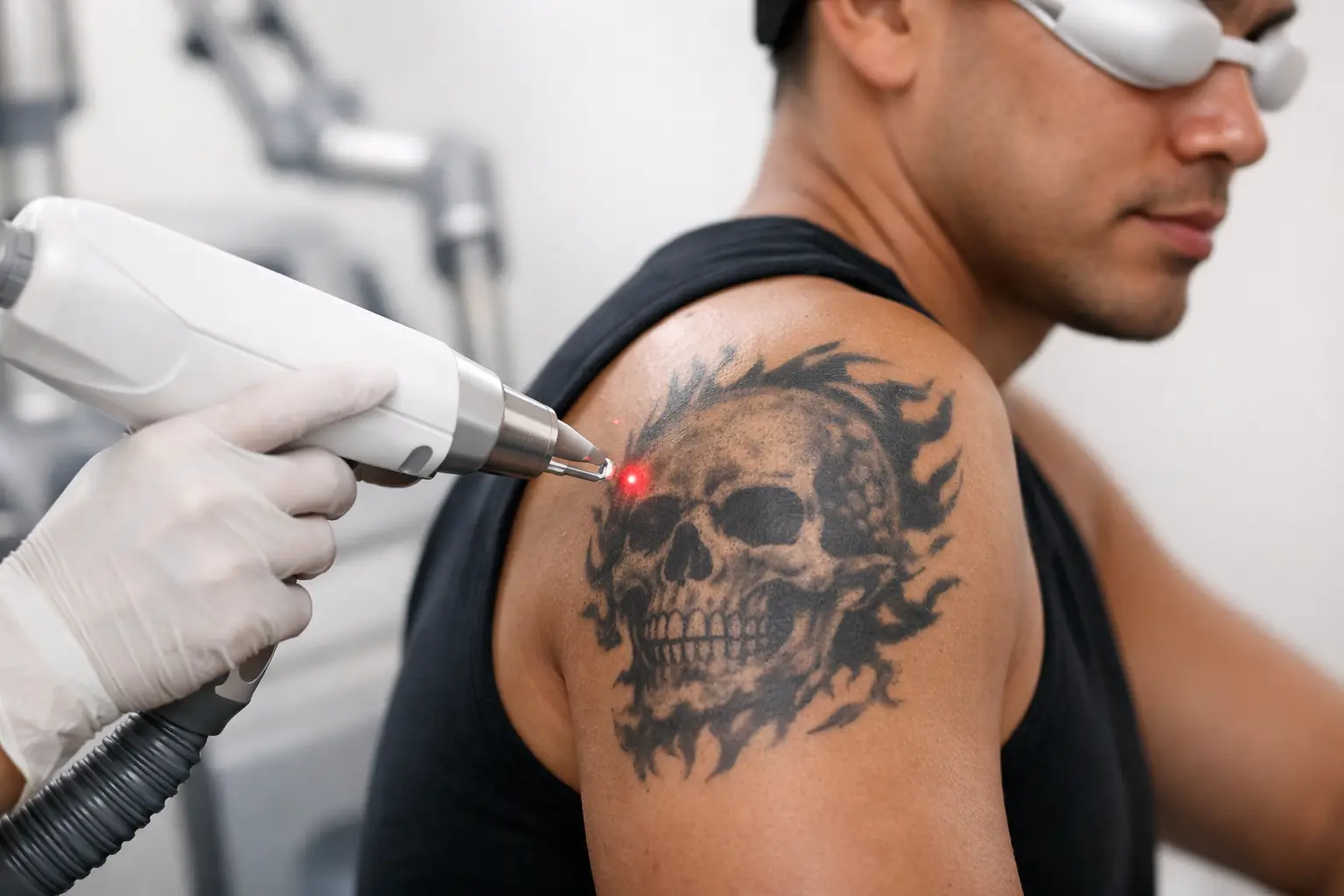
A small black script tattoo on the wrist can look simple enough, but when someone asks for a tattoo removal for dark ink example, that is often the kind of piece we use to explain how treatment really works. Dark ink usually responds better than lighter colours, but that does not mean it disappears quickly or evenly. The real answer depends on the ink density, the depth of the pigment, the age of the tattoo, and how your skin heals between sessions.
For many clients, dark ink feels like the safest place to start because they have heard black is the easiest colour to remove. There is truth in that. Laser technology generally targets dark pigment very effectively. Still, two black tattoos can behave very differently, even when they look similar at first glance.
A realistic tattoo removal for dark ink example
Imagine a client with a professionally done black forearm tattoo that is around five years old. The lines are crisp, there is some heavier shading through the centre, and the skin around it is healthy with no scarring. This is a strong tattoo removal candidate because black ink absorbs laser energy well, and older tattoos have often already faded slightly over time.
In the early sessions, the finer outline may begin to soften first. The heavier packed areas usually take longer because there is simply more pigment sitting in the skin. After a few treatments, the tattoo may look patchy rather than steadily pale across the whole design. That can worry clients, but it is often a normal part of the process. Ink does not always break down in a perfectly even way.
Now compare that with a second client who has a newer black tattoo on the calf, done with very dense shading and some areas of layered rework. Even though it is also dark ink, this one may require more sessions because there is more pigment to clear and the body has to process those fragmented particles gradually. Same colour, different treatment journey.
Why dark ink usually responds well
Lasers work by delivering energy that is absorbed by tattoo pigment. Dark colours, especially black, tend to absorb that energy more efficiently than lighter colours like yellow, green or pastel tones. That is why black and dark blue tattoos are often the most responsive.
This does not mean every dark tattoo clears completely, or that every client gets the same result. Some tattoos fade to a very low trace. Others may leave behind a faint shadow, particularly if the ink was placed deeply or the area has previous trauma. The goal is always safe, effective fading based on what your skin and tattoo can realistically achieve.
Black is not always the same as black
One point people are often surprised by is that “black ink” is not a single uniform material. Different tattoo artists use different ink formulations, and some tattoos include carbon-heavy black while others are mixed with undertones that can affect how they fade. A tattoo that looks jet black on the skin may still contain variations in pigment that become more obvious as it lightens.
That is one reason a proper consultation matters. It helps set realistic expectations before treatment starts, rather than promising a result based on colour alone.
What affects results beyond the ink colour
Ink colour is only one part of the picture. The tattoo’s age, the placement on the body, your immune response, sun exposure, and whether the tattoo was professional or amateur all influence the pace of removal.
Professional tattoos often take longer than amateur ones because the ink is typically placed more evenly and more deeply. Areas with stronger circulation may also respond better over time than body parts with slower healing. A small black tattoo on the upper chest may progress differently from a similar tattoo on the ankle.
Skin health matters too. If the surrounding skin is well cared for and treatment spacing is appropriate, the body has a better chance to clear fragmented ink between sessions. Rushing appointments does not usually speed things up. In fact, it can limit the result and place unnecessary stress on the skin.
What to expect during treatment
For most dark tattoos, laser removal is done as a series of treatments spaced out over time. During the session, the laser targets the pigment, and the treated area may temporarily whiten or frost. Afterwards, redness, swelling and a warm sensation are common for a short period.
Most clients describe the process as manageable, although comfort levels vary depending on the tattoo location and individual pain tolerance. Aftercare is a key part of the outcome. Keeping the area clean, protected and out of excessive sun helps support safer healing.
The visible fading often happens gradually in the weeks after each session, not just on the day of treatment. That delayed response can be frustrating if you are eager to see change straight away, but it is a normal part of the body clearing the ink.
How many sessions will a dark ink tattoo need?
This is one of the most common questions, and it is also where blanket answers can be misleading. Some small, older black tattoos may fade well in fewer sessions. Others need a longer plan, especially if they are large, saturated, recently done, or layered over previous work.
A realistic approach is better than an optimistic guess. In clinic, we would usually assess the size, density, age and placement of the tattoo, then talk through what kind of fading may be possible and how long that process could take. Clear advice matters because tattoo removal is rarely a one-visit fix.
Tattoo removal for dark ink example: where clients misjudge the process
The biggest misunderstanding is assuming dark ink is easy, full stop. Better laser response does not mean instant removal. It means dark pigment is generally more treatable than many lighter colours.
Another common misconception is that fading should be perfectly even from edge to edge. In reality, the body clears broken-down ink at its own pace. Heavier sections, scarred areas, or zones with more concentrated pigment often lag behind. This does not always signal a problem. It usually means the treatment plan needs patience and consistency.
Some clients also expect that once a tattoo fades significantly, the skin will look exactly as it did before the tattoo was placed. Sometimes that happens. Sometimes there may be subtle texture change, slight residual pigment, or a faint ghost image. A careful consultation should discuss those possibilities honestly.
Why professional assessment matters for dark tattoos
Dark tattoos can be excellent candidates for removal, but they still need an individual treatment plan. Skin tone, medical history, previous laser exposure, and tattoo characteristics all matter. A licensed clinic with appropriate technology and trained practitioners is not just a nice extra. It is central to treating the tattoo safely.
This is particularly important for clients who feel anxious or unsure. The right clinic should not rush you into treatment or oversell a perfect result. You want clear information, a realistic timeframe, and a practitioner who can explain why your tattoo may respond the way it does.
For clients on the Sunshine Coast, having that conversation face to face can make the whole process feel far more manageable. It gives you the chance to ask practical questions, understand the likely course of treatment, and decide whether partial fading or full removal is the better goal.
Is dark ink always worth removing?
That depends on your reason for treatment. If you want complete clearance, a dark tattoo may offer strong potential compared with many coloured tattoos, but you still need to accept that outcomes vary. If your goal is a cover-up, you may not need full removal at all. Strategic fading can create more options for a tattoo artist and reduce the need for a darker, heavier redesign.
This is where personalised advice becomes valuable. The best plan is not always the most aggressive one. Sometimes a measured approach gives the best cosmetic result and the least disruption to your skin.
Choosing laser tattoo removal is often about more than removing ink. It is about feeling more comfortable in your skin, moving on from an old decision, or making room for something new. A good dark ink tattoo can respond very well to treatment, but the strongest results usually come from realistic expectations, safe technology, and a clinic that takes the time to treat you as an individual. If you are considering your options, start with a proper assessment and let the plan be shaped by your tattoo, not by someone else’s timeline.