A fresh laser session rarely looks dramatic in the way people expect. Most clients are surprised by how ordinary the first few hours can seem – a bit of redness, some warmth, mild swelling, and then the waiting begins. If you are searching for a tattoo removal healing journey example, what you usually want is not a glossy before-and-after. You want a realistic picture of how skin responds over days, weeks, and multiple appointments.
That matters because tattoo removal is not a one-day event. It is a process your body works through gradually. The laser breaks up ink particles, but your immune system does much of the clearing afterwards. This is why two people with similar tattoos can heal differently, and why the same tattoo may respond differently from one session to the next.
A realistic tattoo removal healing journey example
Let us take a common example. Imagine a client removing a small to medium black tattoo on the forearm. It is a few years old, professionally done, and the client has no relevant skin issues, follows aftercare well, and spaces treatments appropriately.
Immediately after the session, the area may look white or frosted for a short time. This is a normal laser response. Over the next few hours, that frosting fades and the skin often becomes pink or red. Some swelling is common, especially in the first 24 hours, and the area may feel similar to mild sunburn.
By day two or three, the tattoo can look darker, patchier, or more raised than expected. This often worries clients, but it is usually part of the normal healing response. Some people develop small blisters or crusting, while others have very little visible reaction. More reaction does not always mean a better result, and less reaction does not mean the treatment has failed.
Around the end of the first week, tenderness usually settles. If blistering occurred, it should begin to calm and dry out. The most important thing during this stage is not to pick, scratch, or rub the area. Skin that is healing well still needs protection.
By weeks two to four, the surface of the skin generally looks much better. At this point, clients often expect the tattoo to be dramatically lighter, but that is not always what happens straight away. The visible fading can be subtle at first. Sometimes the main change is that the edges look softer or a section of ink appears broken up.
Between weeks four and eight, your body continues clearing fragmented ink. This stage is less about surface healing and more about internal processing. It is common to notice gradual fading rather than a sudden shift. For many tattoos, this is when clients start to see that the treatment is working.
What changes from session to session
The first session is often the most emotionally loaded because everything is unfamiliar. Clients are watching every colour change and checking the area constantly. By the second or third treatment, expectations usually become more realistic. You begin to understand your own skin response and what normal healing looks like for you.
Early sessions often create a visible break-up in dense pigment. Later sessions can feel slower, particularly when only lighter remnants remain. That does not necessarily mean progress has stalled. Stubborn fragments can simply take longer to clear, especially in areas with less circulation or in tattoos with layered, saturated ink.
There is also a trade-off between speed and skin recovery. Aggressive treatment is not always better treatment. A professional plan should balance effectiveness with skin safety, because preserving healthy skin is part of achieving a good final result.
The healing timeline people usually want to know
If you are looking at a tattoo removal healing journey example to work out your own timeline, the practical answer is that healing happens in two layers.
The first layer is surface healing. This is what happens in the days after treatment – redness, swelling, possible blistering, dryness, flaking, and then recovery of the skin barrier. The second layer is ink clearance. That takes much longer and continues after the skin looks normal again.
For many clients, the skin settles in roughly one to two weeks, while the fading continues over six to eight weeks or more. Some people need longer intervals between treatments, particularly if their skin is sensitive, the tattoo is heavily inked, or the body area heals more slowly.
This is why spacing matters. Treating too soon can put unnecessary stress on the skin without giving your body enough time to process the shattered ink. Patience is frustrating, but it is often part of getting a safer and cleaner outcome.
What is normal and what needs attention
A professional clinic should always explain the difference between expected healing signs and symptoms that need review. Mild to moderate redness, localised swelling, sensitivity, itchiness, dryness, and some blistering can all be normal. Temporary darkening of the tattoo is also common.
What deserves attention is severe or worsening pain, increasing redness that spreads, unusual discharge, strong heat in the area, or signs that healing is not progressing properly. These symptoms do not always mean something serious is wrong, but they should not be ignored.
This is one reason many clients prefer a specialist clinic setting rather than a quick, transactional service. You want proper guidance before treatment, clear aftercare advice, and somewhere to turn if you are unsure whether your healing is on track.
Why one person’s example will never match yours exactly
Any tattoo removal healing journey example is useful, but it is still only an example. Your result depends on several factors, including ink colour, tattoo age, placement on the body, depth of ink, your skin type, your immune response, and how consistently you follow aftercare.
Black ink often responds more predictably than some colours. Amateur tattoos may clear differently from professional work. Areas with better circulation can respond more efficiently than hands, feet, or lower legs. Smoking, general health, and sun exposure can also affect progress.
Then there is the question of skin goals. Some clients want complete removal. Others want enough fading to make a cover-up easier. Those are different treatment endpoints, and the healing journey looks different depending on the goal.
Aftercare shapes the journey more than people realise
Clients often focus on the laser itself, but aftercare plays a real role in how comfortably the skin recovers. Keeping the area clean, protected, and out of the sun sounds simple, yet these steps are often what prevent avoidable irritation.
Friction is another issue people underestimate. Tight clothing, gym equipment, heavy sweating, or rubbing straps can aggravate fresh treatment areas. So can returning too quickly to activities that heat or irritate the skin. Small decisions in the first few days can make healing smoother.
Hydration, general wellness, and giving your body time also help. No clinic can promise a perfect, identical response every time, because the healing process is biological, not mechanical. What a good clinic can do is guide you through it safely and adjust treatment to how your skin responds.
Why photos only tell part of the story
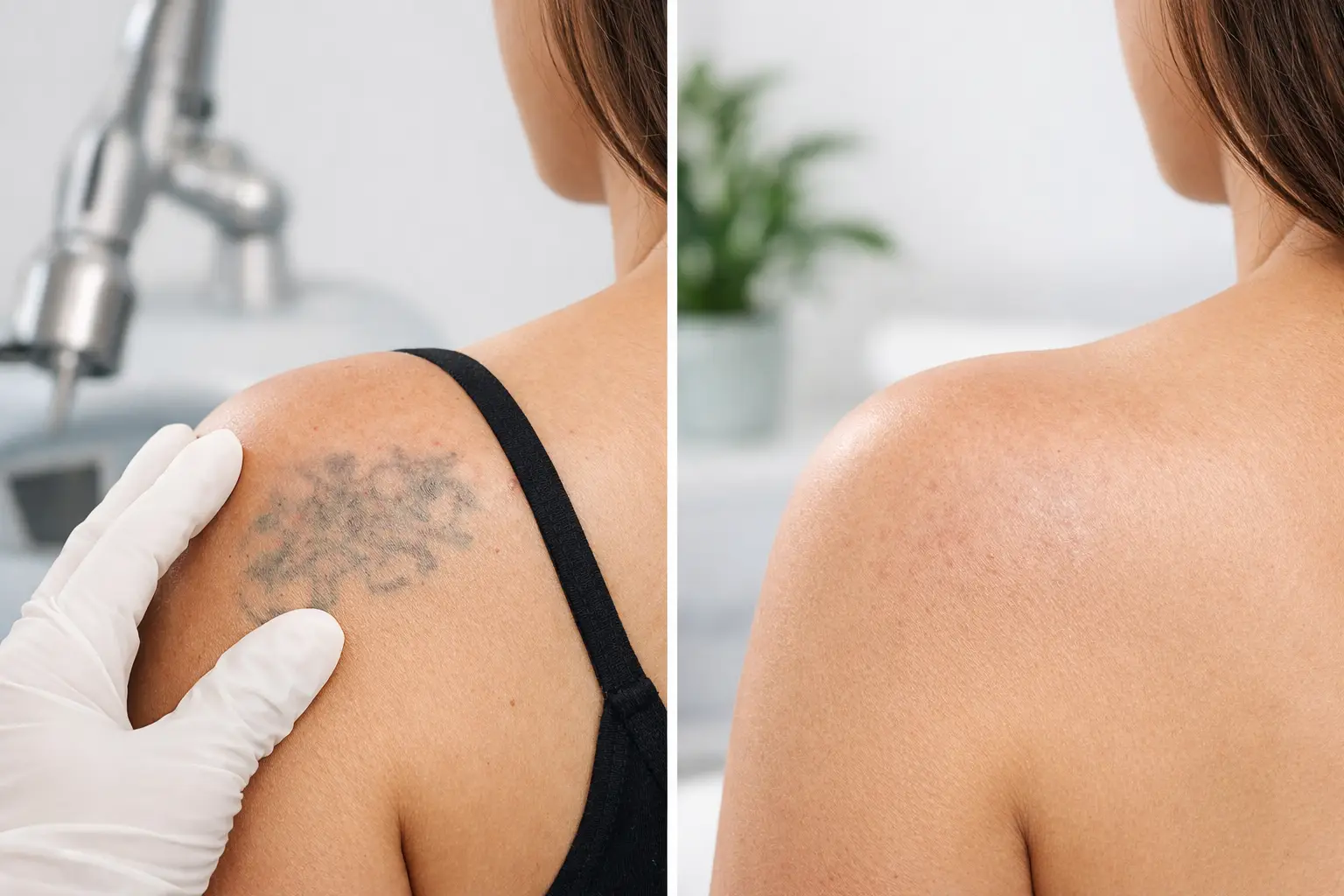
Before-and-after images are helpful, but they compress a long process into two snapshots. They rarely show the in-between stages when the tattoo looks patchy, darker, flaky, or unchanged for a while. Those stages are normal, and they are often where clients start doubting the process.
A more honest way to think about tattoo removal is this: improvement is usually gradual, not linear. Some sessions produce obvious fading. Others seem quiet, then show results later. A supportive practitioner will prepare you for that, rather than overselling quick results.
For clients on the Sunshine Coast considering treatment, this is often the biggest relief during consultation – understanding that good care is not just about the machine. It is also about setting realistic expectations and monitoring your skin properly between sessions.
If you have been comparing your tattoo to someone else’s online, treat those examples as reference points, not promises. The most useful tattoo removal healing journey example is the one interpreted by a trained professional who can assess your skin, your tattoo, and your end goal. With the right plan, steady progress tends to feel less uncertain and far more manageable.