A faded brow tattoo, an unwanted cosmetic lip tattoo and an old body tattoo can all feel like the same problem: something on the skin you no longer want. But tattoo removal versus saline is not a simple choice between two interchangeable treatments. These methods work in very different ways, and the right approach depends on the type of pigment, where it sits in the skin and the result you are hoping for.
For most unwanted body tattoos, professionally delivered laser tattoo removal is the established option. Saline removal is more commonly discussed for certain cosmetic tattoo concerns, particularly eyebrow tattooing. A careful consultation helps separate what is possible from what is merely promised, so your skin is treated with the care it deserves.
Tattoo Removal Versus Saline: The Key Difference
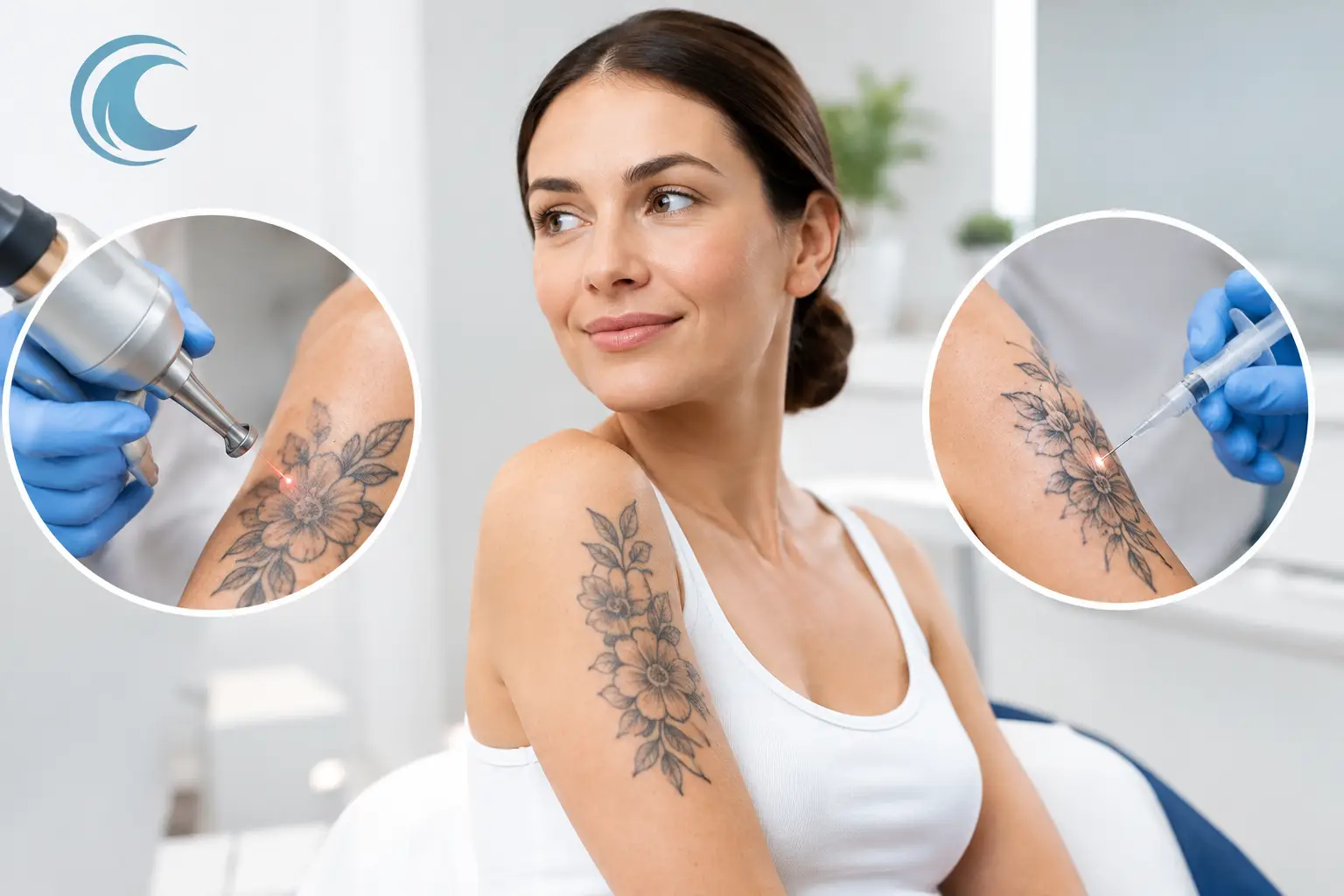
Laser tattoo removal uses targeted light energy to break tattoo pigment into smaller particles. Your body then gradually clears those particles through its natural processes over time. It is designed to reach pigment within the skin without physically removing the skin’s surface.
Saline removal is a form of tattoo lightening used most often in the cosmetic tattoo space. A sterile saline solution is implanted into the tattooed area using a tattooing-style technique. The aim is to draw some pigment towards the surface as the area heals and forms a small scab. When that scab sheds naturally, some pigment may lift with it.
The difference matters because a body tattoo and a cosmetic brow tattoo are not necessarily made with the same pigment, placed at the same depth or located in skin with the same healing considerations. The technique that is appropriate for one may be ineffective, unnecessarily aggressive or unsuitable for the other.
When Laser Tattoo Removal Is Usually the Better Option
Laser treatment is generally the preferred method for unwanted body tattoos, including tattoos on the arm, leg, back, chest or other areas of the body. It is also often suitable for many cosmetic tattoos, although this must be assessed carefully before treatment.
Professional tattoo inks can be dense, deeply placed and made from a mix of colours and compounds. Laser technology is designed to target these pigments. Treatments are spaced apart to allow the skin to recover and give the body time to clear fragmented ink. Complete removal is not always guaranteed, but progressive fading can make a substantial difference and may also prepare an area for a cover-up tattoo.
The number of sessions varies. Ink colour, tattoo age, density, depth, skin type, the body area and your immune response all influence the treatment plan. Older black or dark tattoos often respond more readily than newer, heavily saturated designs or some lighter colours. This is why a realistic plan is more valuable than a one-size-fits-all estimate.
For clients considering laser tattoo removal, safety begins with appropriate equipment, trained practitioners and a thorough assessment. At Coastal Skin Clinic, treatment planning is personalised, with skin health and sensible expectations kept at the centre of the process.
Cosmetic tattoo pigments need extra caution
Some eyebrow, eyeliner and lip tattoo pigments can behave unpredictably when exposed to laser energy. Certain pigments may temporarily darken or change colour before they begin to fade. This does not automatically mean laser is the wrong choice, but it does mean a test spot and informed treatment plan can be especially valuable.
A practitioner should ask about the original procedure, pigment colour, when it was performed and whether the area has been previously treated. Photos of the fresh tattoo can also help, particularly when the pigment has already faded or shifted in colour.
Where Saline Removal May Have a Role
Saline removal is most often considered for small areas of cosmetic tattooing, such as brows. It may be discussed when a client has a fresh cosmetic tattoo they regret, or when a practitioner believes the pigment and placement are better approached through saline lightening rather than laser.
It can be appealing because it is often described as pigment being lifted out through the healing process. However, it is not a quick fix and it is not risk-free. The treated area needs to heal undisturbed, and aftercare is essential. Picking, rubbing or prematurely removing a scab can increase the chance of poor healing and scarring.
Saline treatment also has limits. It may lighten pigment rather than remove it completely, and repeated sessions may be required. Results can be variable because they depend on pigment type, depth, the skin’s response and how carefully the area is cared for during healing.
For a large or deeply saturated body tattoo, saline removal is generally not the practical first choice. Treating a broad area with a technique that deliberately creates a surface wound would be time-consuming and can carry unnecessary healing considerations. Laser is typically the more targeted and efficient option for this kind of work.
Healing, Comfort and Aftercare
Both methods require downtime in the sense that the skin needs time to settle and repair, but the healing experience is different.
After laser tattoo removal, the area may feel warm and tender, similar to a mild sunburn. Redness, swelling and temporary blistering can occur. Keeping the area clean, protecting it from friction and avoiding heat, swimming and sun exposure while it heals are common parts of aftercare. The treated skin should not be picked or scratched.
After saline removal, the goal is usually for a light scab to form. That scab is part of the process and must be left alone to shed naturally. Keeping the area dry or following other specific instructions provided by your practitioner is particularly important. Healing should never be rushed for the sake of a faster result.
Neither treatment should be performed over irritated, infected or actively inflamed skin. If you have a history of keloid scarring, are pregnant or breastfeeding, take medication that affects healing, or have a skin condition in the treatment area, disclose this before booking. A professional assessment can identify whether treatment should be postponed, modified or avoided.
Choosing the Right Method for Your Goal
The most useful question is not, “Which removal method is best?” It is, “Which method is appropriate for this particular tattoo and my skin?”
If your goal is to fade an unwanted body tattoo, laser removal is usually the logical starting point. If you are concerned about a small cosmetic tattoo, especially an eyebrow tattoo, saline may be one option worth discussing alongside laser. In some cases, a staged approach, a test spot or simply allowing a recent cosmetic tattoo time to settle may be the safest recommendation.
Be wary of anyone who promises complete removal in a set number of treatments or assumes every pigment will respond the same way. Good treatment advice accounts for uncertainty. It explains the likely process, the possible reactions and the aftercare required before you commit.
What to Ask at Your Consultation
A consultation should leave you feeling informed rather than pressured. Ask which method is recommended and why, whether a test spot is appropriate, what changes may happen to the pigment and how your skin will be supported through healing.
It is also reasonable to ask about the practitioner’s training, the equipment used and what realistic progress looks like for your tattoo. Bring clear photos if the tattoo has changed colour over time or if you cannot remember details of the original pigment.
The best treatment plan is one that respects both your result and your skin. Whether laser or saline is the more suitable path, taking the time to assess the tattoo properly is a small step that can make the whole process feel safer, clearer and far more manageable.