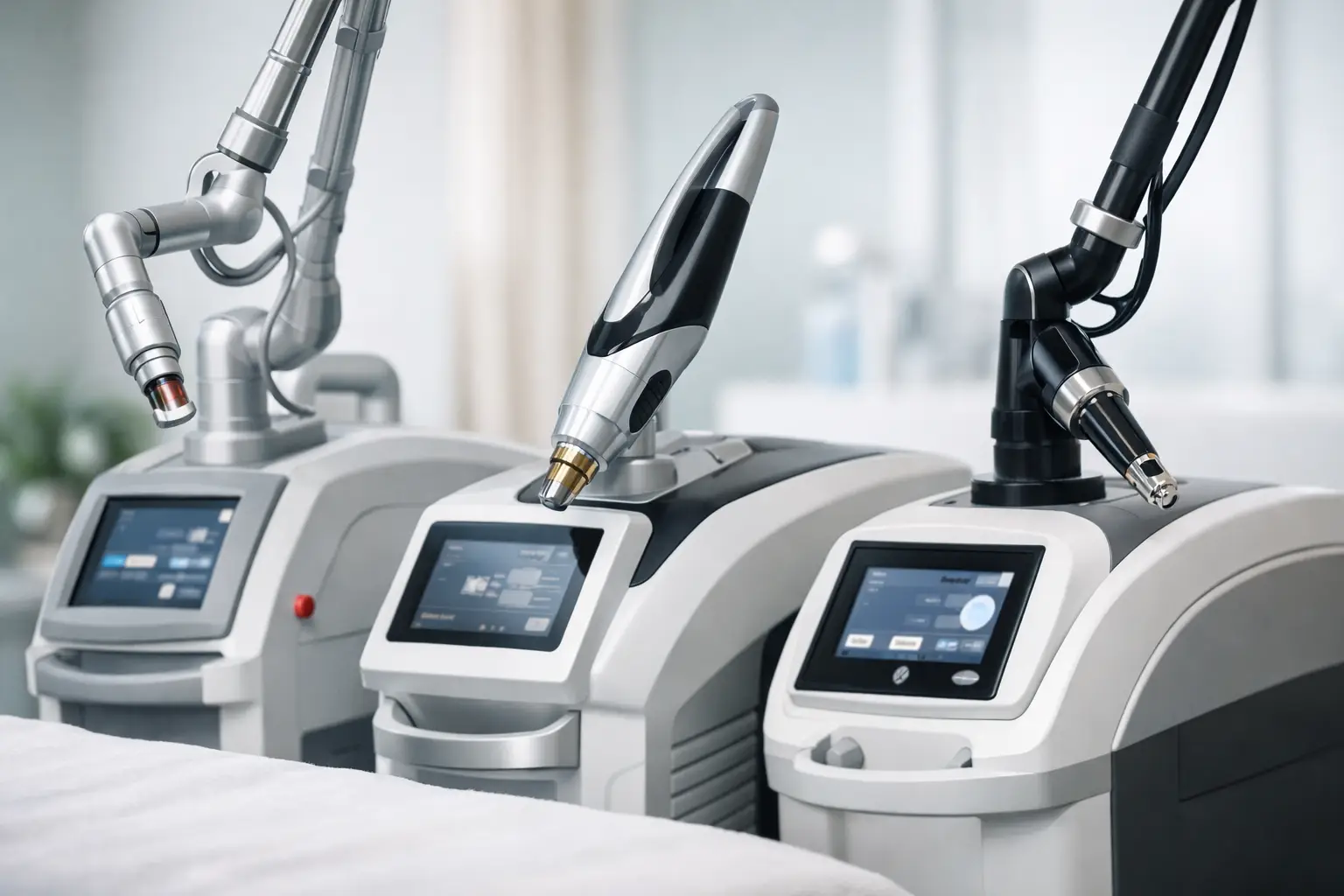
Choosing between a CO2 laser, Pico laser, q switch laser can feel confusing when all three are described as advanced treatments. The truth is they do very different jobs, and the right choice depends on what you want to treat, how much downtime you can manage, and what your skin needs.
CO2 laser, Pico laser, q switch laser – what’s the difference?
A CO2 laser is usually chosen for skin resurfacing. It works by creating controlled micro-injuries in the skin to encourage renewal, which can help improve texture, fine lines, acne scarring and sun damage. It is a stronger rejuvenation option, so results can be impressive, but downtime is usually greater than with other laser treatments.
A Pico laser delivers ultra-short bursts of energy. It is commonly used for tattoo removal, pigmentation concerns and some forms of skin rejuvenation. Because the energy is delivered so quickly, it can break pigment into smaller particles while reducing heat spread to surrounding tissue. That can make it a very effective choice when precision matters.
A q switch laser is also well known for treating pigmentation and tattoo ink. It has been used for many years and remains a trusted technology for certain colours, skin concerns and treatment plans. In some cases, a q switch laser may be appropriate where a proven, targeted pigment treatment is needed.
Which laser suits your concern?
If your focus is smoother skin, acne scars or deeper resurfacing, CO2 may be the better fit. If your goal is tattoo removal or stubborn pigmentation, Pico or q switch are more likely to be discussed during consultation.
That said, there is no single “best” laser for everyone. Skin tone, tattoo colours, skin sensitivity, medical history and lifestyle all matter. Some clients want the strongest possible result and are prepared for downtime. Others prefer a gentler treatment pathway with less disruption to work or social plans.
Why a consultation matters
At Coastal Skin Clinic, laser treatments are guided by your individual skin and treatment goals, not a one-size-fits-all approach. A proper consultation helps identify what is safe, realistic and worth doing, especially if you are balancing visible results with comfort and recovery time.
The most helpful question is not “Which machine is best?” but “Which treatment is best for me?” That is where expert advice makes all the difference.