An eyebrow tattoo that once felt like the perfect shortcut can become frustrating when the colour shifts, the shape no longer suits you, or your style simply changes. When comparing cosmetic tattoo removal vs laser, the best option is rarely about choosing the quickest-looking fix. It is about understanding the pigment, your skin, the placement of the tattoo and the level of care needed to protect the area while aiming for a clearer result.
Cosmetic tattoos, including eyebrow tattoos, lip blush and eyeliner, are different from many body tattoos. They are often placed on delicate facial skin, may contain unpredictable pigment blends and can change colour as they fade. A professional assessment is the safest place to start.
Cosmetic Tattoo Removal vs Laser: The Key Difference
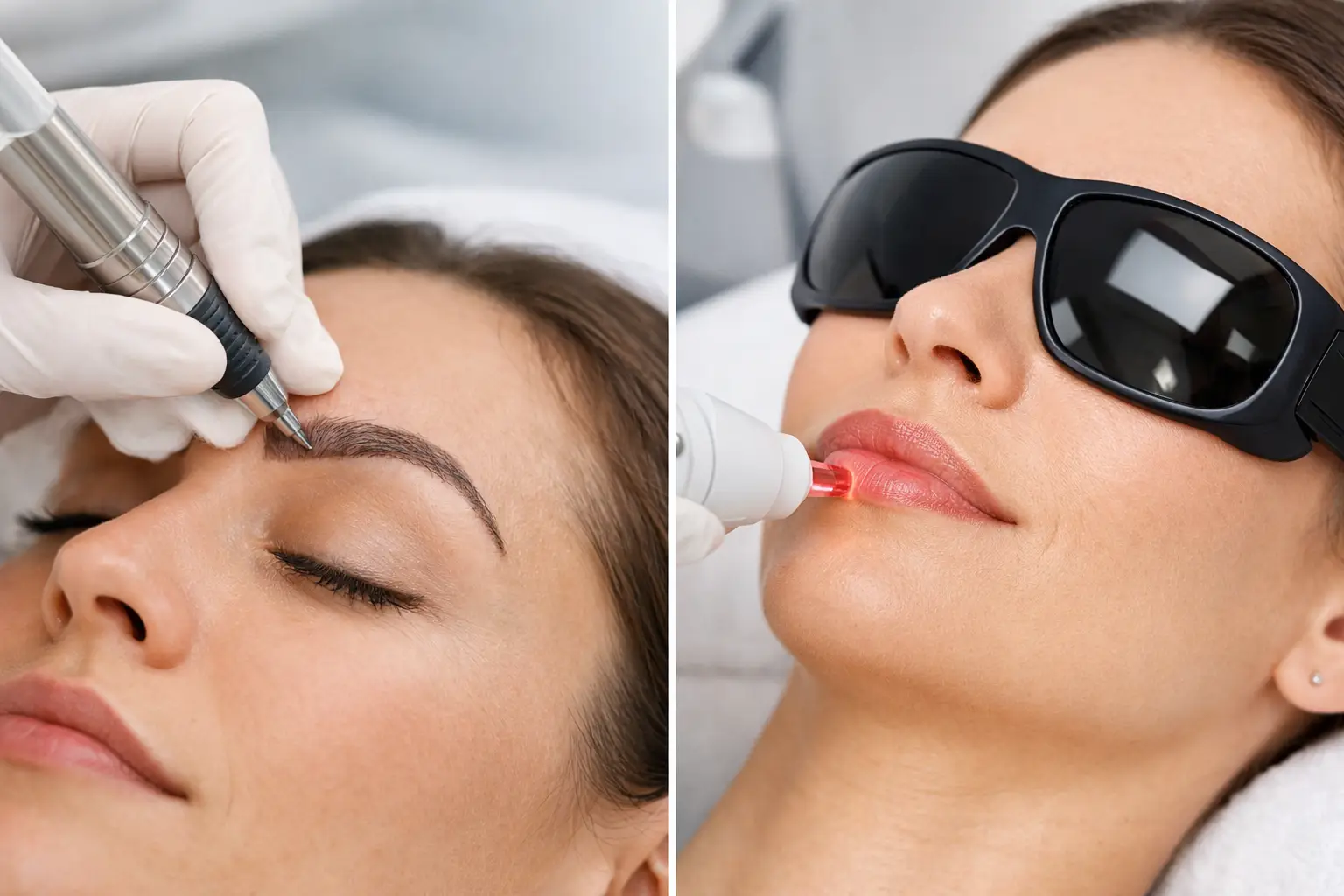
The phrase cosmetic tattoo removal can describe several non-laser approaches. These may include saline-based removal, chemical removal solutions or manual techniques designed to draw pigment towards the surface of the skin as it heals. Laser tattoo removal uses controlled light energy to break pigment into smaller particles, which the body then gradually clears.
Neither approach is automatically right for every cosmetic tattoo. The choice depends on factors such as the pigment colour and ingredients, how deep it sits, the age of the tattoo, previous removal attempts, skin tone and whether there is any scarring in the area.
Laser treatment is often considered for unwanted cosmetic tattoo pigment because it can target pigment without manually abrading the surrounding skin. However, some cosmetic pigments need especially careful assessment. Certain pigments can darken or shift colour when exposed to laser energy before they begin to clear. This is why a test patch and an experienced practitioner’s guidance matter so much.
How Laser Removal Works
Laser tattoo removal delivers very short pulses of energy into the pigment. The energy breaks the pigment into smaller fragments, allowing the body’s natural processes to gradually remove them over time. Treatments are spaced apart to give the skin time to recover and the body time to respond.
With cosmetic tattoos, results are not always linear. A brown eyebrow tattoo, for example, may contain a blend of black, red, yellow or white pigment. As one colour clears, another undertone can become more visible. This does not necessarily mean the treatment has failed. It may simply mean that the pigment is revealing its individual components and the plan needs to be adjusted accordingly.
A laser consultation should include a close look at the tattoo’s current colour, depth and location, as well as your skin history. A test patch can provide useful information about how the pigment may react before treating a larger area.
Benefits of a laser-led approach
For suitable clients, laser removal can offer a targeted way to reduce unwanted pigment over a series of treatments. It is particularly helpful for many darker tattoo pigments, although cosmetic tattoo inks require more caution than standard black body tattoo ink.
The skin is not intentionally broken in the same way as with manual removal techniques. There may still be temporary redness, swelling, tenderness or frosting immediately after treatment, and careful aftercare is essential. But the treatment is designed to focus energy on pigment rather than remove skin tissue.
The trade-off is patience. Complete clearance cannot be guaranteed, and the number of sessions varies widely. Older, lighter or more superficial tattoos may respond differently from fresh, saturated or repeatedly tattooed areas.
How Non-Laser Cosmetic Tattoo Removal Works
Non-laser methods are sometimes chosen when laser is not appropriate, when a tattoo needs a small correction, or where an assessment suggests another approach may better suit the pigment or desired outcome. These treatments generally involve placing a removal solution into the skin to encourage pigment to lift during the healing process.
Because the skin is deliberately opened, healing is a central part of the process. A crust or scab may form, and it must be allowed to heal naturally. Picking, rubbing or trying to speed up shedding can increase the risk of irritation, uneven healing and scarring.
These methods can be useful in particular circumstances, but they are not a simple alternative to laser. The results can be variable, especially where pigment sits deeply or has been placed in multiple layers. They also require a practitioner with strong knowledge of facial skin, cosmetic tattoo technique and safe aftercare.
When a non-laser method may be considered
A practitioner may discuss non-laser removal for a very small section of unwanted pigment, such as an eyebrow tail that extends too far, or where the goal is to make space for a future correction rather than remove every trace. It may also be discussed if a test patch indicates an unpredictable laser response.
That said, choosing a method solely because it promises fast removal can be risky. Cosmetic tattoos sit in highly visible areas. Protecting skin quality and supporting calm, even healing should take priority over rushing the process.
Pigment Is the Deciding Factor
The biggest difference between cosmetic tattoo removal and laser is often not the device or solution. It is the pigment itself.
Cosmetic inks are not always consistent, even when tattoos look similar on the surface. Some may contain iron oxides, titanium dioxide or colour modifiers that react differently under laser treatment. A pigment that appears warm brown may temporarily become darker, grey or reddish after a session. In some cases, this response can still be treated over time. In others, it may change the recommended plan.
Previous tattoo work also matters. If brows have been tattooed, faded, covered and retouched several times, there may be multiple colours and depths of pigment present. A personalised plan is far safer than applying a one-size-fits-all removal method.
Photos can be helpful at a consultation, particularly if you have images from when the cosmetic tattoo was first completed. They may offer clues about the original shade and how the pigment has changed over time.
What Does Healing Look Like?
Whether you choose laser or another removal technique, the treated area needs time and gentle care. Immediately after laser treatment, the skin may feel warm and look red or slightly swollen. With eyebrow or eyeliner tattoo removal, this can be more noticeable for a short period because the skin is fine and facial blood flow is strong.
Non-laser treatments can involve a longer visible healing phase, including dryness, crusting and temporary changes in skin texture. Your practitioner should explain what is expected, what needs attention and when to contact the clinic.
Avoid excessive heat, swimming, intense exercise and direct sun exposure while the area is healing, following the aftercare instructions provided for your treatment. Do not apply active skincare, makeup or healing products unless they have been specifically recommended for the treated area. Good aftercare supports the result, but it cannot compensate for an unsuitable treatment choice or poor technique.
Questions Worth Asking Before You Proceed
Before booking removal, ask whether the practitioner has experience with cosmetic tattoo pigments rather than body tattoos alone. Ask if a test patch is recommended, what reactions may occur with your particular colour and what realistic progress could look like.
You should also feel comfortable asking about qualifications, hygiene protocols, the equipment being used and how complications are managed. In Queensland, appropriate licensing and a professional clinical setting are meaningful safeguards, particularly for treatments involving lasers.
Be cautious of anyone who guarantees complete removal in a set number of sessions, dismisses the need for a consultation or treats every brow tattoo as though it will react the same way. Safe, effective care starts with honesty about what can be predicted and what must be monitored along the way.
Choosing a Plan That Respects Your Skin
For many people, laser is the preferred starting point for reducing unwanted cosmetic tattoo pigment, provided a careful assessment shows it is suitable. For others, a combination of approaches or a more conservative plan may make better sense. The aim is not just to fade pigment. It is to do so while caring for the skin beneath it.
At Coastal Skin Clinic, consultations are designed to give you clear, personalised guidance before treatment begins. If you are considering cosmetic tattoo removal, take the pressure off yourself to decide from photos or promises alone. A thoughtful assessment can help you move forward with realistic expectations, a safe plan and confidence in each next step.