When your skin looks dull, feels uneven and develops persistent bumps around the nose, chin or jawline, it can be tempting to scrub harder at home. But congestion is not always a sign that skin needs more abrasion. Microdermabrasion for congested skin can be a helpful professional treatment for some people, particularly where blocked pores and rough surface texture are the concern. The key is choosing it at the right time, with settings and aftercare that respect your skin barrier.
At Coastal Skin Clinic, we take a personalised approach because congestion can look similar from a distance while having very different causes. A thoughtful consultation helps determine whether microdermabrasion is the right starting point, or whether another treatment and home-care approach will better support clear, comfortable skin.
What congested skin actually looks like
Congestion refers to a build-up of oil, dead skin cells, skincare residue and other debris within or around the pores. It often appears as blackheads, whiteheads, small flesh-coloured bumps, enlarged-looking pores or a generally rough, lacklustre complexion. Some people notice it mostly through the T-zone, while others experience it along the cheeks, hairline, jawline or back.
It is not always the same as active acne. Acne can involve inflammation, tenderness, pustules and deeper lesions, whereas congestion may be largely non-inflammatory. The two can overlap, which is why it is worth having your skin assessed rather than treating every bump in the same way.
Heat, humidity, heavier makeup, sunscreen, hormonal changes, sweat and unsuitable products can all contribute. On the Sunshine Coast, warm weather and active outdoor lifestyles can make regular cleansing and suitable product choices especially relevant. Over-cleansing or using harsh exfoliants, however, may leave skin irritated and can make its protective barrier less resilient.
How microdermabrasion for congested skin works
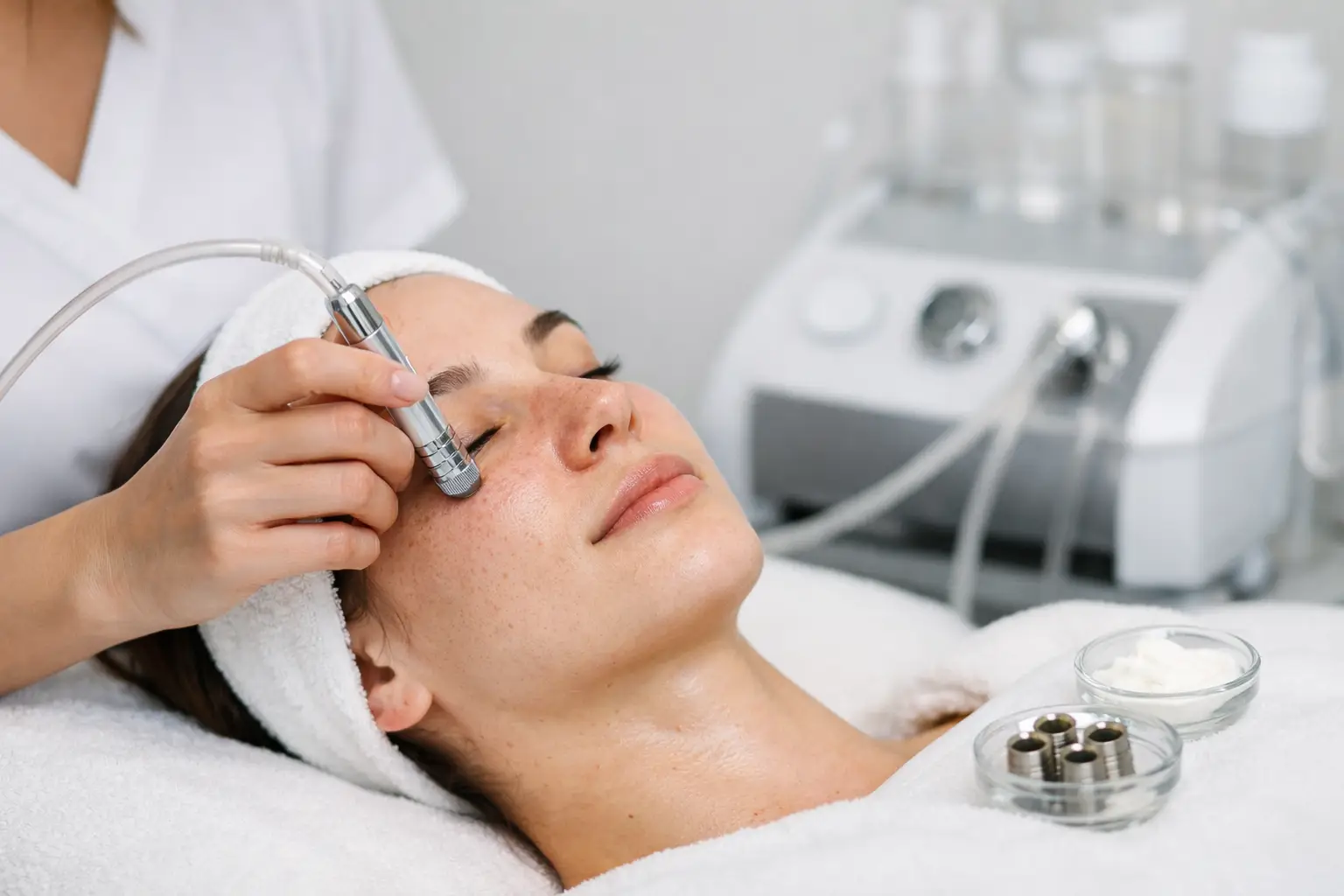
Microdermabrasion is a non-invasive exfoliation treatment. A trained therapist uses a specialised handpiece to gently polish away a controlled amount of surface dead skin cells while suction helps lift loosened debris from the skin. The treatment is designed to refine the skin’s surface, rather than aggressively strip it.
For suitable clients, this can help skin feel smoother and look fresher. By reducing the build-up of dead cells at the surface, microdermabrasion may also support clearer-looking pores and help skincare products apply more evenly. It is often chosen by people who feel their complexion is rough, dull or prone to recurring superficial congestion.
The treatment is not a shortcut for every type of breakout. It does not treat the underlying drivers of hormonal acne, and it is not intended to be performed over painful, inflamed or broken skin. In those circumstances, friction and suction may be uncomfortable and could aggravate an already reactive complexion.
What a professional treatment feels like
Most clients describe microdermabrasion as a gentle scratchy or suction-like sensation rather than painful. Your skin may look mildly pink afterwards, particularly if it is fair, sensitive or new to professional exfoliation. This usually settles quickly, but your practitioner will guide you on what is normal for your skin and what aftercare is appropriate.
A professional appointment should never feel rushed. Your therapist can adjust the intensity, avoid sensitised areas and assess how your skin responds throughout the treatment. That level of individual care is particularly valuable when your skin is congested but also dry, reactive or prone to pigmentation.
When it may be a good option
Microdermabrasion can suit clients with non-inflamed congestion, uneven texture, dullness and visible surface build-up. It may also be helpful as part of a regular skin-maintenance plan for someone whose pores tend to block between treatments.
Results vary. Some clients notice a smoother feel and brighter appearance straight after their appointment, while clearer-looking pores usually depend on consistency, suitable home care and avoiding the factors that trigger their congestion. A single treatment can refresh the skin, but recurring congestion often needs a plan rather than a one-off fix.
It may be particularly worth considering if you have tried changing cleansers or masks without seeing a meaningful improvement, or if you are unsure whether your current exfoliating routine is doing more harm than good. Professional guidance can simplify a routine that has become crowded with products.
When to pause or choose another treatment
Microdermabrasion is not suitable for every skin condition or every day of your skin journey. If you have active inflamed acne, open lesions, sunburn, an active skin infection, eczema flare-ups, rosacea sensitivity or a compromised barrier, another approach may be safer. Your therapist may recommend allowing the skin to settle first, or may suggest a more calming treatment.
You should also mention any recent cosmetic procedures, laser treatments, peels, prescription skin medicines or strong active skincare products during your consultation. Retinoids, exfoliating acids and benzoyl peroxide can increase sensitivity for some people. Your clinician can advise whether these products need to be paused around treatment, rather than leaving you to guess.
For skin that marks easily or is prone to post-inflammatory pigmentation, treatment selection and intensity deserve extra care. More exfoliation is not automatically better. A gentle approach, combined with daily sun protection and considered product use, often delivers a more comfortable and sustainable result.
The role of extractions, peels and home care
Microdermabrasion is often one part of a tailored facial plan. Depending on your skin, a professional may combine or alternate it with suitable extractions, hydrating treatments, LED therapy or a carefully selected peel. Each option has a different role, and the right choice depends on whether your main concern is surface texture, excess oil, blackheads, inflammation, pigmentation or sensitivity.
At home, keep the focus on consistency rather than intensity. Cleanse thoroughly but gently, especially after sweating or wearing makeup. Use non-comedogenic products where appropriate, avoid picking at bumps and introduce active ingredients gradually. Applying several acids, scrubs and masks in the hope of faster results can lead to irritation, redness and a cycle of further skin concerns.
Sun protection matters after any exfoliating treatment. Freshly exfoliated skin can be more vulnerable to UV exposure, and regular broad-spectrum sunscreen supports both skin health and the appearance of an even complexion. A hat and sensible sun habits are worthwhile additions, particularly after a treatment.
What to expect after your appointment
Your therapist will provide individual aftercare instructions, but the general aim is simple: protect and support the skin while it settles. For the rest of the day, avoid rubbing, scrubbing and introducing unfamiliar active products. Keep your routine gentle, use moisturiser suited to your skin and apply sunscreen diligently.
It is also sensible to avoid excessive heat, heavy exercise, saunas and direct sun immediately after treatment if your skin is pink or warm. If you experience persistent irritation, swelling or a reaction that concerns you, contact your treating clinic for advice.
Many people benefit from treatments spaced according to their skin’s response and goals. The ideal frequency is not a standard timetable. A client with resilient, oily skin and superficial congestion may need a different plan from someone with dry skin, sensitivity and occasional blocked pores.
A clearer plan starts with understanding your skin
Congested skin is frustrating, but it does not need to be attacked. The most effective path is usually one that balances exfoliation with barrier support, considers your lifestyle and products, and changes course when your skin asks for something gentler.
If you are considering microdermabrasion, a professional consultation can give you clarity before you commit to a treatment. With the right assessment and a calm, considered plan, you can care for congestion while keeping your skin comfortable, supported and looking its best.