A bright tattoo can feel far more personal than a simple black outline. It may be tied to a past relationship, an old style, or artwork that no longer suits you. But before starting treatment, most people ask the same sensible question: is laser removal safe for coloured tattoos?
For the right person, with the right laser settings and a qualified practitioner, coloured tattoo removal can be performed safely. It is not a one-size-fits-all treatment, though. Different inks react differently, skin tone matters, and some pigments need more caution than others. A proper consultation is where safety starts.
Why coloured tattoos need a personalised approach
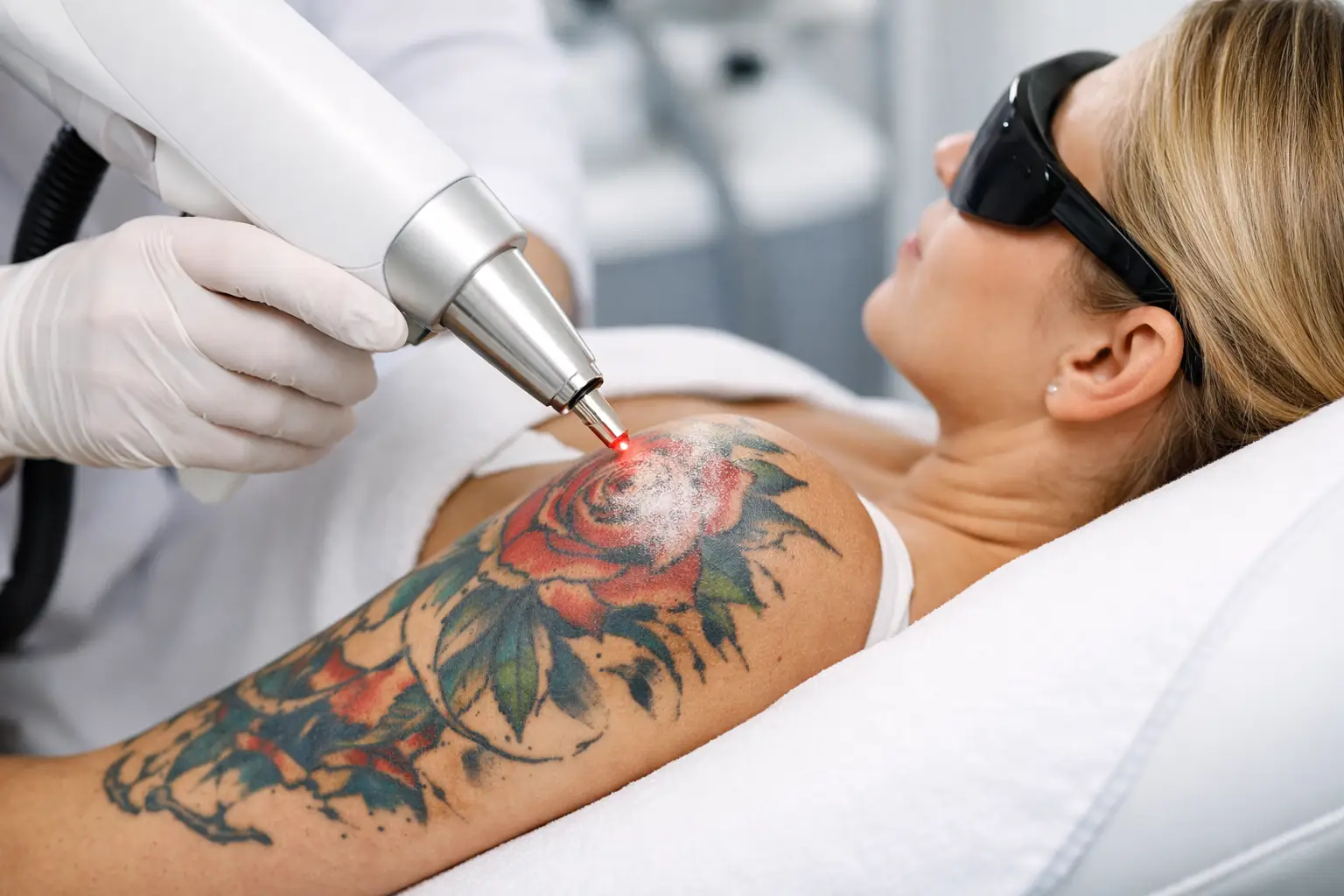
Laser tattoo removal works by sending short pulses of light into the skin. The tattoo pigment absorbs that energy, breaks into smaller particles, and is gradually cleared by the body over time.
The key word is absorbs. Dark ink absorbs a broad range of laser energy well, which is why black tattoos are often the most straightforward to treat. Coloured inks reflect and absorb light differently. Red, blue, green, orange and purple can each require a different wavelength or treatment strategy.
That does not mean coloured tattoos cannot be removed. It means the practitioner needs to identify the ink colours present, assess the depth and density of the tattoo, and select settings that target pigment while respecting the surrounding skin.
A multicoloured tattoo may also fade unevenly at first. One shade may respond quickly while another takes more sessions. This is normal, and it is one reason a tailored plan is more useful than promising a set number of appointments before your skin and ink have been assessed.
Is laser removal safe for coloured tattoos on all skin types?
Safety depends on more than tattoo colour. Your natural skin tone, recent sun exposure, skin health and history of pigmentation all influence how treatment should be approached.
Lasers are attracted to pigment. If settings are not selected carefully, the laser can affect some of the skin’s natural pigment as well as the tattoo ink. People with deeper skin tones, or anyone prone to post-inflammatory hyperpigmentation, may need more conservative settings and longer intervals between sessions. This helps minimise the chance of temporary darkening or lightening of the treated area.
Sun exposure is another important consideration, particularly on the Sunshine Coast where tattoos are often exposed year-round. Tanned or sunburnt skin should not be treated. Arriving with your skin calm, protected and as close to its natural tone as possible gives your practitioner a safer starting point.
Your consultation should also cover any relevant health conditions, medications, previous scarring, skin sensitivities and past reactions to cosmetic treatments. This is not just paperwork. It helps your practitioner decide whether treatment is suitable now, whether a test patch is appropriate, or whether it is best to wait.
Some ink colours carry specific considerations
Many coloured inks respond well to laser treatment, but no practitioner can responsibly guarantee complete clearance of every pigment. Tattoo inks are not standardised, and the label or visible colour does not always reveal exactly what is in the skin.
Reds and oranges can often respond well with an appropriate wavelength. Blues and greens may take longer and can be more resistant, depending on the ink formula and how deeply it was placed. Pale yellow, white and flesh-toned inks are among the most unpredictable.
White and cosmetic-style pigments deserve particular care because some contain ingredients such as titanium dioxide or iron oxides. In certain cases, laser treatment can cause these pigments to oxidise and become darker rather than lighter. This is known as paradoxical darkening. It can happen with cosmetic tattooing, including some eyebrow tattoos, as well as body art containing pale inks.
A test patch can be very valuable when there is uncertainty about an ink’s behaviour. It allows the practitioner to observe how a small, discreet section responds before treating the full tattoo. It is a cautious step, not a sign that something has gone wrong.
What a safe treatment plan looks like
A safe tattoo removal journey should feel measured, clear and well supported. At Coastal Skin Clinic, this begins with a consultation rather than rushing straight into a full treatment.
Your practitioner should examine the tattoo in good lighting and talk through the colours, age, location, size and any cover-up work. Older tattoos can sometimes fade more readily than newer, densely packed designs, but every tattoo is different. Professional tattoos may sit deeper and contain more concentrated pigment, while amateur tattoos can be less predictable in placement and composition.
They should explain realistic expectations. Laser removal is a gradual process because your body needs time to clear fragmented pigment between sessions. Spacing treatments appropriately is part of achieving a safer outcome. Treating too frequently does not force the tattoo to disappear faster and may place unnecessary stress on the skin.
You should also be told what the treatment feels like, what healing may involve, and when to contact the clinic with concerns. The goal is not simply to remove ink. It is to help you work towards your result while protecting the health and appearance of your skin.
Expected reactions versus signs to check
Redness, warmth, swelling and a temporary whitening or frosting effect immediately after treatment are common. Depending on the tattoo and laser settings, small blisters or light crusting can also occur during healing. These reactions do not automatically mean the treatment was unsafe, but they do need appropriate aftercare.
Keep the area clean, avoid picking, and follow the aftercare instructions provided by your practitioner. Protecting the area from sun exposure is essential. Avoid swimming, excessive heat, friction and activities that may introduce bacteria while the skin is healing.
Contact your clinic promptly if you notice increasing pain, spreading redness, unusual discharge, significant swelling, fever, or any reaction that concerns you. Early guidance is always better than trying to manage a possible complication alone.
Scarring is an uncommon risk when treatment is professionally performed and aftercare is followed, but it cannot be described as impossible. Your individual risk may be higher if you have a history of keloid scarring, tend to scar heavily, pick at healing skin, or expose the treated area to sun too soon. A caring practitioner will discuss this openly before treatment.
Questions worth asking before you book
You do not need to become a laser expert to make a confident decision. You do deserve clear answers. Ask who will perform your treatment, what training and licensing standards the clinic follows, and how they choose a laser approach for coloured pigment and your skin type.
It is also reasonable to ask whether a test patch is recommended, what results are realistic for your specific colours, and how the clinic supports you if you have questions during healing. Be cautious of blanket promises such as “all colours removed” or a guarantee of complete removal in a fixed number of sessions. Safe, effective care allows room for your skin’s response.
Photos of healed results can be helpful, but your own outcome will depend on factors that are unique to you. A tattoo’s age, ink blend, placement, previous treatments and your immune response all play a role.
The safest next step is a professional assessment
Coloured tattoo removal is not automatically risky, nor is it automatically simple. Modern laser technology and skilled treatment planning can make a significant difference, especially when the process is guided by careful assessment rather than assumptions based on ink colour alone.
If you are considering removal, arrive at your consultation ready to discuss your tattoo honestly, including any previous laser sessions or cosmetic tattooing. A qualified practitioner can assess the pigment, explain the likely pathway, and help you decide whether treatment is right for you. Feeling informed and cared for before your first session is a very good place to start.