
That faded name on your shoulder or old design on your ankle might not bother anyone else, but if you see it every day and wish it were gone, that feeling is reason enough to look at your options. If you are wondering how to remove an old tattoo, the short answer is that professional laser treatment is usually the safest and most effective path – but the right approach depends on the tattoo, your skin, and what kind of result you want.
Old tattoos can behave quite differently from newer ones. Some lift more easily because the ink has already broken down over time. Others are stubborn, especially if they were applied deeply, contain dense black pigment, or have been touched up more than once. This is why a proper consultation matters. Good tattoo removal is not just about using a laser. It is about choosing the right settings, spacing treatments correctly, and making decisions based on your skin rather than a one-size-fits-all plan.
How to remove an old tattoo: what actually works
When people ask how to remove an old tattoo, they are often comparing everything from creams to surgery to laser. In a clinical setting, laser tattoo removal is the option most often recommended because it can target the ink while leaving the surrounding skin as intact as possible.
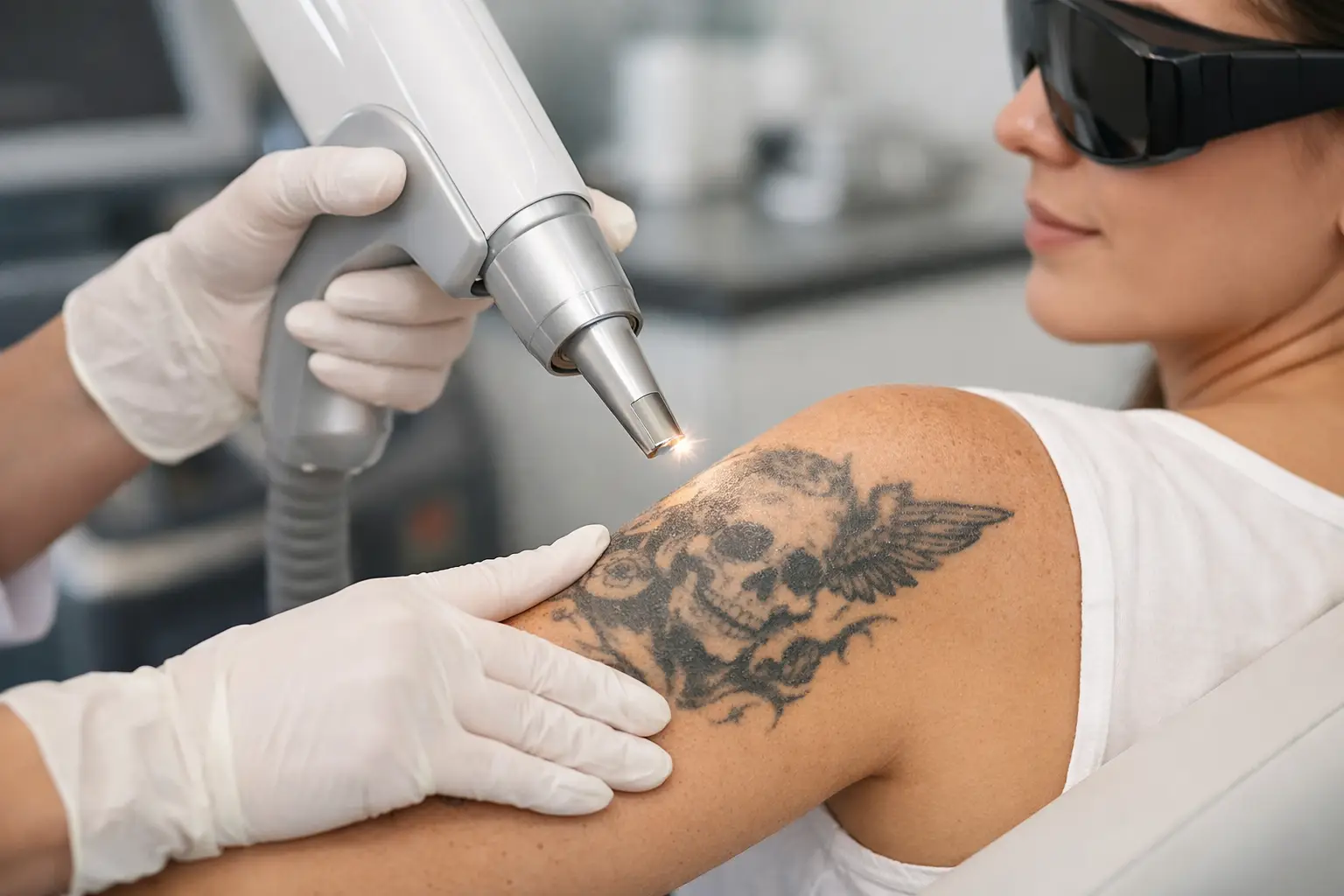
Laser treatment works by sending short bursts of energy into the tattoo pigment. That energy breaks the ink into smaller particles, which your body then gradually clears away through its natural processes. It is not instant, and it is not one treatment for most tattoos. Removal happens over a series of sessions, with time in between so the skin can recover and the body can do the clearing.
Tattoo removal creams and home remedies are often marketed as simple fixes, but they do not remove tattoo ink in the way people hope. At best, they may irritate the skin. At worst, they can cause burns, scarring, or uneven pigment changes without meaningfully fading the tattoo. Dermabrasion and surgical excision still exist in some cases, but they are usually more invasive and are not suitable for every area or tattoo size.
For most people, laser remains the best balance of effectiveness, safety, and cosmetic outcome when performed by a trained professional.
Why old tattoos can be easier – or harder – to remove
There is a common assumption that older means easier. Sometimes that is true. Over the years, sun exposure, skin turnover, and your body’s immune response may naturally soften the look of a tattoo. If the ink has already faded, a laser may have less dense pigment to break apart.
But age alone does not guarantee a faster result. Some older tattoos were done with heavy-handed application, older pigment formulas, or layering from touch-ups. A tattoo that looks soft on the surface may still have deep, concentrated ink underneath. Colour also matters. Black and dark blue often respond well. Greens, light blues, and some reds can be more challenging.
Your skin tone, the tattoo’s location, the quality of the original work, and your general health can all affect the process. Areas with better circulation, such as the upper body, may respond differently from lower legs or ankles, where fading can take longer.
What to expect from laser tattoo removal
The first step is a consultation. This is where the practitioner assesses the tattoo, reviews your medical history, checks your skin, and talks through realistic expectations. A good consultation should feel clear and supportive, not rushed.
During treatment, you may feel a quick snapping sensation against the skin. Most clients describe it as uncomfortable rather than unbearable, and the session itself is often shorter than expected, especially for smaller tattoos. Immediately afterwards, the area can look white or frosted, then become red, warm, or slightly swollen.
Over the following days, the skin may feel tender and dry. Some clients experience light blistering or scabbing, which can be part of a normal healing response when managed properly. Aftercare matters. Keeping the area clean, protected, and out of the sun supports better healing and lowers the risk of complications.
The fading happens gradually. It is not unusual to look at the tattoo a few weeks after treatment and feel unsure whether much has changed, then notice a clearer shift closer to the next session. Patience is part of the process.
How many sessions does it take to remove an old tattoo?
This is one of the most common questions, and the honest answer is that it depends. Some old tattoos respond well within a smaller number of sessions, particularly if they are already faded, amateur, and done in black ink. Others take longer because of colour, depth, layering, or body placement.
Complete removal is possible in many cases, but not every tattoo disappears perfectly. Sometimes the goal is full removal. Sometimes it is significant fading for a cover-up. Both are valid outcomes, and the right plan starts with being honest about what the skin and ink are likely to do.
A practitioner should never promise an exact number of sessions without seeing the tattoo in person. It is more responsible to explain the likely range and how your body responds after the first treatments.
Safety matters more than speed
It is understandable to want the tattoo gone as quickly as possible, especially if it has personal history attached to it. But pushing the skin too hard or treating too often does not always improve the result. In fact, it can increase the risk of irritation, delayed healing, and unwanted skin changes.
Safe treatment means allowing enough time between sessions, using appropriate laser technology, and adjusting the plan based on your progress. It also means being upfront about whether your tattoo is likely to need a slower approach.
This is especially important for clients with darker skin tones, sensitive skin, a history of scarring, or tattoos in delicate areas. Professional care is not just about the machine being used. It is about judgement, training, and knowing when to be cautious.
Is there a best age to remove a tattoo?
There is no perfect age for tattoo removal. What matters more is whether the tattoo is fully healed, whether your skin is in good condition, and whether you are ready for the commitment of multiple sessions.
If the tattoo is many years old, that can work in your favour, but it is still only one piece of the picture. Some clients decide to remove a tattoo because it no longer suits their style. Others are moving on from a past relationship, career phase, or life chapter. Those reasons are deeply personal, and they are all valid.
A supportive clinic will recognise that tattoo removal is not only a cosmetic treatment. For many people, it is part of feeling more comfortable in their skin again.
Choosing the right clinic for tattoo removal
If you are comparing providers, look beyond convenience and ask the questions that affect safety and outcome. You want to know who is performing the treatment, what technology they use, how they assess suitability, and what support you receive between sessions.
Experience matters. So does the environment. A professional, warm clinic experience can make a real difference if you are feeling nervous or unsure. This is one reason many clients across the Sunshine Coast choose a specialist clinic rather than treating tattoo removal like a quick beauty add-on.
At Coastal Skin Clinic, the focus is on tailored treatment planning, safe care, and honest guidance about what your tattoo is likely to need. That kind of personalised approach is especially important with older tattoos, where fading patterns are not always predictable.
When removal is not the right next step
Sometimes the best immediate option is not treatment on the day. If the skin is tanned, irritated, recently treated, or healing from another issue, it may be safer to wait. In some cases, a client comes in asking for full removal but realises that fading for a cover-up is a better fit.
This is why consultation-led care matters. The right answer is not always the fastest or most aggressive one. It is the plan that gives you the best chance of a safe result and skin that heals well.
If you have been putting it off because the tattoo is old, dark, or feels too far gone to change, it is worth getting expert advice. You may have more options than you think, and the first step is simply understanding what your skin and tattoo are likely to respond to.