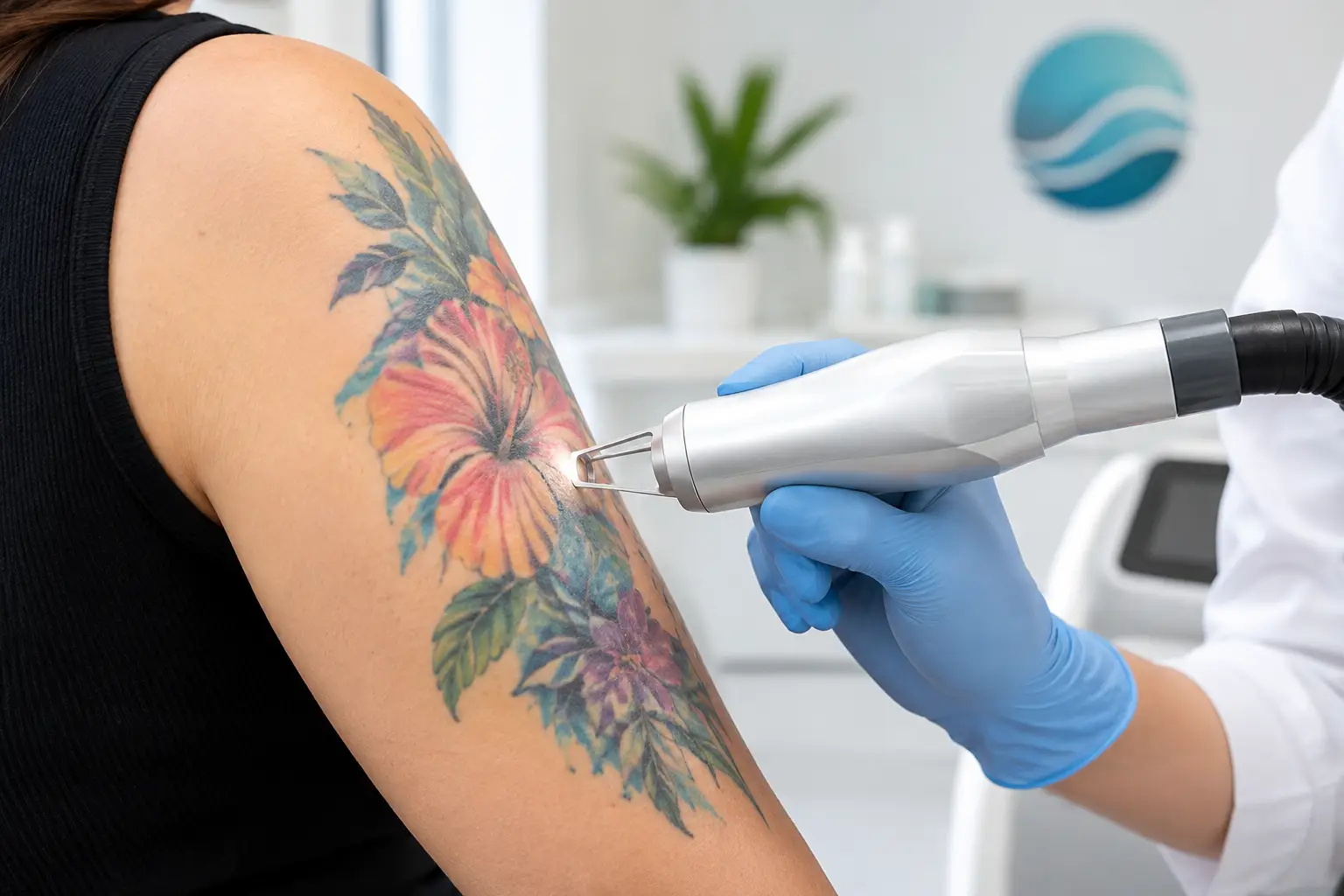
A tattoo can look like one design, but laser removal sees a collection of separate pigments. That is why multicolour tattoo fading rarely happens evenly. A black outline may soften early, while a bright green leaf, pastel blue shading or dense red detail takes longer to change. This is normal, and it is exactly why a personalised treatment plan matters.
At Coastal Skin Clinic, we take the time to assess the tattoo, your skin and your treatment goals before recommending a way forward. Safe. Effective. And based on what is actually in front of us, rather than a one-size-fits-all estimate.
Why multicolour tattoo fading is different
Laser tattoo removal works by delivering short pulses of light energy into the tattoo pigment. The pigment absorbs that energy, breaks into smaller particles, and is gradually cleared by your body’s immune system between appointments.
Different ink colours absorb different wavelengths of light. Dark colours, particularly black and dark blue, generally respond well because they absorb a broad range of laser energy. Brighter colours can be more selective. Reds, oranges, greens, blues, purples and yellows may each respond differently depending on the pigment used, how deeply it was placed and how saturated the ink is.
This does not mean colourful tattoos cannot fade significantly. It means the removal process needs patience, appropriate technology and thoughtful adjustments as the tattoo changes. What works well for the black linework may not be the best approach for a green or red section beside it.
What affects how quickly colours fade
There is no honest way to promise a precise number of sessions from a photo alone. Two tattoos with similar colours can behave very differently under laser treatment. A consultation allows your practitioner to look beyond the colour itself.
Ink type, density and depth
Professional tattoos often contain denser, more deeply placed ink than amateur tattoos. They may therefore take longer to fade, especially where colours have been layered or packed in heavily. Cover-up tattoos can also be complex because there may be multiple layers of pigment beneath the visible design.
Ink formulations vary widely. Some pigments are designed to stay vibrant in the skin, while others break down more readily. Even tattoos completed by the same artist can respond differently if they used different inks or techniques.
The colours in the design
Black commonly fades first, which can make the remaining colours appear more noticeable for a time. Red and orange can often respond well with the right wavelength, while green, blue, purple and yellow may require more persistence. Pale shades and pastel inks can be particularly unpredictable.
Occasionally, some cosmetic or light-coloured pigments may temporarily darken after treatment. This is known as paradoxical darkening. It is one reason an experienced assessment and cautious treatment approach are so valuable, particularly for tattoos containing white, beige, pink or flesh-toned ink.
Tattoo location and circulation
The body plays an active role in clearing fragmented ink. Tattoos closer to the heart may sometimes clear more efficiently than those on the hands, feet or lower legs, where circulation can be less active. This is only one factor, but it helps explain why an ankle tattoo and an upper-arm tattoo may not progress at the same pace.
Your skin and overall health
Your skin tone, healing response, immune system and general health all influence the treatment journey. A skilled practitioner will select conservative, suitable settings for your skin and monitor how it responds. The goal is meaningful progress while protecting skin integrity, not chasing the strongest possible treatment.
What to expect after each laser session
Immediately after treatment, the tattoo may look white or frosted. This is a short-term response and usually settles quickly. Mild redness, swelling, tenderness and a warm sensation are also common. Depending on the area and treatment intensity, small blisters or scabbing can occur as part of healing.
The more meaningful multicolour tattoo fading happens gradually over the weeks that follow. Your body needs time to process the disrupted pigment, so it is common to notice continued changes well after the initial reaction has settled. In some sessions, one colour may visibly lighten while another appears unchanged. That does not automatically mean treatment is not working.
Appointments are usually spaced apart to give your skin time to recover and your immune system time to clear ink particles. Rushing treatments can increase irritation without necessarily improving results. Your practitioner can advise on the right interval for your tattoo and adjust it as needed.
How to care for treated skin
Aftercare is not an optional extra. Looking after the area supports comfortable healing and reduces avoidable complications. Keep the skin clean, avoid picking or scratching, and follow the specific aftercare advice provided by your practitioner.
Protecting the treatment area from sun exposure is especially important on the Sunshine Coast. Tanned or sun-stressed skin can affect treatment planning and may increase the risk of unwanted pigment changes. Cover the area with clothing where practical, and use appropriate sun protection once the skin has healed as directed.
Avoid swimming, saunas, intense exercise and anything likely to create excess heat or friction immediately after treatment for the period your practitioner recommends. Loose clothing can make a real difference when a tattoo sits in an area that rubs against waistbands, straps or footwear.
If you experience symptoms that concern you, such as increasing pain, spreading redness, unusual discharge or a delayed healing response, contact your clinic promptly for guidance.
Is complete removal always possible?
Many clients begin treatment hoping for full removal, while others want to fade an existing tattoo enough for a cleaner cover-up. Both goals can be realistic, but the likely endpoint depends on the tattoo.
Some multicolour tattoos clear exceptionally well. Others may retain a faint shadow, a trace of stubborn pigment or a subtle change in skin tone. Dense greens, pale blues and yellow inks can be more resistant, and previous removal attempts may add another variable. A reputable clinic will discuss these possibilities clearly before treatment begins.
If your goal is a cover-up, full clearance may not be necessary. Reducing darkness, breaking up solid areas or lifting selected colours can give a tattoo artist more creative freedom and may allow for a lighter, more refined new design. Your laser practitioner can help you understand when the tattoo has faded enough to speak with your chosen artist.
Choosing the right approach for a colourful tattoo
Laser tattoo removal should feel considered, not rushed. The right treatment plan begins with an in-person consultation, a review of your medical history and an assessment of the tattoo’s colours, age, placement and density. It should also include a straightforward conversation about healing, likely treatment intervals and what progress may look like for you.
Ask who will perform your treatment, what laser technology is being used, and how the clinic manages skin safety throughout the process. Qualified practitioners should be comfortable explaining why some colours may take longer and why treatment settings can change as fading occurs.
Photos taken before treatment and at intervals along the way can be helpful. When you see the tattoo every day, gradual fading is easy to overlook. Consistent photos provide a clearer record of progress and help guide decisions throughout your plan.
A colourful tattoo does not need a simple answer to make progress. It needs a careful one. With professional assessment, sensible spacing between sessions and skin-focused aftercare, you can move forward with clear expectations and support at every stage.